
Christian Nationalism Is Thriving, and "We Should Be Concerned"
An interview from the front lines of the fight for separation of church and state.

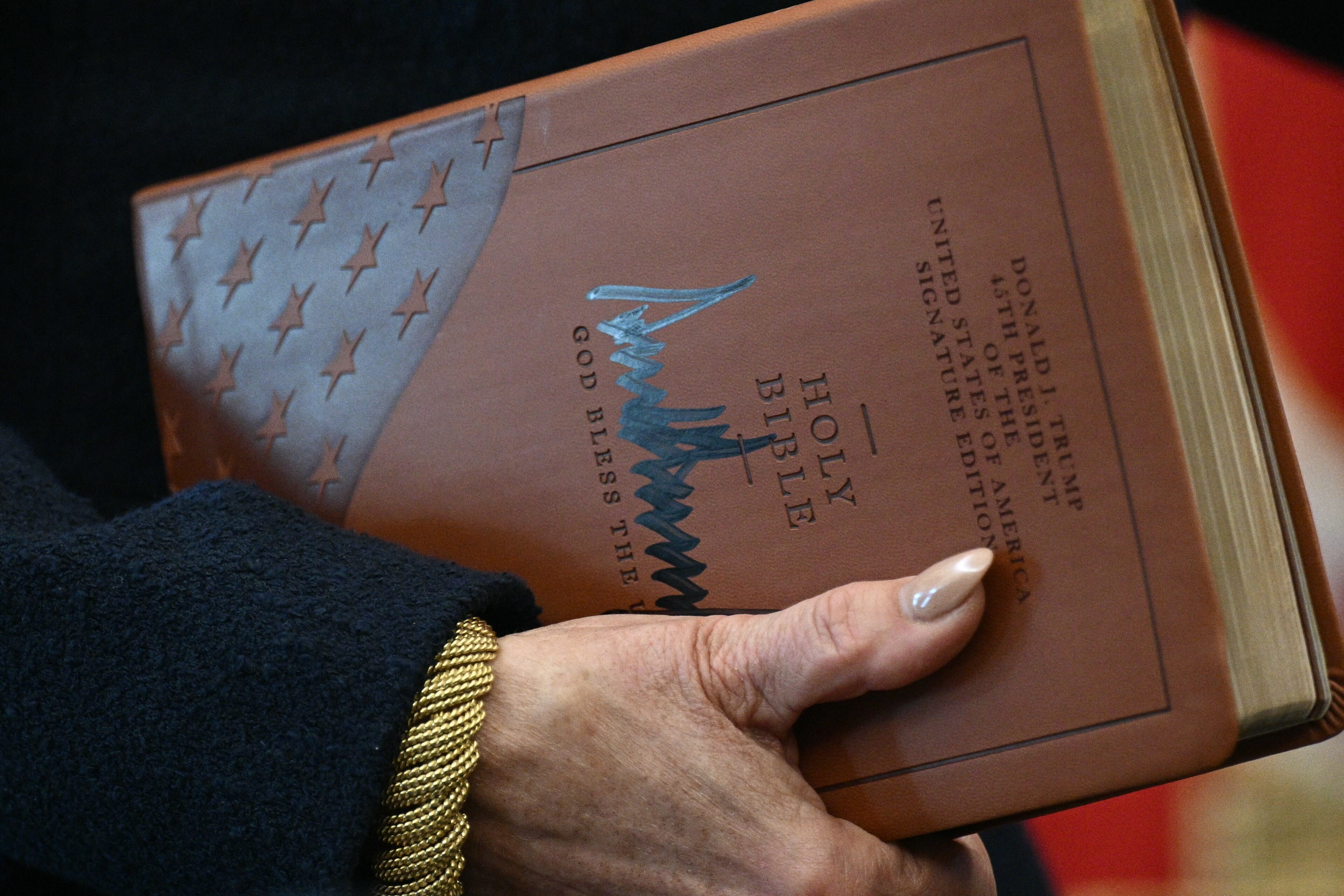
The ascendance of Christian nationalism inside of the second Trump administration has meant a lot of work for Americans United for Separation of Church and State (AU). The 70-year-old organization has rarely been so challenged on both the legal and policy fronts. The AU is currently involved in lawsuits and political organizing on issues including abortion, LGBTQ rights, the Ten Commandments in public school classrooms, and more. Last week, the group sued the Department of Defense and Department of Labor, seeking information about Christian prayer services that Secretaries Pete Hegseth and Lori Chavez-DeRemer have held for employees of their agencies in the wake of a 2025 executive order by Donald Trump vowing to “Eradicate Anti-Christian Bias” in government.
I spoke to Mariko Hirose, a veteran civil liberties attorney who serves as AU’s chief program officer, about the status of the group’s legal fights, and the broader challenges of the neverending battle against Christian nationalism. Our conversation, edited for length and clarity, is below.
How Things Work: I want to touch on the series of Freedom of Information Act (FOIA) lawsuits you’ve filed against the DoD, DoL, and other federal agencies. What are you looking for, and what’s at stake in those lawsuits?
Mariko Hirose: The most recent set of FOIA request lawsuits were about getting more information about the prayer services that have been going on in government buildings during work hours at the Department of Labor and the Department of War, which is very concerning. We know that over Christmas, Franklin Graham gave a message about the importance of following a god of war. At the Department of Labor, MAGA preacher Leon Benjamin is arguing that the employees are working for god and Trump. These are supposedly voluntary, but if you are an employee in these agencies, are you really going to feel like you need to attend to keep your job or be promoted? Especially with news reports that even intern applicants are being asked about their political loyalty to the president?
Trump issued his executive order about “Anti-Christian Bias” a year ago. What has come of that in the past year?
Hirose: That’s the subject of some of our other FOIA request lawsuits, against the Department of Health and Human Services, Department of State, and Department of Veterans Affairs. We’re trying to get at that question of what’s happening with that. But also exposing that there’s really no basis for spending taxpayer resources on this kind of a task force—this call to create an “anti-Christian bias” task force, not actually responding to instance of widespread anti-Christian persecution, that is about propping up Christianity instead of spending resources creating an equal workplace. That’s why we’ve been investigating those agencies: those are the agencies where we’ve heard of proactive steps to create task forces.
I imagine that normal people who aren’t lawyers who hear about the preaching going on inside of these government agencies would think that that obviously goes against the separation of church and state. What is the legal case that the government makes to justify it?
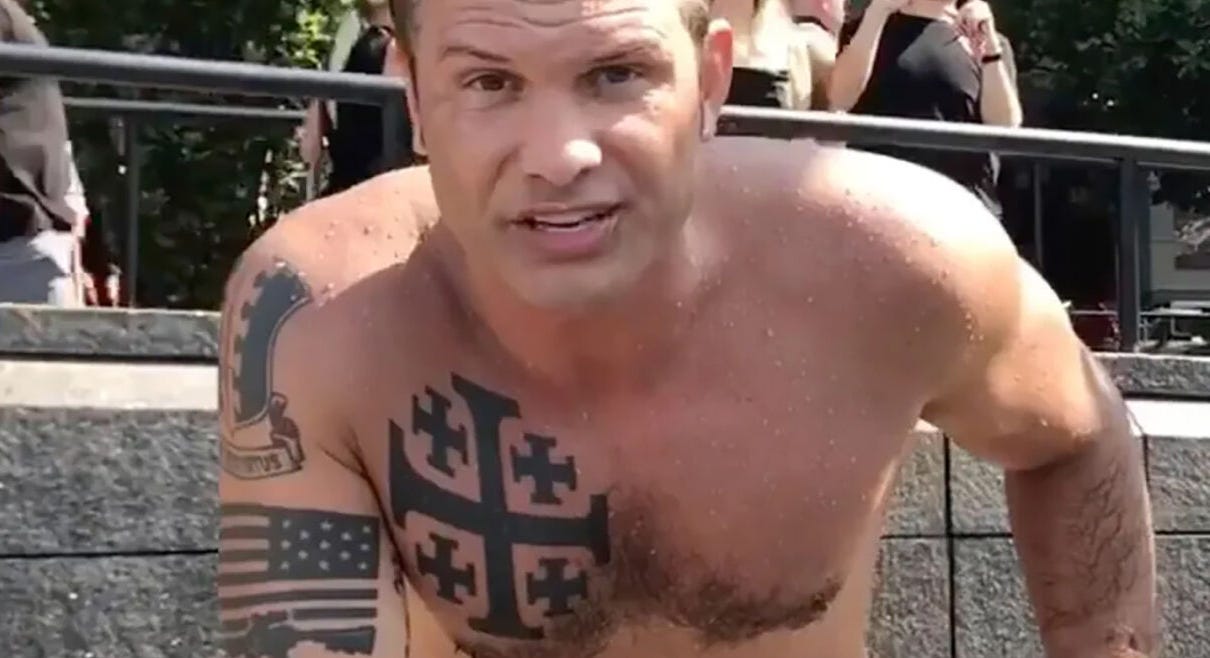
Hirose: I don’t think they have made a legal case justifying it. I don’t think we have an administration that cares about following the rule of law. We’ve warned members of Congress from the beginning about Pete Hegseth and his agenda. He has Christian nationalist tattoos on him. I don’t think he shies away from pushing his Christian nationalist agenda, which is the antithesis of church-state separation that’s in our Constitution.
How well the rule of law will hold up throughout this administration is obviously an open question. How confident are you that the courts will intervene in this area? Have the courts gotten more hostile to you during the Trump era?
Hirose: We have a Supreme Court that has been steadily cutting back on the meaning of church-state separation. So we should be concerned, all of us who care about democracy and these foundational principles in the Constitution.
Seeing what’s happened at state and local levels, I do think there is a lot of support among the American people for church-state separation. There is a lot of public outrage about what’s been happening in Oklahoma for the past three years, for example, with efforts led by Christian nationalist politicians to insert religion, forced education, into public schools. When the American people see these efforts to force religion and take away the religious freedom of families, they have really seen the problems and opposed it vigorously. I do think this is an agenda that is being driven by a small minority of well-funded people—an extremist political movement. So that’s where I find hope.
Is the second Trump administration different from the first on these issues?
Hirose: They’ve definitely been out there more. What’s happening with the prayer services, the anti-Christian task force, the “Religious Liberty Commission” that Trump has launched—it’s really focused on one very narrow view of faith, a very narrow version of Christianity. In the second administration, yes, the president is more overtly pushing for Christian nationalism, and has cabinet secretaries in place that want to realize the idea that this country was founded as and should be a Christian nation.
Have the red states been getting more radical on these issues in tandem with the federal government?
Hirose: Yes, I think what we’re seeing is that Christian nationalist politicians in the red states are feeling empowered by both what’s happening in the federal government, and also in the Supreme Court. They are taking actions that are unpopular with their electorates, but they’re trying to push laws that violate fundamentally what church-state separation has meant in this country. So that’s why we’re seeing in places like Texas, Louisiana, Arkansas—those are places where we are challenging laws forcing the Ten Commandments in public school classrooms. There’s efforts to force Bible study in public schools.
I covered a bit of Texas politics recently and noticed that the main issue seemed to be Sharia law, for some reason. Do you think there’s been a rise in discrimination against non-Christians at the same time that Christian nationalism has been on the rise within government?
Hirose: Absolutely, and that’s two sides of the same coin. Christian nationalism is about favoring one version of Christianity. That means disfavoring and discriminating against other religions, and even other versions or other denominations of Christianity. In a lot of our lawsuits—for example, against the Ten Commandments [in school]—we have Christian clients who, their faith is to believe in church-state separation. They do not want the public schools to teach their children from the version of the Bible that is being proposed in school classrooms.
On your comment about anti-Muslim bigotry, yes, we have heard a lot of anti-Muslim rhetoric coming out recently, and the talk about Sharia laws is a reflection of that.
Hanging the Ten Commandments in public schools is maybe the most obvious education fight you’re in, but what other education issues do you have your eyes on?
Hirose: Public taxpayer funding going to private schools, many of which are religious. That happens through private school voucher programs. It happens through coordinated efforts to start the country’s first religious public charter schools. That’s a context in which we challenged Oklahoma’s decision to allow the first religious public charter school. The Oklahoma attorney general opposed that as well. That case went up to the Supreme Court, and the Supreme Court did let stand an Oklahoma Supreme Court decision that said that approving that kind of a school to open would violate church-state separation. But now there are efforts to try to overturn that law, and that fundamental principle, and we’re seeing both in Oklahoma and other places efforts to open these schools.
The problem with public money going to private religious schools—or any private school really—is that private schools aren’t open to all students the way that public schools are. Our taxpayer money should go to public schools that are open to all students, that are not allowed to discriminate. That’s where the money is needed. Instead we see a pushing in many states to take that money and give it to private schools.
It seems also that many of the anti-trans measures we’ve seen recently are rooted in claims about schools, and school athletics. Do you see that as a Christian nationalist issue as well?
Hirose: Yes, absolutely. The anti-LGBTQ+ policy pushes that we’re seeing are really animated by the beliefs of the Christian nationalist political agenda. We’re seeing that play out in schools through book bans and efforts to challenge curricular decisions to be more LBTQ+ inclusive.
This is an oversimplified question, but what accounts for the surge in political power of Christian nationalism right now? They’ve been around for decades. Why are they having such a moment?
Hirose: They’ve been strategic in terms of how they move forward. They’re very well funded. There are billionaires. There’s a connected network that is funding the movement and putting people in places of power.
It’s a reaction to the progress that the civil rights movement has been making across the board. One of the moments in which the Christian nationalist movement got a lot of energy was after desegregation, and trying to figure out ways not to have schools desegregated. So segregation academies and preserving white supremacy was one of the roots of the Christian nationalist movement. And then as we’ve had successes in the civil rights movement moving towards more equality—racial equality, LGBTQ+ equality, gender equality—we’re seeing a backlash to that. I guess that’s also another hopeful way to look at it. This is a side effect of the successes we’ve had, and we will be able to overcome this moment.
The Democratic Party sort of has to be the opposition party on this issue by default. How encouraged or not encouraged are you by where the bulk of national Democratic politicians are on these issues?
Hirose: Well, I would say that church and state separation should be a completely bipartisan issue. It’s just a fundamental part of the American Constitution. It’s like saying, “Who’s in favor of democracy?” Everyone should be. It’s fundamental to democracy.
But it’s fair to say that today the Republican Party is pretty well captured by the Christian nationalist vision, at least at the moment. We’re looking to the Democrats for whatever opposition will happen in the near term.
Hirose: I don’t know that that’s true. I think that these debates play out really differently in the red states. It may be one political party, but even within that there may be significant differences. For example in Oklahoma, with the religious charter schools case, it was the Republican attorney general litigating the case and arguing for church-state separation. We were on their side. It was an Oklahoma Supreme Court who ruled in favor of church-state separation. We’ve had clients who are Republicans who don’t want public funds being taken away from public schools and put into these uses. And it’s especially true for rural Oklahomans, for people in rural areas. They really depend on their public schools. These are rural Oklahomans who are people of faith, but they know they have access to Sunday schools and to religious education, and what they need is investment into public schools that are going to teach core subjects.
On abortion, the AU’s website says plainly that “Abortion bans violate the separation of church and state.” Is your argument that abortion bans are inherently religious? Or are there religious and non-religious bans?
Hirose: The way that it’s been pushed here is quite evidently religious. It’s about the religious view of when life begins. So that’s the problem. We see in the legislative record when abortion bans are debated, how this comes in—that it really is about religious motivation.
Is there anything on the abortion front that you think people should be watching? Is there a realistic potential for a national abortion ban?
Hirose: It is an issue that people should watch and be concerned about. It’s one of the things that was in Project 2025, which I’m sure you’ve been following… it is a road map for Christian nationalism. They talked about going after reproductive freedom. They talked about LGBTQ+ rights and undercutting that, that was a very big theme. And then about private school vouchers, which plays into what we were talking about.
We can’t say they didn’t warn us!
Hirose: Yep, at least we knew what to expect. We certainly started planning based on what they said they would do.
A lot of the work you do is in the courts, but what do you tell regular people that they can do if they care about the separation of church and state?
Hirose: Follow what’s going on in local politics and in your school board. Often some of the most important church and state separation issues are playing out in those places. And that’s where your voice can make the biggest difference.
More
Previously, in religion: We’ve Given Religion Too Much Respect; Anti-Religious Politics; The God of Solidarity; Onward, Christian Soldiers—To War! Previously, in interviews of interesting people: A nurse; A boxer; A tenant union organizer; A DSA politician down South; A former Secretary of Labor.
Many of you may have attended No Kings protests this weekend. Be aware that the next action that the organizers of those protests have called for is a national general strike on May 1: “No work, no school, no shopping.” If you are one of the millions of people who has mused about how we should have a general strike over all this stuff that’s happening, you must participate! Put it on your calendar now! No whining! More on this in coming weeks.
How Things Work exists because of the support of readers who choose to become paid subscribers. These noble supporters make it possible for me to do this work and publish it without a paywall, so everyone can read it, regardless of income. If you can afford to subscribe for six bucks a month or $60 a year, you will do your part to help keep independent media rolling in 2026. I appreciate your consideration.
"If you're ever doing business with a religious son of a bitch, get it in writing. There's no telling how they'll try to fuck you with the good lord in on the deal."
-William S. Burroughs.
Absolutely terrifying