
The God of Solidarity
Beyond religion, a better world.

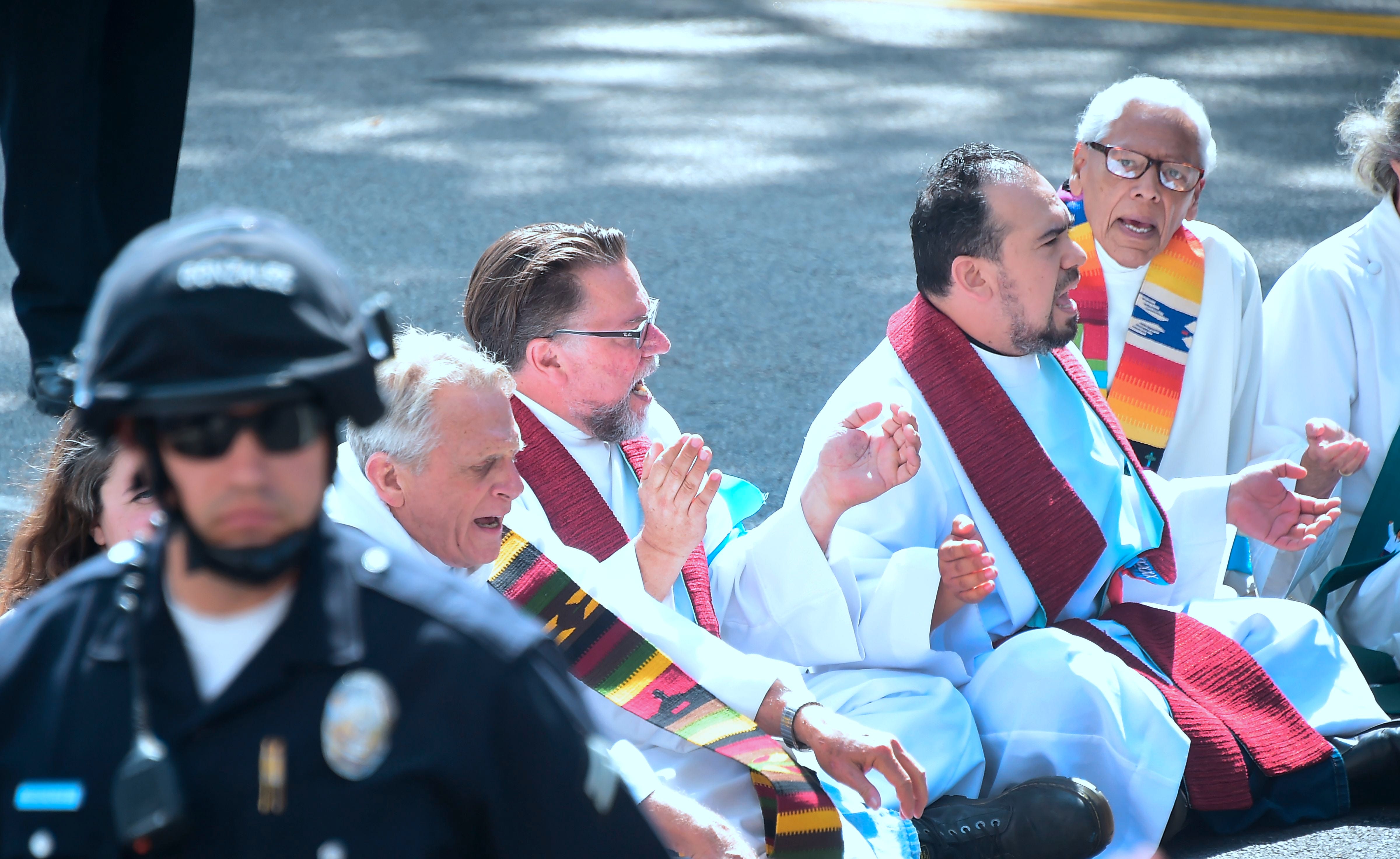
Christians are having mixed feelings about immigration. Among Southern Baptists, some view immigrants as friends and neighbors, but many others are in full support of the government’s harsh, ongoing crackdown. “I would not knowingly extend communion to an illegal immigrant who is visiting our church,” one Louisiana pastor told the New York Times. “That person would be in sin by being in this country illegally.”
James Talarico, a religious Presbyterian preacher-in-training running for Senate as a Democrat in Texas, has a milder view, saying that “We should treat our southern border like our front porch. We should have a giant welcome mat out front, and we should have the lock on the door.”
Catholics are having the same debates. The top guy, The Pope, has criticized America’s immigration purge, saying “when people have lived good lives—many of them for 10, 15, 20 years—treating them in a way that is, to say the least, extremely disrespectful, and with instances of violence, is troubling.” JD Vance, our Catholic vice president, dismissed the direct criticism from god’s emissary on Earth, and defended anti-immigrant attitudes, saying “It is totally reasonable and acceptable for American citizens to look at their next-door neighbors and say, ‘I wanna live next to people who I have something in common with, I don’t wanna live next to four families of strangers.’”
Other Catholics called Vance’s comments “un-Christian.”
Of course, Christianity has no monopoly on political debates channeled through the lens of faith. Right wing Hindus who despise their Muslim neighbors are in control of India. Religious violence by Muslims in Nigeria draws a violent response from America’s Christian leaders. Conservative factions of all the world’s religions cite their religious beliefs to argue in favor of hierarchy and tradition, and more liberal factions of the same religions cite their own beliefs to argue for the opposite. This continues until we all die, at which point the religious people will, at least, be able to appeal to god as a referee in the afterlife.
All of you who are religious, I’m sure, have your own views on how the tenets of your faith should be translated into the worldly issues of politics and power. Many of your brethren hold the opposite views. There are devout Christians who deeply believe that it is their duty to do everything to help immigrants, and there are equally devout Christians who believe just as deeply that illegal immigrants are sinners to be condemned, and there are equally devout Christians who believe just as deeply that these are all matters for Caesar, not the church. There are Catholics who believe that they are bound to follow the dictates of the Pope and there are other Catholics who believe that the Pope should be damned if he doesn’t adhere to the true will of god, which they themselves have more clearly divined. Even after you set aside the hustlers and charlatans that plague every human endeavor, there are countless millions of true believers who peer at the same holy books and draw vastly different conclusions about their messages.
This entire seething intellectual and moral struggle—the ebb and flow of which has powered the engine of human history for millennia—is, I’m afraid, a big waste of time. It is a foolish way to spend your life. It is like arguing with a dog. He won’t understand you, but he’ll keep on barking. As unreasonable as the dog seems to you, you seem just as unreasonable to the dog.
The problem with religious argument is that there is no shared, objective set of rules or values to which both sides can appeal. The only judge who can rule on it definitively is god, who isn’t talking, except to the crazy people. Treating holy, mystical, mythological texts as intelligible rule books for human life is an activity roughly equivalent to reading tea leaves or drinking ayahuasca in search of truth. You’re welcome to do it, but you should abandon the notion that any aspect of it is consistently understandable enough across different human minds to serve as any sort of shared basis of agreement. The reason there have always been so many different preachers and prophets and holy men and monks and religious authorities declaring the divinity of so many different stories and rules is that… why shouldn’t they? Who’s to say they’re wrong? Religion is not logic. It is creative expression. We can prove that two plus two equals four, but the combined efforts of billions of people for thousands of years will never prove whether Islam or Christianity or something else is the One True Religion, any more than you can prove that Picasso is the One True Artist, while Jackson Pollock was a heathen who should be roasted at the stake in punishment for his incoherent sins.
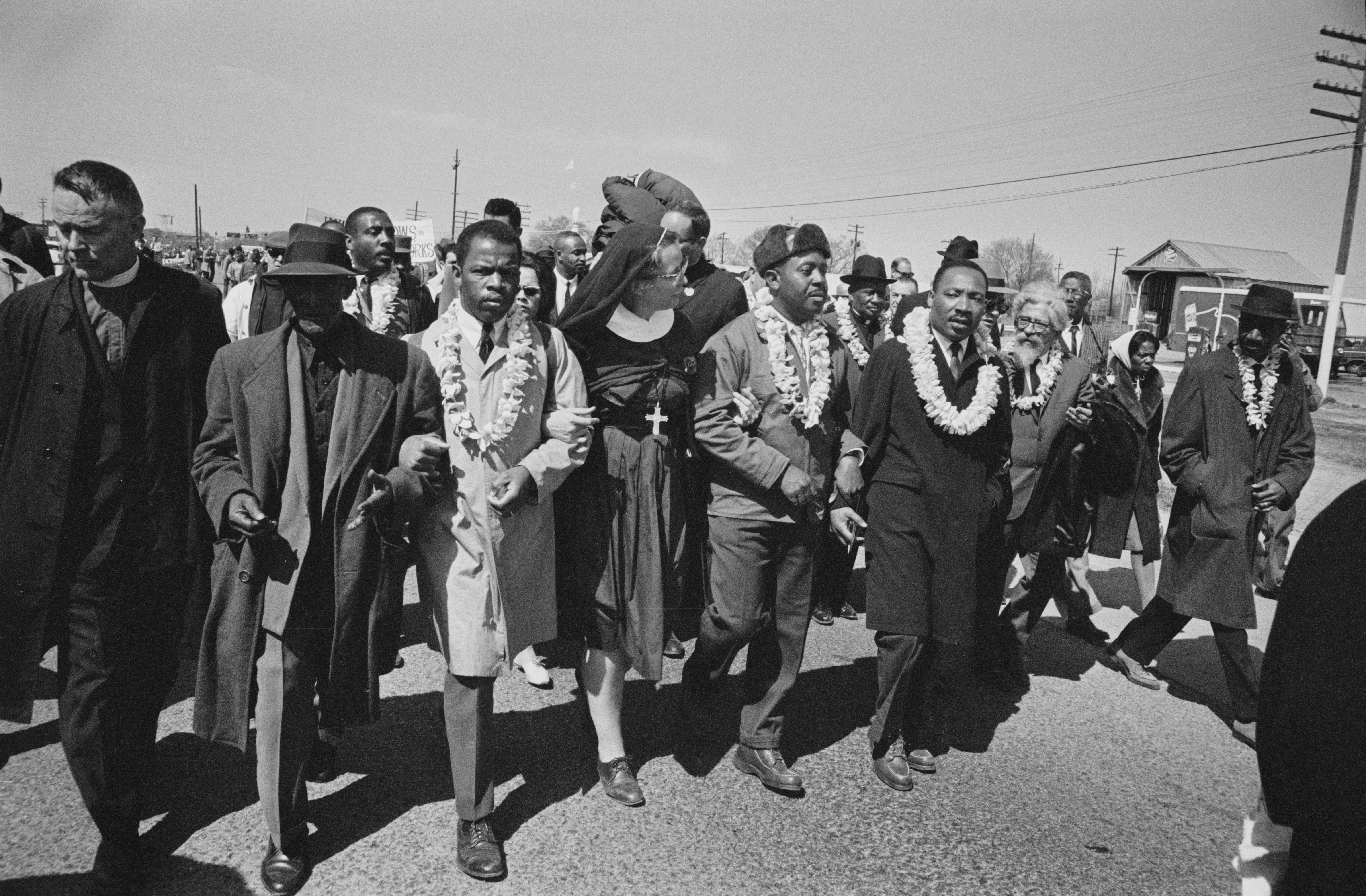
This quality of religion—its inability to be proved wrong, its imperviousness to logical debate—is what led smart people to recognize long ago that it should be kept separate from democratic government. In a democracy, the base source of legitimacy that we all aspire to appeal to is morality that is rooted in logic and made persuasive through reason and put into action by widespread mutual agreement. As soon as you begin to use religious belief as the basis of political arguments, you depart from the world in which it is even theoretically possible for everyone to agree on how we will decide what is right and wrong. All that is left then is power struggle, and crushing your enemies, and other things that democracy aspires to overcome.
You are allowed to be religious. You are allowed to hold political beliefs that are motivated by your faith. But if you want to bring those beliefs into practice in a democratic government you must be able to argue for them using reason, because reason is the only thing that works equally for the Muslim and the Christian and the atheist, all of whom are citizens. They figured all this stuff out during the Enlightenment, but religions themselves have, unsurprisingly, been rather slow to get on board.
It is natural to yearn for what religion offers: Community in lonely world; Certainty in the face of intolerable mystery; and a definitive prescription for moral living that allows for us to fulfill our basic need to think of ourselves as good people. Humans will never stop seeking to quench these urges. Indeed, democracy itself is an attempt to build a political framework that honors these very things. As we recognize this, we can also recognize that religions—all of which take the shortcut of blind faith—are not going to be a stable, long term answer to humanity’s perpetual search for stability in which to flourish.
I don’t know if we have a god. But I know that we have each other. What unites human beings is that, like it or not, we will rise and fall collectively. I am not religious, but I acknowledge that it is unreasonable to ask religions to separate themselves from politics, because politics is just another word for the tangible affairs of the world, and any religion that purports to embrace a set of values must necessarily concern itself with the affairs that politics regulates. So, instead of trying to wish away religious inconsistency, or pretend as if we can reconcile irreconcilable mythologies, I like to hope for something more modest and achievable: That we can unite ourselves around a common value that can serve as a more stable foundation for a common political program, and then a better world.
Solidarity. That is the value I suggest. It is a value that sits well apart from specific hot button issues, encompassing an entire world view that can be translated into action in a straightforward way. Solidarity means, simply, that we are all in this together. It means loving thy neighbor, and it means treating others as you would be treated, yet it requires no appeal to mysticism for its authority. All it requires is a look around. We’re all here. We’re all trying to figure out how to live together. If we all take responsibility for one another, and decide that our collective well-being is our collective responsibility, we are all going to get farther than we otherwise would.
Solidarity is the basic value that motivated Jesus. It is also the value that motivated Karl Marx. Solidarity! What else has the power to unite Christianity and Communism? Solidarity is an orientation that sates the demands of reason and the demands of the heart. It is logic, and it is love. Solidarity knows no borders or boundaries. It is a simple perspective that can guide all of your decisions when faced with hard choices. It is a value to which religious and non-religious people alike can appeal if they want to discuss what is or is not righteous. It requires no gods, but it allows for them all. As long as they give a damn about all of us.
When you are lonely, when you are uncertain, when you are hungry to feel as if you are living a life of value, think of solidarity. Let it guide you and you will probably be okay. It is less pernicious than god’s unknowable will, and more likely to help you make friends with different kinds of people.
A new year is coming. We haven’t got everything right yet. Solidarity will get us closer to where we need to be.
More
Related reading: Nations Are People; Talking Our Way Forward; Anti-Religious Politics.
I wrote a very short piece for Nieman Lab about my prediction for the media in the upcoming year. It is about solidarity, too.
This is typically when journalists are forced to write “Year in Review” type pieces and other awful roundups that carry publications through these final weeks of the year, when everyone wants to not be working. I am not required to write a bunch of those now, because I work in independent media, here at How Things Work. This place is one hundred percent funded by you, the readers. It’s a pretty great system, if we can make it work. I promise you not to bombard you with dozens of “Best Of” listicles, and in return, I ask—or suggest, mildly, in the kindest way—that you consider becoming a paid subscriber, to keep this publication free and independent for one more year. I know that we can do it together. You are all great, and I thank you all for reading.
“We must learn to live together as brothers or we will perish together as fools”.
Martin Luther King, March 22, 1964.
I’m hoping that J.D. Vance declares himself Pope and we have an American Antipope as well as a Pope, the multiple papacies in the 13th century was an entire vibe that people forgot about.