
In California, It's Either Tax the Billionaires or Face a Health Care "Catastrophe"
An interview with the union leaders pushing a state wealth tax.

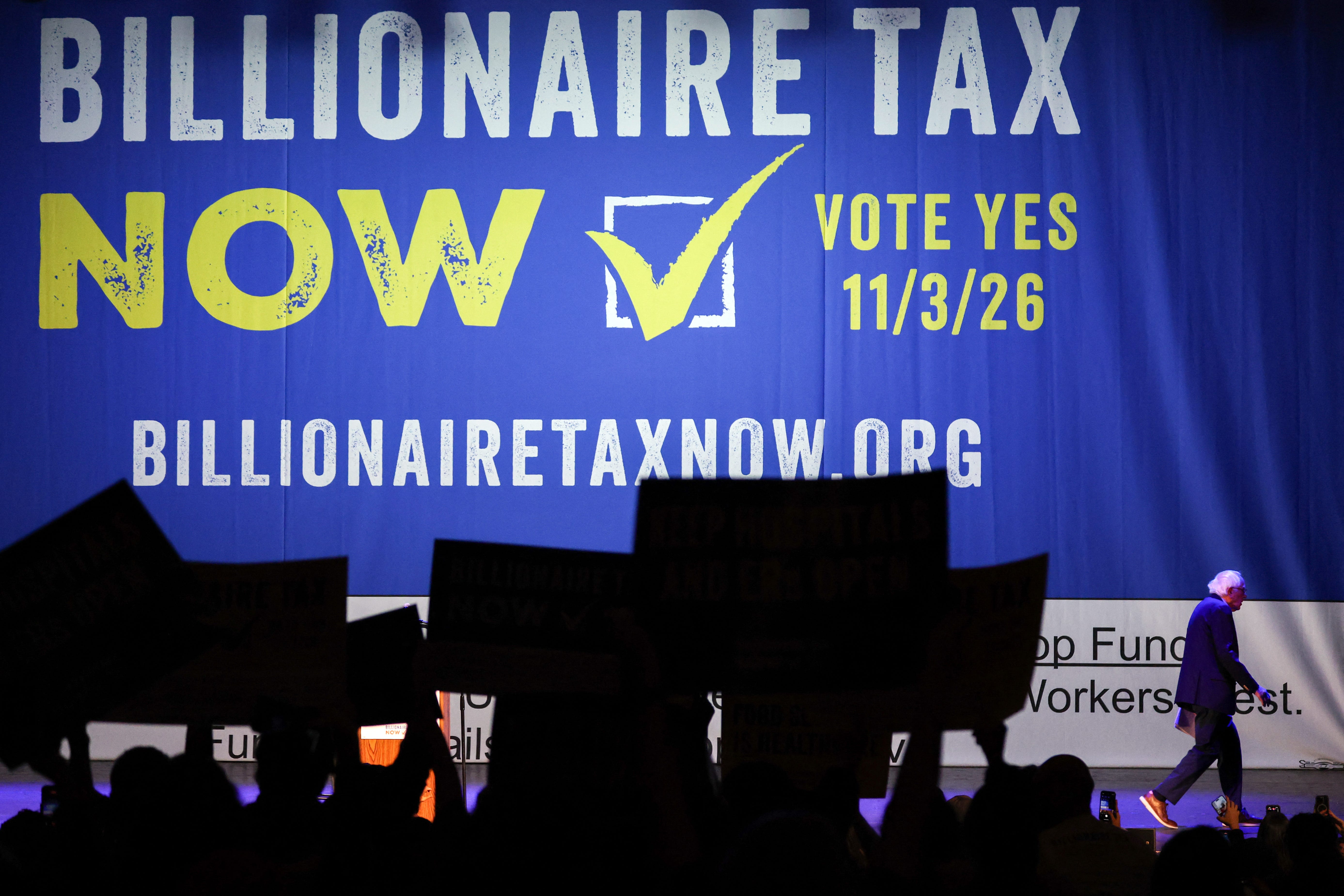
The most meaningful state level wealth tax in America may soon be on the ballot in California. There, a major healthcare workers union, SEIU-UHW, is spearheading an effort to get a very unique wealth tax on the ballot for voters this November. This tax would target only billionaires who were residents of California as of January 1. It would charge them a one-time levy of 5% of their wealth, with most of the money earmarked to fill the hole in state healthcare funding that Medicaid cuts in Trump’s “Big Beautiful Bill” is set to cause.
Already, the proposed wealth tax has caused a number of mega-billionaires to threaten to leave the state, even as they pour tens of millions of dollars into a campaign to stop the measure. It has prompted much wailing and gnashing of teeth in the right wing media. California’s ambitious Democratic governor, Gavin Newsom, has come out against it. On the left, support for wealth taxes is seen as a necessity to combat America’s inequality and oligarchy.
I spoke to two of the people at SEIU-UHW who are leading the push for the wealth tax: Suzanne Jimenez, the union’s chief of staff, and Dave Regan, the union’s president. They say they are on track to submit the signatures required to get the measure on the ballot within the next few weeks. They talked to me about trying to prevent the decimation of healthcare in California, while navigating opposition from billionaires and their political allies. Our conversation, edited for length and clarity, is below.
How Things Work: Tell me the origin story of your decision to pursue this wealth tax. Presumably there are a lot of different routes you could have pursued to tackle this crisis in health care funding. Why this?
Suzanne Jimenez: It really all started with HR 1, “The One Big Beautiful Bill,” signed into law by the President last year. There’s a whole coalition across the country that did everything we can to stop HR 1. We were not successful. When the president signed that into law, that really is decimating health care across the country. But specifically in California, we are looking at $100 billion in cuts to our health care system in the next five years. That means hospitals are going to close, clinics are going to close, ERs are going to close, services will be cut back. When we look at home care services, nursing home services, those are things that seniors, veterans rely on. But also, these cuts mean that, on the conservative side, 150,000 health care workers will be laid off. Millions of people will lose access to care, in terms of their insurance. We’re also seeing what’s being projected as four million businesses are going to see increases in the premiums that they pay for their employees. So, all of that to say, if we do nothing we are going to see a real collapse of our health care system in California. That’s really where this initiative came from, is to solve a problem that was created by the federal administration.
Why target billionaires with a wealth tax, instead of pushing for more traditional tax increases?
Jimenez: Looking at the scale of the problem, we knew we needed lots of revenue to come in. When we looked at how we could generate revenue, it was clear we have a small group—just over 200 people—of the most fortunate people, not just in California but in the country. If they paid a one time 5% emergency tax, we could at least raise enough revenue for the next five years and solve the problem in the more immediate term, while we figured out a more long term solution. So honestly, it was: How do we generate the revenue needed? How does it impact the lowest number of people? And these are the folks that could pay this tax.
Dave Regan: There’s about 200 and some odd billionaires in California. Six years ago, their aggregate wealth was $700 billion. Today, it’s $2.2 trillion. So these 200 folks have had their fortunes grow by one and a half trillion dollars in six years, and all of that is outside the purview of the traditional tax system. So when you have to solve a problem of this magnitude, this seemed to us to be an obvious place to go…
Emmanuel Saez, Darien Shanske, and Brian Galle [economists who helped to design this wealth tax proposal], they had worked on legislation in the California legislature previously. There was a bill that was introduced. It could never get a hearing, even in California. So the other reality is the only way you can overcome the way that politics functions is to put this in front of voters.
The obvious problem with state wealth taxes is that billionaires can move. Which is a challenge that every state-level wealth tax will face. How do you think about that?
Jimenez: There’s two pieces to this. One, that’s always the campaign message, scare tactic, that wealthy people use—that a wealth tax is going to drive wealthy people away from fill-in-the-blank state. When we look at Massachusetts, they passed a wealth tax, and it’s on millionaires. The largest argument against it was that all the millionaires were going to leave. Massachusetts had something like just upwards of 400,000 millionaires. After this tax has passed, they now have over 600,000 millionaires. So that hasn’t come out to be true. Washington [which recently passed a new state tax on incomes over $1 million], we heard the same argument. That’s not coming out to be true.
The way that [our] initiative was written, it’s based on residency as of January 1 of this year. If you were really trying to get out of paying this tax, you would have had to change your residency. That doesn’t mean moving, that doesn’t mean buying a house in another state, it doesn’t mean getting a driver’s license. Residency is very difficult to change. So we think that all of the reports on this are overblown. Even if a couple of them moved out of the state for a one time tax, it won’t hurt the economy and it won’t hurt our state… part of why we made this a one time tax was that we wanted to be able to talk about that this is not about driving out folks that are innovating or creating jobs. This is about solving a problem, specifically all of the cuts in health care.
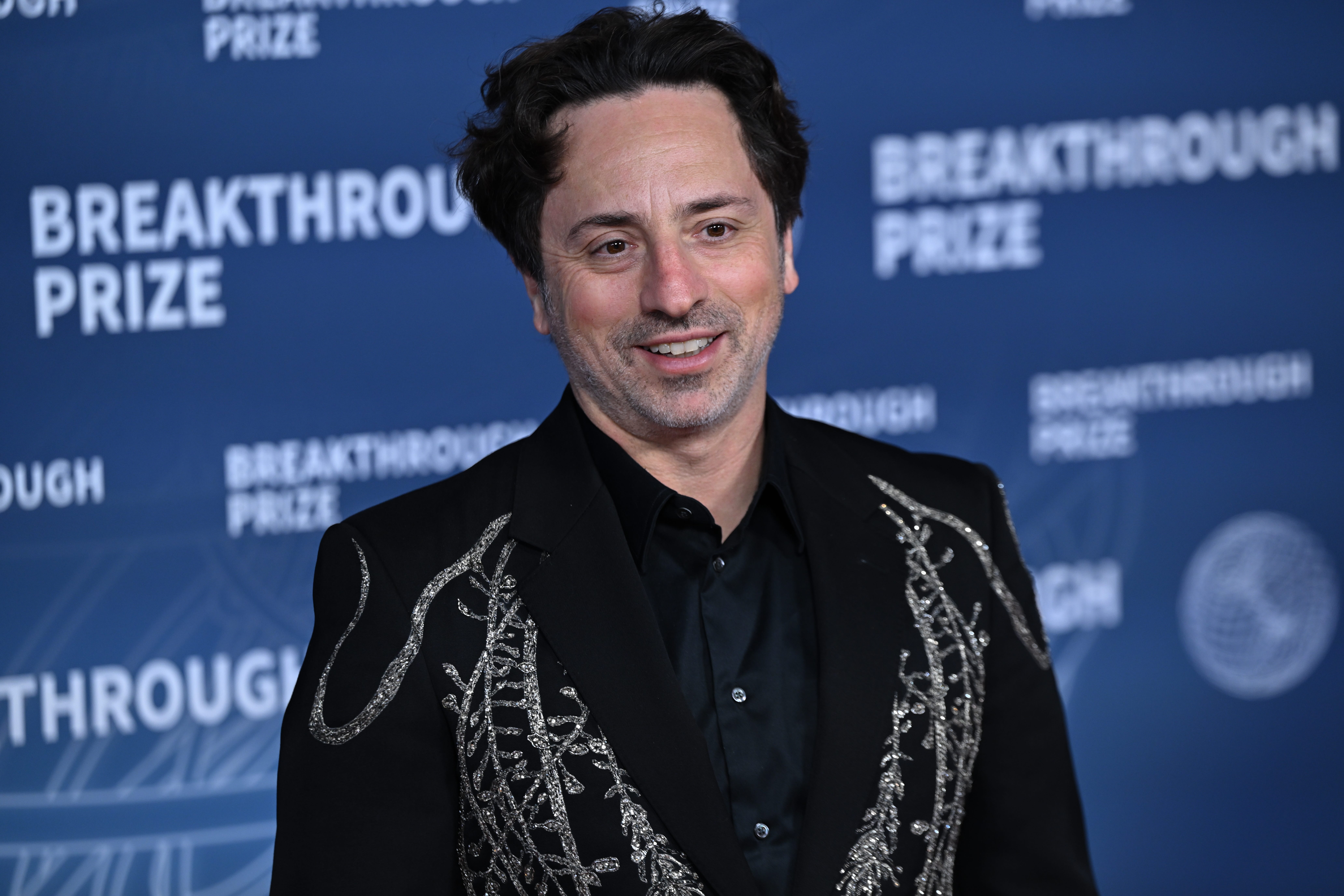
But when someone like Sergey Brin moves to Miami, he’s taking a large percentage of the wealth you’d like to tax out of the state, right?
Jimenez: No. The state’s budget is based off of income tax, primarily. Sergey does not get much income. That’s been another thing that’s very deceptive that these ultrawealthy folks have been moving in the media. “If we leave, then the state budget is going to be decimated.” They pay two and a half percent of the total state budget, comes from these billionaires. Teachers, firefighters, working people pay much more.
Regan: Our measure taxes their worldwide wealth. It’s not a California calculation. As Suzanne said, it’s based on residency. So to be precise, there is no economic incentive to leave California. There’s irrational reasons to do it, but there’s not a rational reason. If we can agree that you can’t legally change your residency in ten days at the end of calendar year 2025, which is what some of these guys were saying they were gonna do.
[Specific taxation decisions would ultimately be made by the state’s Franchise Tax Board.]
Do you think the shame argument can work? When billionaires openly move in order to try to avoid state taxes, can we shame them effectively for that?
Jimenez: I would love to believe yes—only because when we’re thinking about the magnitude of the problem we’re trying to solve here, why are we not talking about 39 million people whose health care is going to be at risk? Or 50% of California children rely on Medical/ Medicaid, and nobody’s talking about kids, seniors, all the people that won’t have access to health care because of the cuts brought on by HR 1. Yet we’re talking about these poor billionaires. That’s where the shame needs to come. Why are they not stepping up? One time, 5%, let’s make sure there’s not a health care collapse.
California governor Gavin Newsom opposes the wealth tax. I read the Politico story, Dave, that reports that when you met with Newsom, and he asked you to withdraw the measure. And your quote is, “I said: ‘Governor, this is our solution. We have a solution. Do you have a solution?’ And he said, ‘I do not have a solution.’” What do you think is behind Newsom’s opposition? Is it about him running for president in 2028?
Regan: I think it is the obvious. I think it is that he’s running for the presidency, and he’s relying on enormously wealthy people to fund his effort. I said that to him—that if I was sitting in your chair, Gavin, I might be making that argument, but there has to be a solution. It’s okay to say this isn’t the solution. But what is the solution to this problem that is literally about tens of millions of people? You may be running for president, but you are still the governor of California until the end of this year. And this potential looming health care collapse is the largest problem facing California. I don’t think that’s debatable.
Your union is spending a lot of money on this effort. What did you say to your members to get them behind this?
Regan: When we lost [the fight against HR 1], and people say, what’s going to happen now? Are we going to see service reductions? Are we going to see layoffs? Are we going to see people lose their coverage? The honest answer is—yes. So what are we going to do about this? We’re a large local union. We’re fortunate that we’re well resourced. But it’s not a tough case to make people that when the midrange projection is 150,000 lost jobs, over three million people losing insurance coverage, 23, 24 million commercial insurance customers, including us, seeing double digit premium increases… the question we ask ourselves is, are we capable of doing something that answers this fundamental threat? Not dealing with it at the back end, to pick up the pieces. Can we do anything to prevent it? And we can do something. Our members, we’re spending millions and millions of dollars on this. All of those decisions get approved by our executive board. People are as excited about this as they’ve ever been. They’re glad and proud and happy that they have an organization that can at least compete a little bit with the most powerful people in the world. That’s a really good thing.
It’s a really interesting story of labor driving a big issue. In your proposal, though, most of the money is earmarked for health care. I know that some other unions have wondered about their own issues—teachers, for example, saying “What about education?” To what extent have you been able to unify labor in California behind this?
Regan: I understand the teachers’ position, and we’ve talked to both big teachers unions. The One Big Beautiful Bill did not cut education. It cut Medicaid. Medicaid is the largest health insurance program in America. It covers over 80 million people. That’s what President Trump and the Congress went after to finance, yet again, another huge tax break. We are trying to restore funding that was specifically attacked by the President. And 10% of what we’re doing is earmarked for public education and food assistance. It’s not like we’re doing nothing. But the first thing you have to do is that, an attack on the whole of the healthcare system predicated on Medicaid, you’ve got to fix that. And this doesn’t detract from anyone else. And if we don’t fix that, then the state is gonna be taking money from the education budget, from the social services budget, from everything else we do, because you’ve got millions and millions of people who are showing up for uncompensated care. Somebody’s got to pay that bill.
Have there been any surprises for you in terms of who supports this measure, and who doesn’t?
Regan: [Democratic candidate for California governor] Katie Porter, who has cultivated this reputation as a progressive. What does that mean, Katie, when you can’t get behind this? And Eric Swalwell, who bailed out of the race for good reasons, he wasn’t a proponent of this. This is why workers are cynical about politics.
The other Democratic candidate for governor is Tom Steyer, a billionaire himself. He would have to pay the tax.
Regan: Steyer is for it.
It seems like states will have to show and prove that these measures work in order to elevate the profile of wealth taxes as an issue. Are you thinking about the path to a national wealth tax? Have you been talking to others about that?
Regan: The One Big Beautiful Bill took a trillion dollars out of the national Medicaid budget. Five years for California is $100 billion. But there’s a parallel situation in the other 49 states… those folks are facing the same freight train coming at them that we’re facing. We have the ability to do something in California. The question is, for the other 49 states, what are you doing? California is 40 million people, but whatever state you’re in, it’s proportional. Over 20% of the population is covered by Medicaid. The entire healthcare system is affected when you blow that hole in it.
Where is the Congressional and national political leadership on this? That, to me, is surprising. What could be more central to the well being of the population? This is a catastrophe. We think that word is fair. We’re not doing that just to be flippant about it. This is a genuine catastrophe, and it’s being obscured because of this kind of narrative around the lifestyles of the rich and famous, as opposed to what’s going on with the majority of people in this country.
Jimenez: A lot of the coverage on the initiative itself has been focused on billionaires. At the end of the day, the only reason why we introduced this initiative was to solve this problem. What’s heading towards California if we do nothing, if this doesn’t pass, is that not just patients but all Californians are going to lose access to care. We’re going to see closures of hospitals, clinics, and other different health care services… that’s what we’re trying to solve here. Everything else about billionaires and what they’re talking about really is second to this enormous collapse that’s heading our way.
More
Previously, in How Things Work labor interviews: Shawn Fain on class war; Sara Nelson on one member, one vote; Gwen Mills on new organizing; Jeff Schuhrke on foreign policy; Eric Blanc on worker to worker organizing; Julie Su on economic justice; A striking journalist. Also: The Real Litmus Test for Democratic Presidential Candidates (it’s a wealth tax).
Books. Unions. Two good things that we must preserve at all costs. I wrote a book about the labor movement, and how and why it can be the tool to turn around America’s inequality crisis. There is a lot of fun to read reporting about worker struggles in there too. It is called “The Hammer,” and you can order it from an independent book store, or wherever books are sold. Good thing to give to anyone you want to RADICALIZE.
Another good thing to preserve: Independent media. Here we all are, reading How Things Work, a real live independent media publication. This place is funded directly by readers like you who think it is worth preserving, and therefore choose to kick in a few bucks to become paid members. If you can afford to do so, I hope that you do that as well. That’s how we keep rolling and stay ahead of the corporate AI media death star. Thank you all for being here.
Either we can have a society that protects the billionaires (which we have) or we can have a society that protects everyone. Other wealthy nations have healthcare for all, but America, the wealthiest nation in the world, cannot? Time to fix this.
I was ready to dismiss Tom Steyer because he’s a billionaire, but he deserves credit for supporting this wealth tax to fund healthcare. And of course, he has supported climate groups for years.