
Claire Valdez Wants to Bring the Labor Movement Into Congress
Government funding of union organizing? Yes.

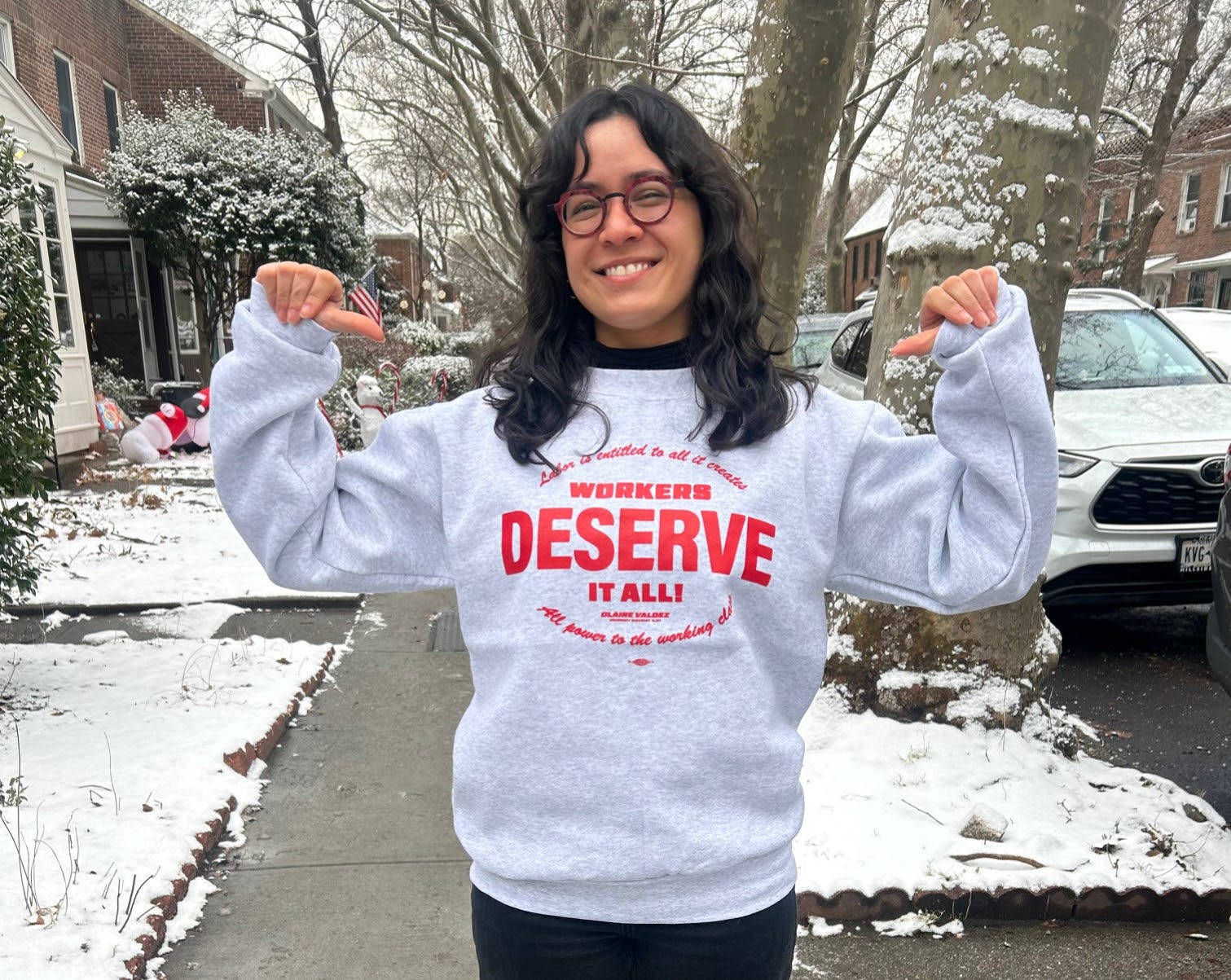
Zohran Mamdani’s successful run for NYC mayor last year made New York City’s DSA a legitimate political force. The group’s next big campaign is that of Claire Valdez, a New York Assembly member who is running for US Congress in New York’s 7th district, covering parts of Queens and Brooklyn. Valdez, a union activist, is endorsed by both Mamdani and Bernie Sanders. Her main primary opponent is Brooklyn Borough President Antonio Reynoso, a more mainstream progressive. Thus the Democratic primary will be a significant measuring stick for DSA’s ability to move safe Democratic districts left.
I spoke to Valdez about her (very good) labor platform, the politics of unions, the future of DSA, and the possibility of an AOC presidential run. Our conversation, lightly edited for length and clarity, is below.
How Things Work: You came up through the UAW, both as a member and then as an organizer. How did that shape your politics?
Claire Valdez: I moved to New York in 2015 to work at a really small museum in Long Island City. And like many arts workers, had pretty low wages, long hours, and I started looking for work and [got a job as a program assistant at Columbia University’s visual arts program]. It was in the interview process that I found out it was union. It was in some ways an accident. But I was looking for more time—and working at Columbia was the first time in my life I had a strict nine-to-five, no weekends or nights, a living wage, and hour-long lunch breaks. That was really transformative for me as a worker. Not having to work a second job. Knowing that if I needed time off, I could have it.
I remember the first time that I went to a union meeting. We were finalizing our contract at the time. It was a big meeting of 200 or 300 people in a big auditorium at Columbia. There’s all these people I’ve never seen before, and we’re all talking about what we wanted to see in our contract, if what we had in there was good enough. It was just the most democratic thing I had ever experienced in my life. And I wanted very much to get involved…
In 2022 I joined the bargaining committee and got really plugged in. Got a real crash course on how to bargain a contract. I was elected unit chair of our shop, and learned how to investigate grievances and be with workers in disciplinary meetings, and how to organize—and how to organize across pretty real political and ideological differences, too. When people hear that I organized at Columbia, they think that I organized grad students. I organized clerical workers, and call center workers, and dining hall cashiers. People come from all kinds of backgrounds. It’s a deeply working class union. A lot of people are there for 20 or 30 years. It has provided real stability and a path to the middle class for a lot of people.
Did that union experience motivate you to go into politics? Or were you a very ideological person before that?
Valdez: I, like many of my millennial cohort, was radicalized during the Iraq War. I think the difference was that the union gave me a place to put my anger and frustration and really use it towards productive ends. I’ve always been political. I just didn’t realize that actually politics is something you do, and not just something that happens to you, and you have to have a good opinion about. That it’s possible to change your circumstances if you organize with other people.
You have a robust labor platform. One part of it that jumped out to me is that you advocate for providing federal government funding for union organizing, which has been a pet issue of mine for years. I can’t recall ever seeing it in a Congressional platform. Even unions don’t lobby for it! What’s your vision for that?
Valdez: Right now, we live in a world where the government is supposed to be a kind of neutral arbiter in labor disputes. We shouldn’t be—we should be actively investing in people’s right to organize. We should actively be helping to support workers who are up against really entrenched corporate power, and this is one avenue for doing that. Organizing can be incredibly time intensive, and it can be expensive too. This is some small way to say, “We can help you print literature, and buy the pizzas, and pay for lawyers, and get your feet underneath you while you’re approaching other unions to help out.” Unions are strapped too. The task ahead of us is enormous. The vast majority of Americans do not belong to a union, even though a huge percentage [say they want to]. That’s a real crisis in American life, if people want to organize and they can’t. We should be addressing that crisis with a scale of solution that actually meets the moment.
We in the labor movement have been trying to reform labor law for at least 80 years. We have failed to do it, and the Democratic Party has failed to do it. What’s the political path you see to actually passing some of these reforms in the real world?
Valdez: I think it’ll be hard… but this is really a moment when the labor movement has real popularity in the United States, and there’s real salience in people’s lives. I think people are working more than they’ve ever worked before. Work encroaches on every single moment of our lives, even after we clock out. The threat of AI is really present in people’s lives. There are mass layoffs at Microsoft and Google. Thousands of people are losing their jobs right now and being replaced by AI.
I think people are feeling a squeeze right now that goes beyond affordability, and is hitting at their sense of control over their lives. We need the labor movement to help us with this. We need unions to actively engage in this idea, and have a vision for federal policy that makes it easier for people to get into unions.
2026 will also be a year where there are a lot of progressives running all over the country, a lot of challengers to incumbents. This could be a real sea change. I’m hopeful that a lot of us win, and we can demonstrate that there’s real momentum for this, and that we shouldn’t be taking unions and the labor movement for granted. Unions are not a turnout machine for the Democratic Party. They’re like a central pillar of American life. I think they’ve been taken for granted too long by the Democratic establishment.
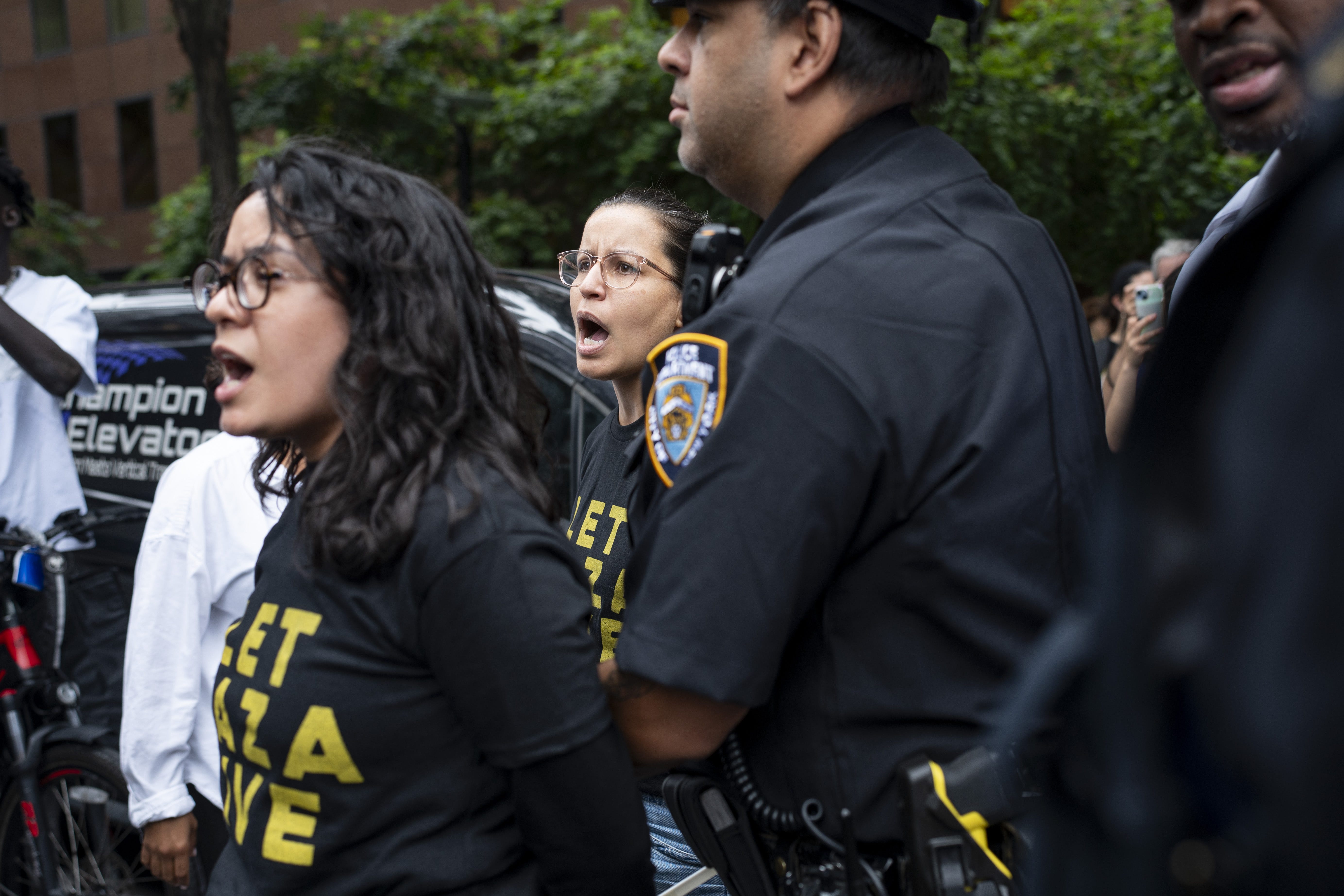
Ironically, “Democratic establishment” is where most big unions tend to land, electorally. There are some exceptions, but most didn’t endorse Bernie when he ran for president, most didn’t endorse Zohran until he won the primaries, and most are not endorsing you in your primary either. What’s it going to take to convince the union establishment that the left is not just on their side, but worth going out on a limb for?
Valdez: Yeah. It’s a great question.
I don’t know the answer.
Valdez: Winning helps. We need to demonstrate that we can win, and that we have a real vision for a working class agenda that is in partnership with them. Building a relationship with the labor movement is also part of that task. A lot of these decisions are relational, they’re not really ideological. That is understandable in a world where labor might be on its back foot, facing real challenges. I think when we win we can demonstrate there’s a real constituency for the vision we have.
After Zohran’s win, it seems like DSA is being treated as much more of a serious political force. But during his campaign, his association with DSA was used to try to smear him in a way that reminded me of people who said that because JFK was Catholic, the Vatican would be controlling America. How do you explain your relationship with DSA to voters?
Valdez: What people are coming to understand about DSA is that its power comes from its democracy. It comes from the fact that members have a real say in the direction of the chapter, in the campaigns we take on, in developing strategy… Everyday people who are members of DSA who might not have political science degrees or have read Capital can engage in this process, and help strategize towards what we’re going to be putting our resources into. That’s really powerful. This is why my union really grabbed hold of me. It’s like, “you actually are a smart, strategic, political person, and we need you to help us.” That’s profound democracy that most people don’t experience for most of their lives. That’s why people come out to canvas. That’s why people spend 20 hours a week of unpaid labor doing work to organize for trans right, for bodily autonomy, for a random Assembly campaign. It’s just so meaningful when you tell people that you trust them and believe in them, that they have a lot of power. That’s the role of the labor movement too.
Have you thought ahead to a day when DSA can be a legitimate electoral alternative for Americans nationally, even outside of blue cities?
Valdez: Zohran’s campaign and election, I think, has real reverberating effects around the world. People are starting to see DSA as a viable political vehicle. I think some people are frightened by that idea, but some people are really excited by it. I would like to see us develop a political program nationally. It will be harder in some places than others. But as Zohran continues to govern, as people continue to see that a democratic socialist can run the largest city in the country, there will be an increasing kind of faith and understanding that democratic socialism equals good governance and real, material improvements for working class people.
You’re running for Congress. There’s a long term trend of Congress becoming less powerful, and under Trump, Congress has been almost completely sidelined from political power. Does that worry you? It seems like even Democratic presidents will have the same incentives to marginalize Congress.
Valdez: Unfortunately, I think that’s true. There are movements to expand Congress. Congress hasn’t been expanded since the [19]20s, even though the population has grown. That’s one thought and idea. I think this is also why I believe so strongly in the labor movement. Real power exists in working people, and when they organize together they can change the balance of power in the United States. We’ve seen that before throughout history. That’s really the place where I want to see more power, taken more seriously, is the labor movement and working people. That’s why I’m running for Congress.
What’s your diagnosis for the rise of Trumpism over the past decade?
Valdez: It is a real failure to put working people at the heart of our agenda. People’s lives have gotten harder. Things are more expensive. Our wages have not gone up. The Democratic Party has not really presented any vision for how that can and should change. I think a lot of it has to do with their capitulation to a donor class and to business interests over the base of the party, working class people. Trump won in 2024 in large part because of the genocide in Gaza, and the fact that the Biden administration wrote blank checks to the Israeli government to bomb refugees, and we all saw it happening—and it continues to happen—in real time. The Democratic Party was unwilling to acknowledge that and acknowledge our absolute complicity in sponsoring it. A lot of people just stayed home in 2024. In my district, a lot of people left the top of the ticket off their ballot. We can’t ignore the fact that the Democratic Party also helped sponsor a genocide. The Trump administration has continued to do so as well. That’s just the most recent outrage that working people had to witness and endure.
Would you like to see AOC run for president?
Valdez: Yeah. That would be fun.
Do you think she will?
Valdez: I don’t know. I think either Senate or president, she could do either one.
Bernie running in 2020, and Zohran running in 2025—just having someone at the top of the ticket who has a real message and can communicate it effectively—is such a game changer for everything down ballot, for changing the electorate. It can be so helpful for the movement.
BONUS: Five Question NYC Lightning Round With Claire Valdez
Best place to hang on a summer weekend day in New York City?
Valdez: Gotta be in my district. I love McGolrick Park, in Greenpoint.
What’s your favorite restaurant in your district?
Valdez: It’s a bakery, Masa Madre in Sunnyside. They have the best conchas I’ve had in my life.
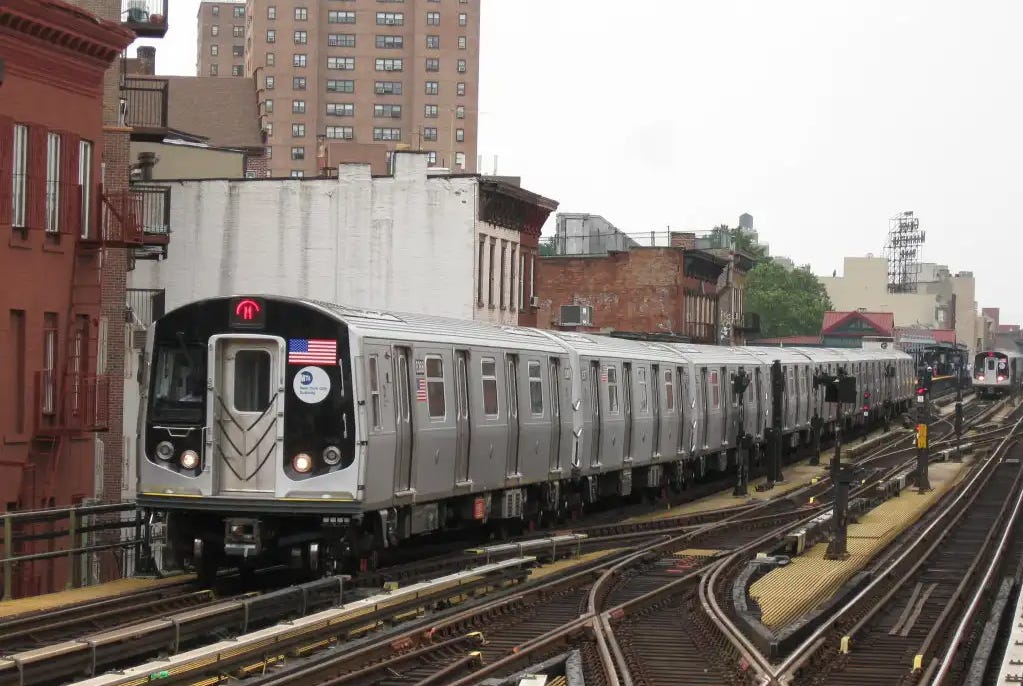
Best subway line in New York City?
Valdez: It’s not actually the best, but it is my favorite: the M. It’s my train line. It has a beautiful view of the city. I’ll say it, I don’t care.
Which has better rappers, Brooklyn or Queens?
Valdez: I live in Queens, I’m just gonna say Queens. [DEFENSIBLE BUT DEBATABLE]
What’s the coolest neighborhood in Brooklyn or Queens?
Valdez: It’s gotta be my neighborhood, Ridgewood. Which is also the platonic ideal of Queens and Brooklyn.
[Unusually for a politician, none of these answers are preposterous.]
Also
Previously, in How Things Work NYC politico interviews: Zohran Mamdani; Julie Su; Brad Lander.
May Day is this Friday. Have YOU made a plan to participate? Find an event near you. Don’t just sit there being all, “People should rise up.” Hit the streets!
Earlier this week, I published my brief annual State of How Things Work report. The short version is that we are writing a bunch of cool shit and it would be great if we could survive and thrive throughout 2026 and beyond. Support independent media: Become a paid subscriber today. Six bucks a month or $60 for the whole year. Cheap!
"It seems like even Democratic presidents will have the same incentives to marginalize Congress."
While this has certainly been true at times in the past, I wouldn't assume it's necessarily reflective of the future – particularly if AOC runs, as you noted and which I suspect is a likely given. (Too soon to know if she'd prevail in the primaries, however.)
We *need* a non-dysfunctional Congress to right the ship, one that can work collegially to pass desperately needed legislation (e.g. restoring Medicaid funding) and eliminate Trump 2.0's insane excesses (e.g. DHS's $191 billion budget and our billion-bucks-a-day misadventure in Iran). I truly hope our ultimate presidential candidate understands that reality intrinsically.
"What people are coming to understand about DSA is that its power comes from its democracy."
I completely agree that this is the right message to be delivering, both in Valdez's own race as well as in general. Aside from some Boomers and older Gen Xers raised on a steady diet of Cold War angst, the Pavlovian distaste for all things "socialist" is dying out, much to The Wall Street Journal's likely dismay. Mamdani divined that reality early on, and used it to propel record turnout among Zoomers and younger millennials.
We obviously need massive corrective action: while there's no undoing Trump's actions, there's plenty that a Democratic-controlled Congress & White House can do to ensure no future tyrant abuses them. If Trump's accomplished anything, he's exposed the cracks in the system as it stands today; our next president's job will be to fix them.
Subscribed. Finally, someone willing to fund organized chaos officially.