
Against Self-Fulfilling Prophecy
The prize for asking for less is less.

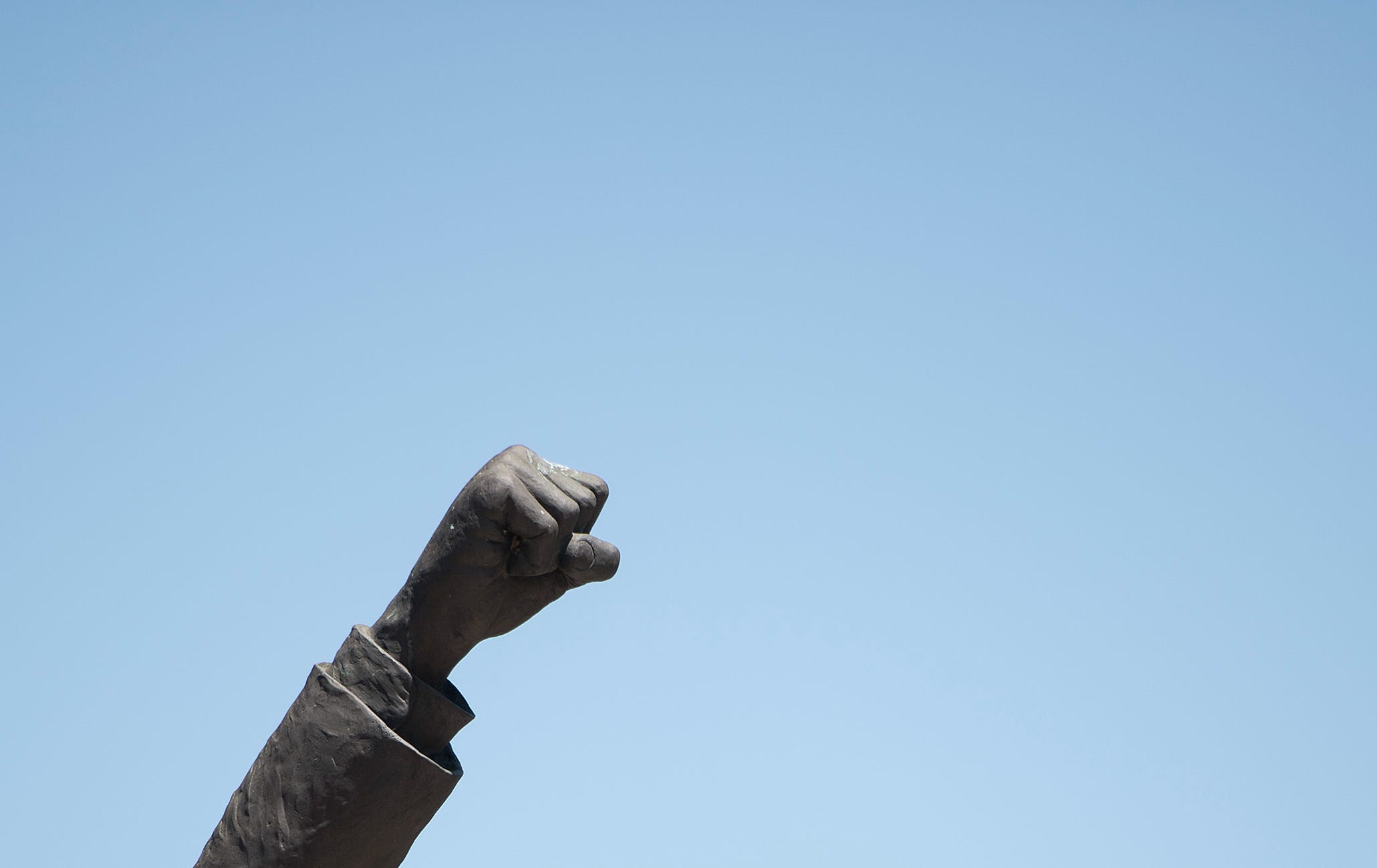
The most salient quality of the future is that it hasn’t happened yet. It is a book whose pages are unwritten. Its authors will be those who decide to work to make their will into reality. Those who just lay back and try to guess what will happen have made their own choice, to be the audience of what the others try to enact. There is nothing especially wrong with this choice except for the fact that many who make it do not realize that they could have made a different one.
Predicting the future is so alluring precisely because it is impossible. Mathematicians can tell you that predictions grow more complex with the number of variables involved. When we are dealing with the real world, the number of variables, and therefore the number of possible outcomes, branches quickly towards infinity. Our most powerful supercomputers can only forecast the weather for about a week before it becomes unknowable. And that involves only quantifiable physics. Add in questions of humanity’s wild hearts and minds, and the task of even knowing what the variables are transcends our grasp.
Sitting around and making educated guesses about the impenetrable future is an engaging pastime, a natural playing field for intellectual showoffs. Yet, unless you are guessing about things that don’t matter too much, you will quickly be faced with the question: “Wouldn’t it be more useful to spend your time trying to make the future that you want, instead of amusing yourself to death trying to prophesize what those who do decide to make the future will do?” You will, after all, have to suffer through the future that comes, whether you like it or not. Might as well do whatever you can do to make it better.
Woe to the misguided prophets! They wallow in a world that others create. No prophecy is so tragic as a self-fulfilling one. Whether you believe that you can change the future or not, you are certain to be correct.
The future comes for everything, but politics is where this choice to watch or to act manifests itself most clearly. In America, a land where the tendrils of capital are always working to strangle democracy once and for all, there is much to be gained by convincing your political opponents that the change that they want is hopeless, while at the same time working feverishly for change in the opposite direction. Politics is a struggle. Every single activist or radical or inspired seeker of progress that you can shift into chagrined moderation is less tension on the rope in a game of tug of war. This basic fact is what makes the self-satisfied moderates who counsel asking for less as an act of wisdom so absurd. They are—in a real, not metaphorical way—doing the work of the enemy. They are shifting the window of possibility in the wrong direction and pretending that they are doing nothing but observing natural forces. Wrong. We are the natural forces. We try to pull the world in our direction, or watch others pull it the other way.
There is nothing as dispiriting as someone who has talked themselves out of their own beliefs because they fear they aren’t achievable. These people’s pessimism signs them up for a diminished life. Polls tell us that most Americans want a better, fairer, more just country. They want healthcare for all, they want to tax the rich, they want to fight climate change, they want to give more foreign aid, they want to have a union. Yet the political system delivers none of those things to them. It’s trivial to say that that is because moneyed interests have bought power in politics; yes, they have, but that is no different from saying that one team is always trying to win over another. What are the mechanisms that allow the interests of the rich to overcome the interests of many, many more regular people? How does the accumulated power of all of those people who want a better world get neutralized? How are they prevented from organizing themselves into what would be an unstoppable force towards humane progress?
The rich cannot fight everyone. They have to convince everyone not to fight. What they need to inculcate in the public is not a sense of rage, but rather a sense of futility. They are like a prison guard with one bullet. Their material weapons cannot overcome the numbers against them; their real weapon is the idea that they create inside every single mind that overcoming them is too risky, too foolish, too unrealistic.
The most popular national elected official in America is Bernie Sanders. Yet when he ran for president, he could not defeat his less liked, more institutional opponents. During those campaigns, from people that I knew to have strong progressive values, I heard time and again the explanation that Bernie simply could not win, and that therefore supporting him would be an indulgent fantasy, a waste of time and money and a vote. On the opposite side, a candidate who was objectively much more extreme and whose success was much more far-fetched by the standards of conventional wisdom inspired a cult of personality, and won. Twice. After watching this for a full decade, many Democratic voters and many Democratic strategists steeped in the religion of triangulation and centrism have still failed to update their beliefs about what is and is not possible. This is a shame. It is a shame that has caused great human suffering within America and around the world. And it is made more shameful by the fact that it could be different if more good people just had the courage to vote for their own values.
Fortunately, the future is a renewable resource. There will be at least one more election. We get another chance. The aperture of possibility is widened. There is organizing, and there are candidates, and the kind of world that you want to see is there, on the menu, somewhere. There is no reward for those who volunteer to forgo their right to try to make their vision of the world come true in full. The prize for asking for less is less. Understanding that, alone, could change so much.
More
Related reading: You Can’t Solve Half a Problem; Two Visions; Do What You Believe In.
The publication you are reading, How Things Work, exists wholly and completely due to the financial support of readers just like you. Paid subscribers enable us to keep publishing and to remain paywall-free, so that anyone can read, regardless of income. Help keep us going by clicking the button below and becoming a paid subscriber today. It’s not too expensive and it supports real independent media. Thanks for being here.
It's like a game of football, (real football), where one team, (GOP), is made up solely of attackers, and the other team, (Dems), is made up solely of defenders.
The Dems spend the entire match, in their own half, getting battered by the GOP. Defending an illusional status quo. Never threatening their opponents goal. And never realising their opponent has little defence! Whenever they get the ball, they just kick it straight back to the other side.
OK... that's a stretch - but once I got going with the analogy, I couldn't stop. :-)
"The prize for asking for less is less. Understanding that, alone, could change so much."
This is so true in just about every facet of life.