
What Polls Do and Don't Tell You
Does the public oppose its own interests? Really?

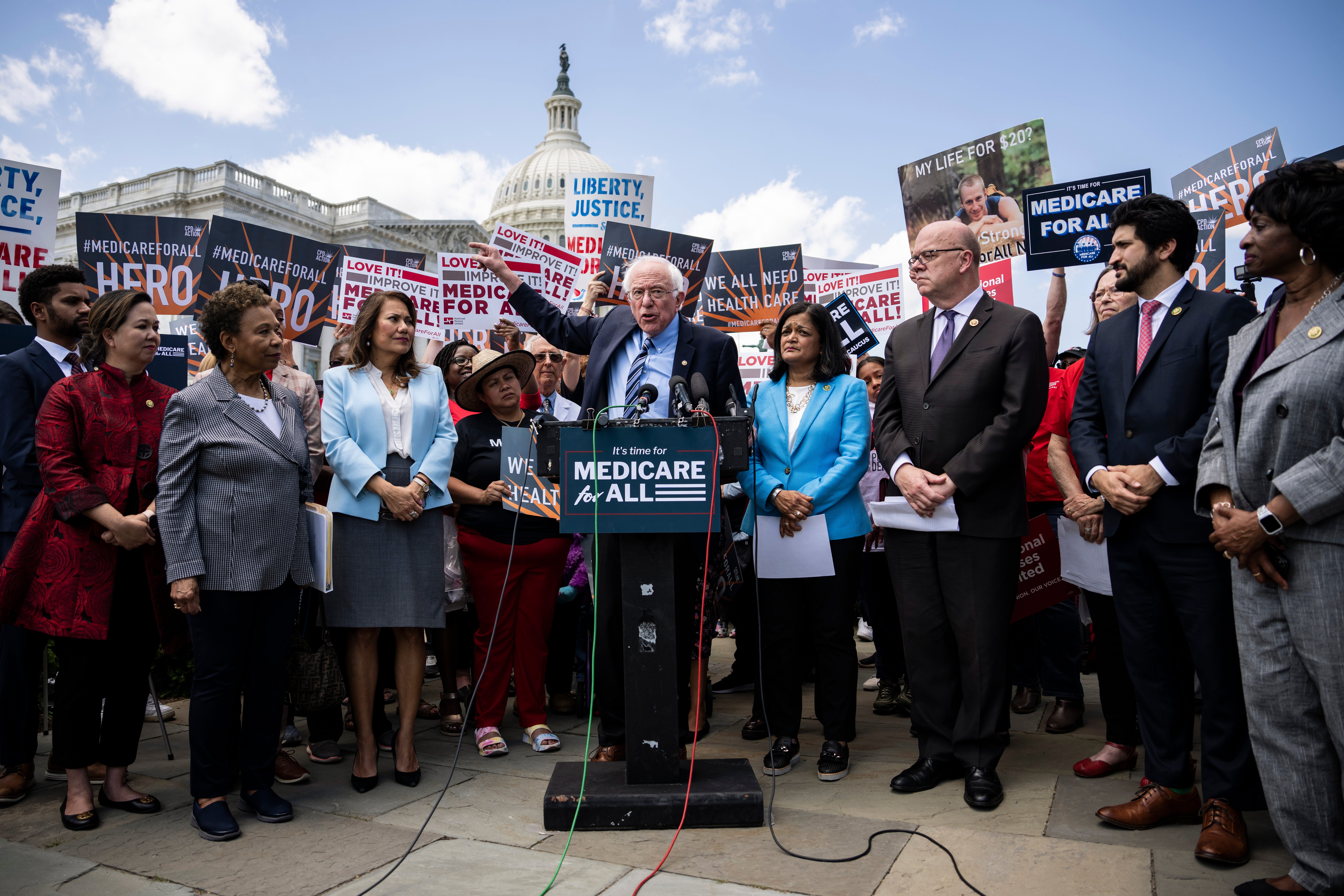
Everyone in America is not a policy expert. In fact, a tiny minority are. It is hardly worth arguing over this fact. Consider any number of socially beneficial policies: Environmental regulation, financing affordable housing, sustainable land use, skillful foreign diplomacy, you name it. Do we expect these policy choices to arise spontaneously from public opinion polls? Do we expect to call a thousand Americans on the phone and then say “majorities of Americans expressed overwhelming support for humanitarian interventions in South Sudan, tightening restrictions on glysophate use in agriculture, and striking a grand bargain over reducing Colorado River basin water use by allotting each of the following states 17.5% of the total acre feet per year?”
No. We do not expect that. Anyone who is genuinely interested in finding and promoting beneficial government policy understands that while the general public may have broad values or intuitions, the process of enacting good policies actually involves first developing those policies based on deep knowledge and expertise, and then undertaking a campaign to educate and motivate the public to support the policies. Then there is an organizing campaign to educate and rally the public around the ideas. Most of the time, policy debates play out among experts, and the public finds out about them when this debate among the people who truly understand the issues has been more or less settled. This is not inherently bad. Virtually all specialized knowledge arises from this sort of dialogue among experts in the field. We don’t use public opinion polls in, you know, archaeology either. “Hey Jim from Omaha, quick polling question, how old do you bet the sarcophagus that they just dug up in Egypt is?”
In order for this process of “experts trying to discover the most beneficial policy solutions” to be benign, it must be conducted in good faith. That element, of course, is frequently corrupted by our political system. The experts all agreed about climate change, sure, but you get Exxon’s lobbyists involved and suddenly half of the political establishment has magically become climatologists and they must warn you that they are quite skeptical of the evidence. And so on. I’m not telling you anything you don’t know here. I say this only to make the point that when you see someone waving around a public opinion poll in order to argue against a policy that would benefit the public, there is good reason to ask whether that person is operating in good faith.
Which brings me to “Searchlight Institute,” a grandiose name for a group of professional Democratic centrists and former John Fetterman staffers who have started their own little think tank. (Side note, but adding “Institute” to your name is a good way to be taken more seriously than you deserve. - signed, the How Things Work Institute.) Searchlight is essentially a blog of sub-Yglesias-level quality that takes in money from donors and produces news stories about why the left is wrong and Democrats must embrace moderation. There is an entire industry of this sort of thing in Washington. What a job! At least they are fighting the good fight against their own unemployment.
Yesterday, Searchlight published a policy brief on what they call “Health Care Unity.” The purpose of this brief is to argue that Democrats should not pursue Medicare for All. This issue has been heartily debated by many Democratic politicians, experts, and writers for years. What does Searchlight bring to the table that is new?
They don’t just write paragraphs. They make their case in bullet points, like this.
And this.
Dumb people love bullet points. Especially if there is also bolding.
But I am selling them short. The heart of Searchlight’s argument is not that Medicare for All is bad policy; it is that the public doesn’t want Medicare for All. Please note that these are very different things! In order to advocate for a host of more modest health care reforms, Searchlight reveals their polling, the heart of which is this:
Given the complexity of the American health care system, it is not surprising that people’s views on diagnosing the problems and finding solutions are complex, too. There is a “dislike the system but like my plan” dynamic at play: Although 76% of Americans are either very satisfied or somewhat satisfied with their own health coverage, 59% are either very or somewhat unsatisfied with the health care system as a whole.
More Americans (34%) report trusting private insurance companies than the government (19%) to provide health care. In a recent survey conducted between Searchlight and the new media organization Zeteo, an overwhelming 70% of voters say they would rather keep their current health insurance than opt-into a government-run national health plan similar to Medicare.
While a majority of respondents feel that the government has a responsibility to ensure everyone has health insurance coverage (57%) and receives basic health care services (60%), opinions are divided on how the government should meet this responsibility: 24% think that there should be a single national health plan, while 30% feel there should be a mix of public and private plans, and 26% feel the government should provide coverage to the poor and to seniors.
The argument against the Democratic Party pursuing Medicare for All, in short, is that in a public opinion poll, majorities of Americans did not say they want to “opt-into a government-run national health plan,” and that there is no consensus majority view among Americans for a specific policy prescription that would ensure that everyone gets health care, which is a thing that a majority of Americans do support.
The rhetorical sleight-of-hand that you may have picked up on is: Who the fuck expects the general public to spontaneously coalesce around a particular health care policy plan, in a vacuum? People do not even understand how to get their own insurance company to pay a doctor’s bill. People don’t know how to find out the price of a health service. The entire experience of accessing and paying for health care in America is purposely confusing. Health care policy is one of the most opaque and convoluted areas of public policy. I am a professional political journalist and I can hardly figure out how to ask my health insurance company to pay for something. Most members of the general public—obviously! naturally!—do not have a deep well of health care policy expertise to draw on that they will use to offer sophisticated policy solutions on demand to telephone pollsters.
Polls are used in political discourse when they serve the interests of the groups publishing the polls. When they don’t, they are not used. There is an entire industry of political pollsters that can use various wording and targeting techniques to produce desired polling answers on demand. I am not saying that is what Searchlight did. I am fully willing to accept their poll is of high quality. But what exactly are we supposed to learn from the fact that a majority of Americans—who have never known public health care, who can hardly imagine what it would be like for all citizens to access health care for a low cost, and who must cling tenaciously to their own health insurance plans like a life raft in order to survive—do not tell a pollster that they support Medicare for All? If you imagine that we are all good faith participants in a debate over the question “How do we best help people get good and affordable health care?”, does this poll then lead us to conclude that Medicare for All is an idea that should not be pursued by the more progressive of our two political parties?
Of course not. That would be an absurd conclusion. If we were all operating in good faith here, the only conclusion to take from this polling would be that it provides mildly informative data on the starting point of our organizing campaign in favor of Medicare for All. As someone who would like to see Medicare for All in America because it is the standard in all the advanced world, except for here, and because it is obvious that our insanely convoluted health care system causes infinite misery in order to enrich a handful of shareholders in private companies, what I take from those poll numbers is: A majority of Americans have the intuition and the desire that everyone should have health care, and that is a good starting point for a push in favor of Medicare for All.
If you instead take that polling and argue that Medicare for All “is not the path forward,” as Searchlight’s Adam Jentleson does, it means that you have started this entire process with a position to advocate (namely, “I oppose Medicare for All”) and then tried to frame the poll data in support of your position. There is nothing wrong with that per se, unless you are trying to portray yourself not as just another ideological actor in an ideological debate, but rather as a good faith interpreter of the political landscape who is giving good faith advice based on a good faith desire to achieve the most beneficial policy outcomes for all Americans. Like think tanks do.
If, theoretically, you started a think tank that got a bunch of its funding from, for example, hedge fund billionaires who have made significant investments in the private health care industry and are predictably uninterested in having the Democratic Party unite around Medicare for All, that might be a situation where you would be a less-than-good-faith participant in the public debate around Medicare for All. That could in theory be an instance where you would be motivated to search out polling numbers that could be framed to argue for a lesser health care reform agenda on the grounds that the public just doesn’t support this Medicare for All stuff. It’s right there in the numbers!
It’s not that any of this is surprising. It would just be nice if we could be more precise in the ways that we think about who is offering polling evidence on various issues, and why, and whether that polling is actually telling is what it is purported to tell us, and whether we should be looking to public opinion polls to guide us to good public policy stances in the first place. Or whether it would be okay if we just figured out the way to help the most people and then did our very best to accomplish that. The Republicans don’t want to help people. If you allow the Democrats to choose as their starting point in policy negotiations “We don’t want to help people too much,” we are not going to get too much. Unless we are paid by hedge fund billionaires.
More
Related reading: What Is Centrism?; People Don’t Know Anything About the Government; How to Think About Politics Without Wanting to Kill Yourself; Don’t Take Advice From Your Enemies.
Nate Wendt is a union activist from South Dakota who is currently fighting cancer. I met him a few years back at Labor Notes and he is still fighting the good fight. He is raising money to help with his recovery. I’m sure that anyone who is able to donate here would be greatly appreciated.
Thank you for reading How Things Work. This publication has no billionaire donors, and it has no paywall, so that everyone can read it regardless of income. How is this possible? It is possible because readers just like you say to themselves, “I am willing to kick in a modest amount to become a paid subscriber, so that How Things Work can continue to exist for everyone to read.” It’s a nice system. And it works for everyone as long as readers like you who have a few extra bucks take a quick second and click that button below to support us financially. A small minority of readers pay to keep this place going for everyone. Can you join them? It would be great if you can. Rock on, my friends.
I don't trust an "institute" of folks who advised John Fetterman
I was grateful to see you organize your “More” section (at the end) into nicely digestible bullet points.
It really helped this dumb reader better understand the distinct references that you so graciously provided, as opposed to mixing them all up into a glop of a paragraph, where subjects are too often buried.
Thanks!