
On the LIRR Picket Line
Fair wage! Good for you! Good for me!

Bruce Springsteen played Madison Square Garden on Saturday. Bruce Springsteen! Madison Square Garden! Every upwardly mobile white middle aged couple in a fifty-mile radius was seeking to make their way into the city for date night with The Boss. Standing on Seventh Avenue and 33rd street under the watchful eye of an Ariana Grande for Swarovski billboard, you could watch them all stream by, holding hands, waving on their friends, ready to celebrate their good fortune. In they came. From Jersey! From White Plains! From Westchester! And, oh yes, from Long Island!
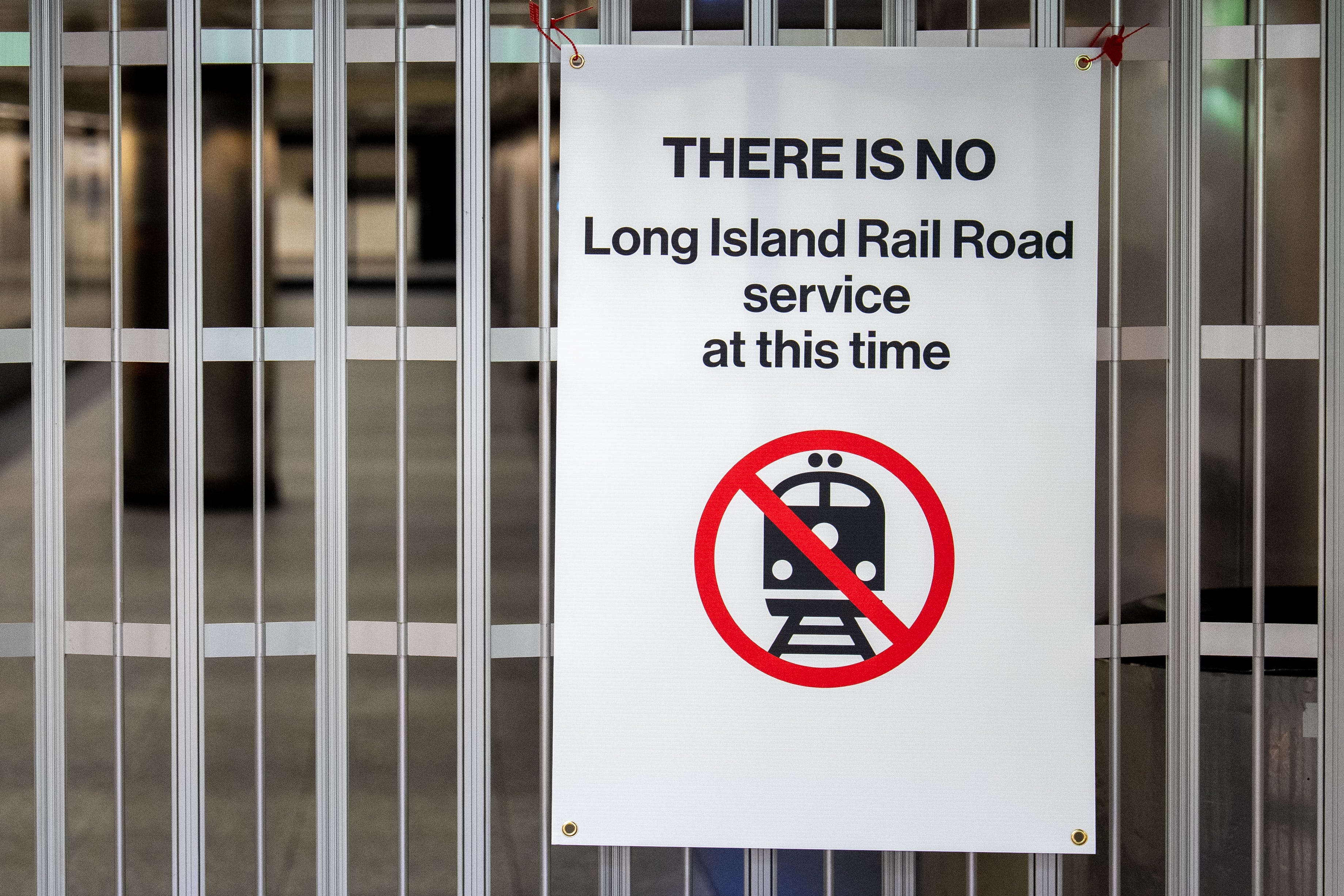
It was a perfect night to launch a Long Island Railroad strike.
More than 3,000 LIRR workers from five different unions are now on strike, for the first time in more than 30 years. Nothing prompts angry denunciations from the city’s reactionary media outlets like a public sector strike, particularly one involving blue collar workers who make six figure incomes. The very concept offends the most basic values of the sort of person who owns the New York Post. Rather than descend into the muck of manufactured anger, I prefer to take a big picture view: Union power is rare; here is an important economic chokepoint that is subject to union power; these workers are using that union power to get themselves the best deal that they can; strikes that successfully demonstrate the power of organized labor are good.
At issue in the strike is a relatively small gap between the raise percentage requested by the unions and the raise percentage that New York state is willing to pay. Because the LIRR workers are subject to the byzantine bureaucratic demands of the Railway Labor Act, they can’t just strike willy-nilly; this strike comes after three years of navigating successive government boards and mediation processes.
On Saturday night, a small group of strikers huddled with picket signs outside of Penn Station’s soaring, pointy glass LIRR entrance. They chanted about the head of the MTA: “Janno Lieber/ Has no clue!/ Fair wage/ Good for you!/ Good for me!” Occasionally, a passing Springsteen fan would give them a pumped fist in support.
Ian Parfrey wore a colorful bucket hat and a long goatee. He has been a locomotive engineer for the past 12 years. He drives trains from Grand Central out to Ronkonkoma and back. “We’ve reached the complete end of our labor process here. They’ve dragged out giving us a new contract for over three years now. The sticking point mainly is that we want a wage increase that at least covers inflation, and they’re offering a wage increase that does not cover inflation. Plus they want givebacks on top of that,” he said. “Some of these guys work jobs that are eleven-and-a-half hours long. They do four round trips, six round trips. They’re going back and forth like a pinball with barely time to eat or piss.”
“We are highly qualified and skilled people. We know how to operate any kind of train over every mile of track that this railroad has,” he said. “The training process for this job is over a year long. It consists of multiple examinations. Some of the written ones are incredibly difficult. We are very qualified. And, you know, frankly we deserve this money.”
George Barreto, another member of the Brotherhood of Locomotive Engineers, has been on the job driving trains for 28 years. He grew up in New York but now lives in Philadelphia and commutes to work five or six days a week. “On Thursday, I ran a train out of Grand Central to Babylon, after the fire outside of Penn Station in the tunnel caused a massive service disruption. I got a call from the railroad, an ASAP call, ‘How fast can you get in? Can you get to Grand Central at 1:30?’ So in a half hour, I was at work in the blink of an eye. My day changed from a relaxing day off to, I’m helping the railroad out of a disaster, just like that. It happens all the time,” he said.
“You’re never really ready to go on strike. It’s a hard thing. The fact is, anybody who ever says ‘I wish to go on strike’ has never actually been on strike. It hurts everybody. It hurts the passengers. It hurts the riding public that we don’t want to hurt, because they’re our friends, our neighbors, people we care about. The people who care about us. We’re not looking to inconvenience them,” Barreto said. “The amount of studying, the amount of dedication required to get these jobs is often insurmountable. When you do finally qualify, you’re working nights, weekends, holidays for years on end. Mistakes are punitive. They can come after you very quickly. In short, we’re responsible for people’s lives. You cannot make mistakes. It’s a little different from working in an office.”
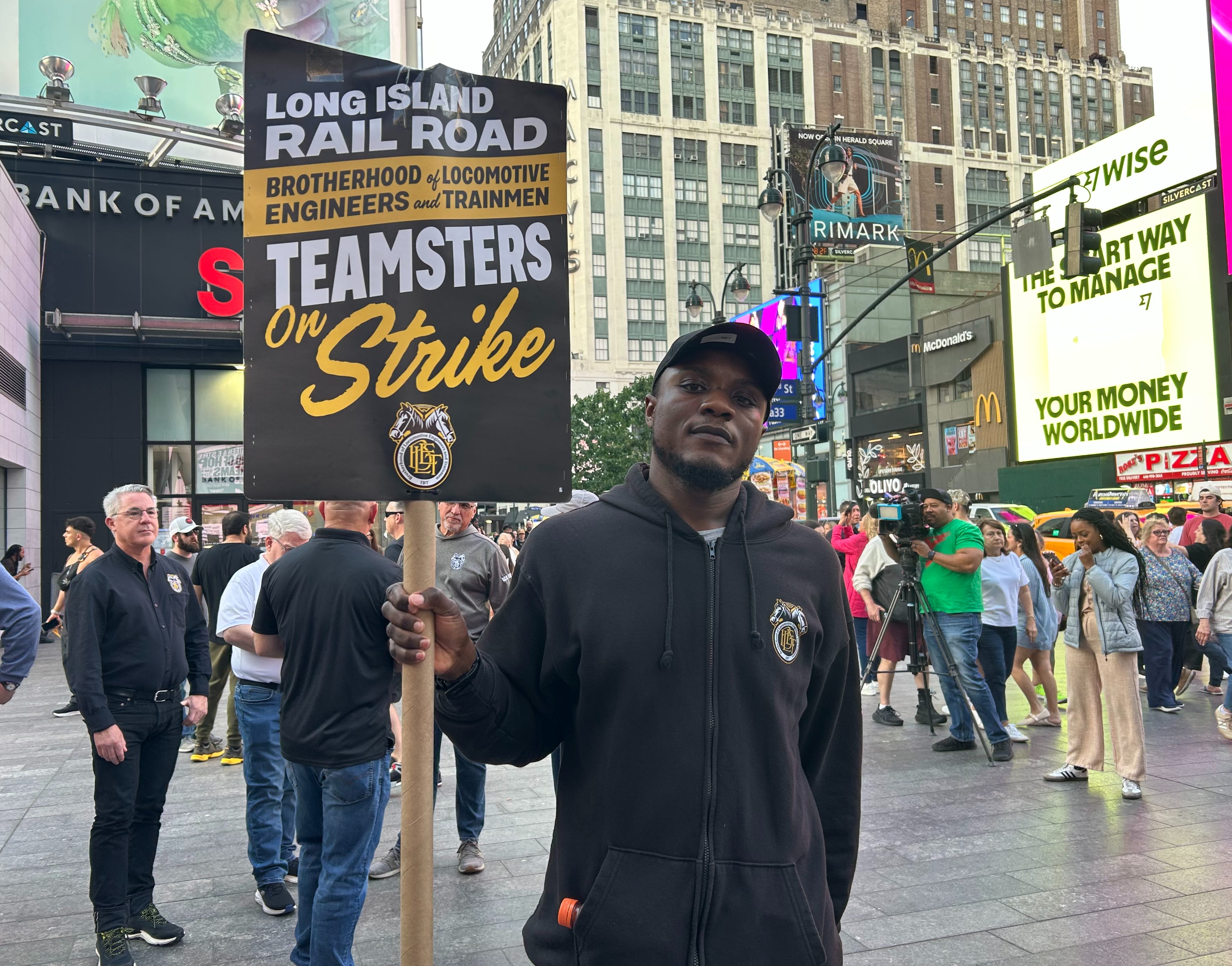
Some of the LIRR drivers are in the Teamsters. One of them was Ezekiel (whose last name I missed), who was hoisting a picket sign with one hand and passing out red Gatorades with the other. He had been a locomotive engineer for only a year and a half, making him one of the youngest people out there. When I asked him why he chose the job, he smiled shyly and replied, “I’ve always liked trains.”
Despite his energey on the picket line, “It kinda blows,” he said. “I know it blows for the commuters, it blows for me. Hopefully the Long Island Railroad comes to the bargaining table.”
A group of union officers, stout men in tight polo shirts, stood chatting off to the side. One was Mark Wallace, the BLET’s national president. He has a southern accent, unlike his extremely New Yawky members on the line. He narrated some of the years-long process that led up to this point.
“Two panels. Six arbitrators, that were picked by Donald Trump as a Presidential Emergency Board. We don’t like Presidential Emergency Boards either! We’ve had to eat out of a bad plate of food many times because of a Presidential Emergency Board. But that’s what’s always been the basis for the agreement we end up coming to. And [the LIRR] refuses to recognize that,” he said. “That was six independent arbitrators saying, ‘This is what’s fair to settle this.’ And this is the first time in our organization’s history—the BLET, we’re 164 years old—that we’ve asked for a Presidential Emergency Board. We normally would push back and say, ‘let us handle this on our own.’”
Though strikes under the Railway Labor Act are rare, this is Wallace’s second in two years—New Jersey Transit workers went on strike last year, over similar issues. So the union knows how fast the pressure will build. “The cost [of the LIRR strike] to the economy of New York, the comptroller said yesterday, it’s $61 million a day,” Wallace said. “That’ll pay for years of the increases we’re asking. They’re the ones that chose to go down this path.”
The mood was fairly happy out there, among the giddy Springsteen fans, with the Empire State Building looming in the background like a giant needle. But that was just the first day. Today is Monday, and the strike is still on, and that means that it is the first day that commuters are fucked. This can’t go on too long. There will be much grumbling. But look up Seventh Avenue and you will see Billionaire’s Row, and look down Seventh Avenue and you will see Wall Street. There are worse things than a few thousand well-paying union jobs for the people who drive our trains. Don’t be mad when union workers make a good living. Instead, get a union of your own, and join them.
More
Related reading: Vibe to Heal America; The Consequences of Bad Labor Law; To Unfuck Politics, Create More Union Members.
Here is a map of picket line locations for the LIRR strike, if you would like to join one in support. If you would like to organize your workplace and need help, contact EWOC. If you want to learn more about the labor movement and why it is so important to saving our miserable country from the fate that capitalism hath wrought for us, order my book “The Hammer” from an independent book store.
Labor reporting in the United States of America: There’s not very much of it. Not even enough to send a reporter out to all of the strikes that happen, even though we don’t have nearly enough strikes. Sucks! One small thing you can do to mitigate this is to support independent media of the sort that might write about labor issues. Media such as… How Things Work, the publication you are now reading. We exist solely because of the financial support of readers like you. If you like reading How Things Work, please strongly consider clicking the button below and becoming a paid subscriber, for just $6 a month or $60 for the whole year. We will hang together or we will hang separately, my friends. Thank you for reading.
"Don’t be mad when union workers make a good living. Instead, get a union of your own, and join them."
I lived in Flint, Michigan, for about 25 years from the late 70s to the early 2000s, and the amount of resentment towards UAW wages that I heard from non-auto workers was stunning. All I could say was "How do you think this works? What do you think happens if all of these people don't get paid this well?" Well, ultimately, and sadly, Flint found out.
For a country that celebrates *some* people making a lot of money, we sure seem to get upset when regular working people scratch out something decent for themselves.
If a union's demands were not based on reason, there would not be a strike. It takes guts and tons of support within the union to get to that point. All strikes are necessarily justified imho.