
The Consequences of Bad Labor Law
Savage inequality and long TSA lines.

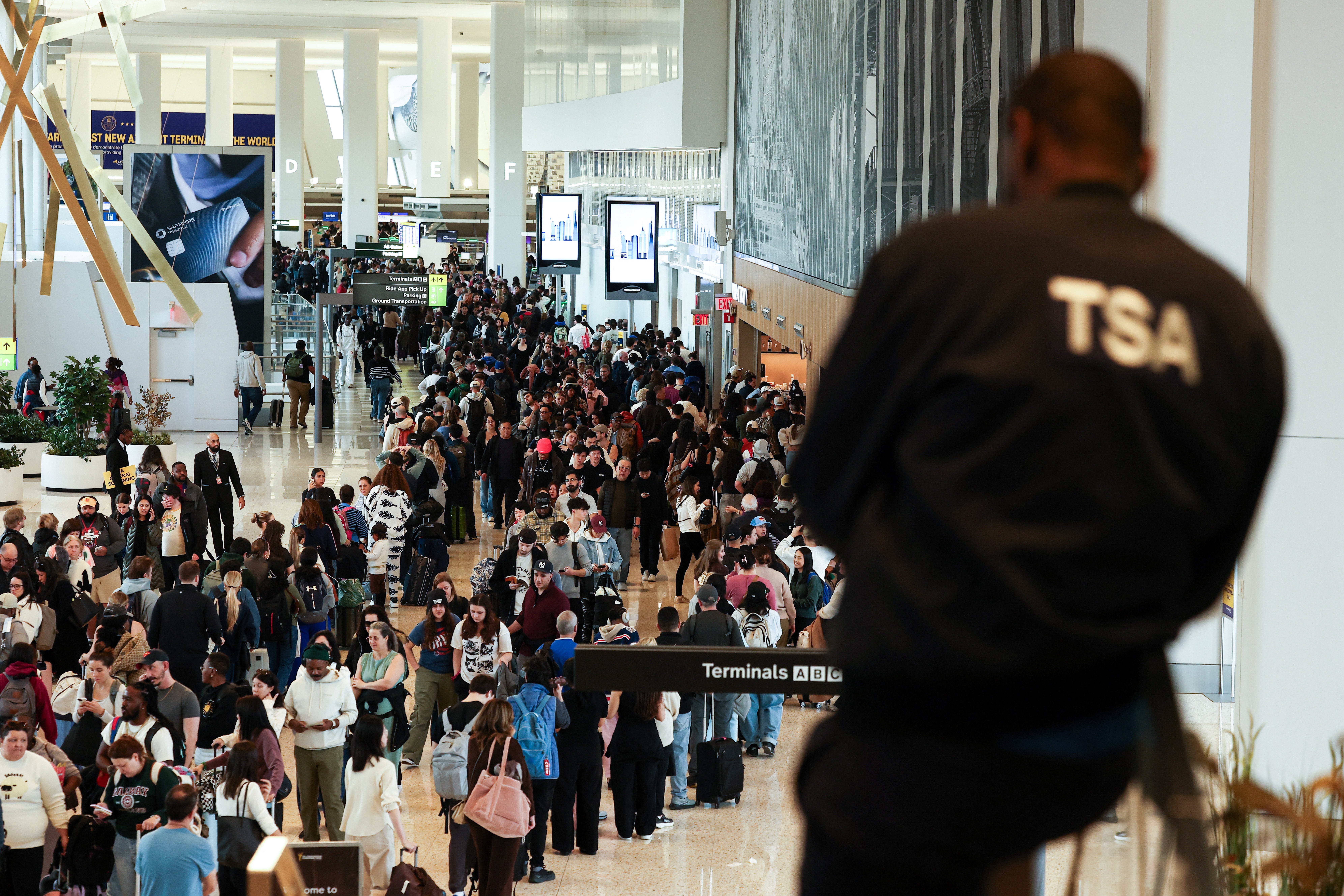
Today—as airline security lines stretch six hours long and untrained Playskool paramilitaries begin to incompetently pose as TSA agents—is a good time to think about labor law. Not necessarily all of its minutiae, which can be deadening to the mind and have the effect of making you not want to think about it at all. Just the important parts.
The main thing to understand about US labor law is that its primary function is to restrict the power of workers in favor of the power of businesses. The ideal of the law as a way to mediate the desires of both capital and labor in the interests of the common good has become wildly tilted towards the interests of capital. It exists, on balance, not to facilitate the existence of organized labor but to handcuff it. This is not a state of nature. It is a policy choice. And, when viewed in the context of a nation slipping dangerously into oligarchy, it is common sense that this policy choice will, in the long run, be proven to have been a very, very bad idea.
In a world where a few people have a ton of money and millions of people have very little, how do regular working people build power for themselves? By voting for nice politicians? Haha. No, what they do is they organize as workers, agree to act collectively, and force the rich people and their businesses to grudgingly bow ever so slightly to the workers’ demands. American workers figured this out more than 100 years ago, organizing and striking against violent and unaccountable industrial bosses in a legal and economic landscape that was much more Wild West than it is now. Labor law developed over the first half of the 20th century as a response to “labor unrest,” with the goal of creating “labor peace.” Workers had to get so organized, strong, and unruly that businesses and their government allies finally recognized that a legal framework that allowed unions to exist in exchange for restricting their ability to Fuck Shit Up was preferable to a perpetual, all-out war.
Unions can build power in any industry, but the most enticing place to build power is in economic chokepoints. If you can organize the workers in those key parts of the economy upon which everything else depends, those workers will naturally have a lot of leverage, because if they strike, everything grinds to a halt. Both a century ago and today, the most obvious chokepoint vulnerable to labor organizing has been the transportation industry. Shut that down and you paralyze a whole lot of other economic activity downstream of it, creating tremendous pressure to settle any strikes quickly. In the pure, deregulated state of capitalism that businesses claim to love, workers would immediately organize powerful unions in these vital industries and use that economic leverage to claim their fair share of profits, and to exercise power for organized labor more broadly.
And that is why the Railway Labor Act exists! After decades of punishing railroad strikes and general unrest, Congress decided that the industry was so especially important that it needed a labor law all for itself. Exactly a hundred years ago, in 1926, the act was passed laying out exactly how railroad workers could organize and strike and mandating a strict process for adjudicating disputes. (Note that the need for “labor peace” in this industry was so obvious that it got its own labor law almost a decade before the NLRA, the labor law for everyone else, was passed.) Over the years, the Railway Labor Act (RLA) was expanded to govern the airline industry, which is what railroads were a century ago: The vital backbone of America’s transportation infrastructure, which can cause chaos nationwide if its operations are interrupted for even a short time. Unions in industries covered by the RLA can’t just organize and strike for their contracts like everyone else. They must follow a Byzantine and highly regulated process to negotiate and proceed slowly up a prescribed ladder towards the theoretical possibility of a strike, overseen by government mediation boards the whole way. The key thing to know about the RLA is that it exists to put labor power in these industries in a straitjacket precisely because of the fact that unions in these industries would have so much power if they were allowed to act freely.
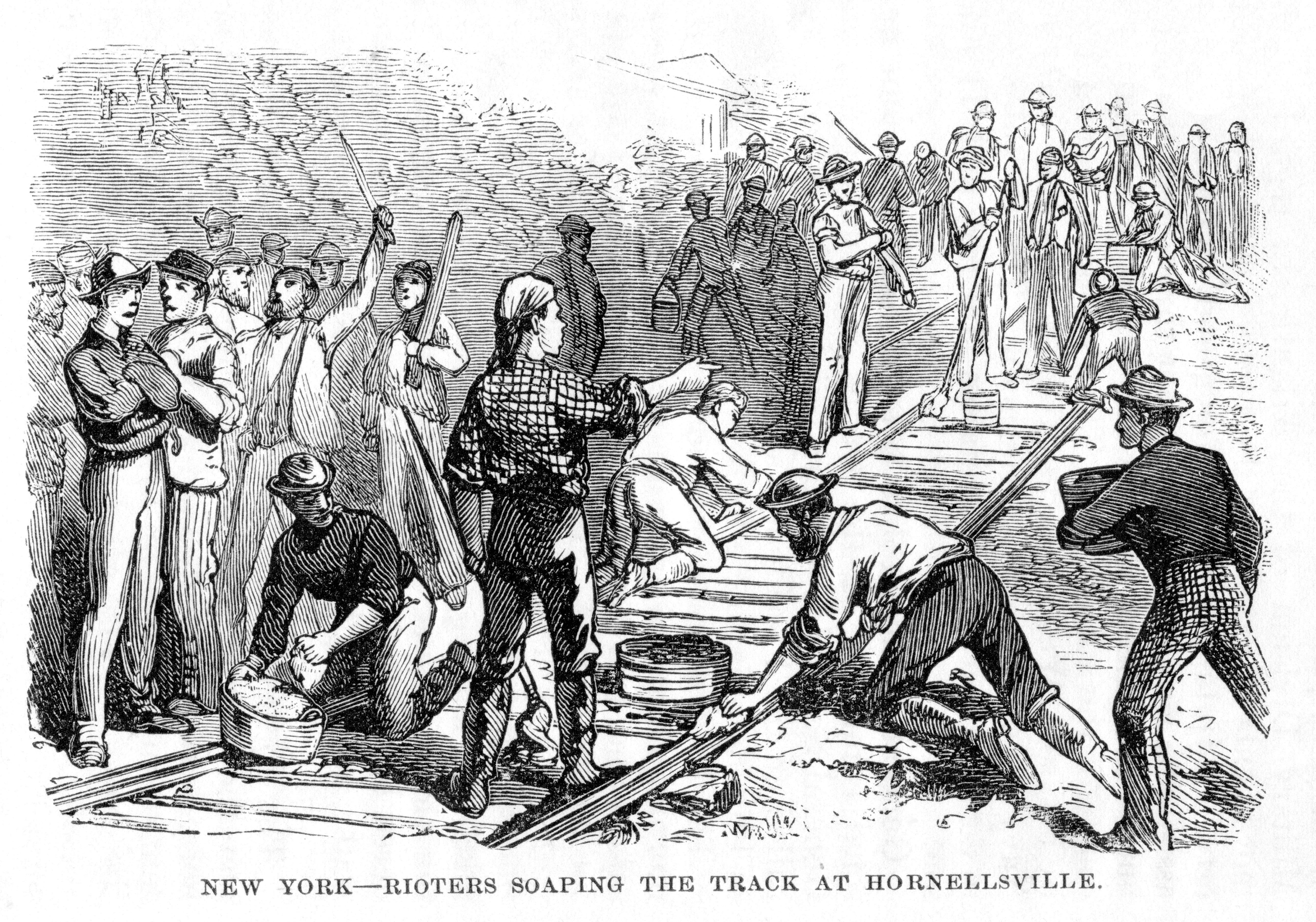
The result, today, is that the airline industry is highly unionized, but that those unions are quite restricted in their ability to strike or take similar direct labor actions. This is not to say the unions do nothing—airline pilots and flight attendants alike have pressed on the edges of the law with creative quasi-strike tactics over the years—but the penalties for flat-out illegal strikes can be ruinous. So these unions’ power, while considerable, is bureaucratized and channeled through a series of government checkpoints that ensure that they are never allowed to really flex their muscles in a way that would enable them to reap the benefits that their position in a key mode of the economy should theoretically make possible.
The government’s commitment to prioritize the smooth flow of commerce over labor power is, by the way, completely bipartisan—you need only think back to Joe Biden, the most pro-union president of my lifetime, quashing a potential national railroad strike in 2022, a decision fully in line with precedent. A century ago, when labor law was first being written, its creation felt like a victory to many unions. It was seen as the fruition of decades of fighting in the streets, an acknowledgement that union power had grown so strong that it was better for everyone to build them a legal and regulated seat at the table with business. Yet in the decades since then, whatever balancing function the law originally served has been lost. Businesses’ successful assault on the foundations of union power has turned that seat at the table into a prison. The idea was that the government would be a fair referee of labor and capital’s disputes, and that would be better than all of us splitting one another’s heads open. But capital proved to be adept at buying the referees. Today’s corporate legal assault on the very existence of the NLRA is just the final coup de grace in a long perversion of what labor law was supposed to be in the first place.
Note that the equal and opposite force of labor law should be antitrust law. If America is determined to use labor law as a way to restrict rather than facilitate worker power, then it should also (if it wanted to prevent the total corporate capture of our economy and government and subsequent slide into oligarchy) be using antitrust law as a way to restrict the tendency of corporate power to consolidate and grow via monopoly. I would like to see a version of labor law dedicated to protecting and enhancing, rather than restricting, worker power—but until we get there, any idiot can see that we must, at the very least, have tough antitrust enforcement in order to have any hope at an economy that accomplishes an equitable distribution of resources in even a minimal way. This is not a leftist wish so much as an enlightened capitalist nod to reality. If you want to prevent an inequality crisis so acute that it threatens the golden goose of American capitalism, you can maybe either restrict the power of workers to claim their fair share of the economy, or you can allow corporate power to consolidate according to capitalist logic. But you certainly cannot do both.
We are doing both. Doing both creates an unsustainable power imbalance. Which is exactly where we are today. Besides the general crisis of oligarchy, corrupt government, and punishing economic inequality, we have the specific issue of gridlocked Congress, unpaid TSA agents, and a faltering airport security system being plugged disingenuously with the president’s private racist army. Imagine an alternate reality in which the TSA workers had a real union and the right to strike. Every single part of our situation would be different. Imagine if airline pilots and flight attendants and mechanics could strike as well. Do you think that Congress would be so cavalier with its government shutdowns if it meant the immediate cessation of air travel in America? Not at all. It wouldn’t happen. The price would be too steep to pay.
And do you think that capital’s power imbalance with labor would be so severe if airline unions and railroad unions and longshore unions at the ports were able to strike in order to support the labor fights of other unions in other parts of the economy? Not at all. This ability alone would go a long way towards forcing corporate America to bargain fair contracts that, today, they simply dismiss out of hand. The fact that unions cannot do this is not natural. It is a result of labor law. It is a result of our own policy choices.
The big labor law reform bill that many Democrats support, the PRO Act, does many good things that would make it much easier for private sector workers to organize unions and win contracts, and harder for employers to illegally union bust as they do now with little fear of consequences. But the PRO Act does not do much to change the Railway Labor Act. Even Democrats fear what would happen if organized labor were free to use its full leverage in the chokepoint of the transportation industries. This fear is misplaced. People think to themselves, “Oh no— if the airline workers could just strike, it would cause chaos.” That’s the wrong way to think about it. The power of the strike is a temporary crowbar used to push a power imbalance back towards a balanced state. What we forsake by restricting the unions with the most potential leverage in our economy is an economy in which big business keeps that power for itself, by default. We are so far down in the hole of inequality that there is no corner of organized labor power that we should not unleash. If unions don’t have that power, much, much worse institutions will.
More
Related reading: To Unfuck Politics, Create More Union Members; The Hammer, Not the Handshake; Unions and Antitrust Are Peanut Butter and Jelly; Why you are leaving money on the table if you don’t have a union; Why Democrats are idiots for not unifying around class war.
Our unionized friends at ProPublica have voted to authorize a strike. Find out more about how to support them right here.
You’re reading How Things Work. And I think that is great. If you like reading this publication, and you are not destitute, please consider—with great seriousness—becoming a paid subscriber. It’s six bucks a month or sixty for the whole year. It makes it possible for this place to exist. And it strikes a small blow against the forces of capital(ist media). I think you are all great. Keep coming back, my friends.
It's a marker of the labor movement's timidity that the high point of its legislative agenda is the PRO Act, rather than the repeal of all the restrictions put on unions by the Taft-Hartley Act. You can be sure when the Supreme Court takes up the challenges of SpaceX and Amazon to the National Labor Relations Act, they will only void the few remaining bones to labor, like Unfair Labor Practices, while leaving the ruinous parts firmly in place.
As with all things labor related in this country, built of racialized capitalism, there is not just a class, but racial dimension as well. As that certainly applies to the Railway Act of 1926. The "special" ness was that the inaugural meeting of the the Sleeping Car Porters (A Philip Randolph at the helm) convened in August 1925