
Less Than $20 an Hour, After 23 Years on the Job
Speaking to the workers who take care of Brooklyn's neediest people.

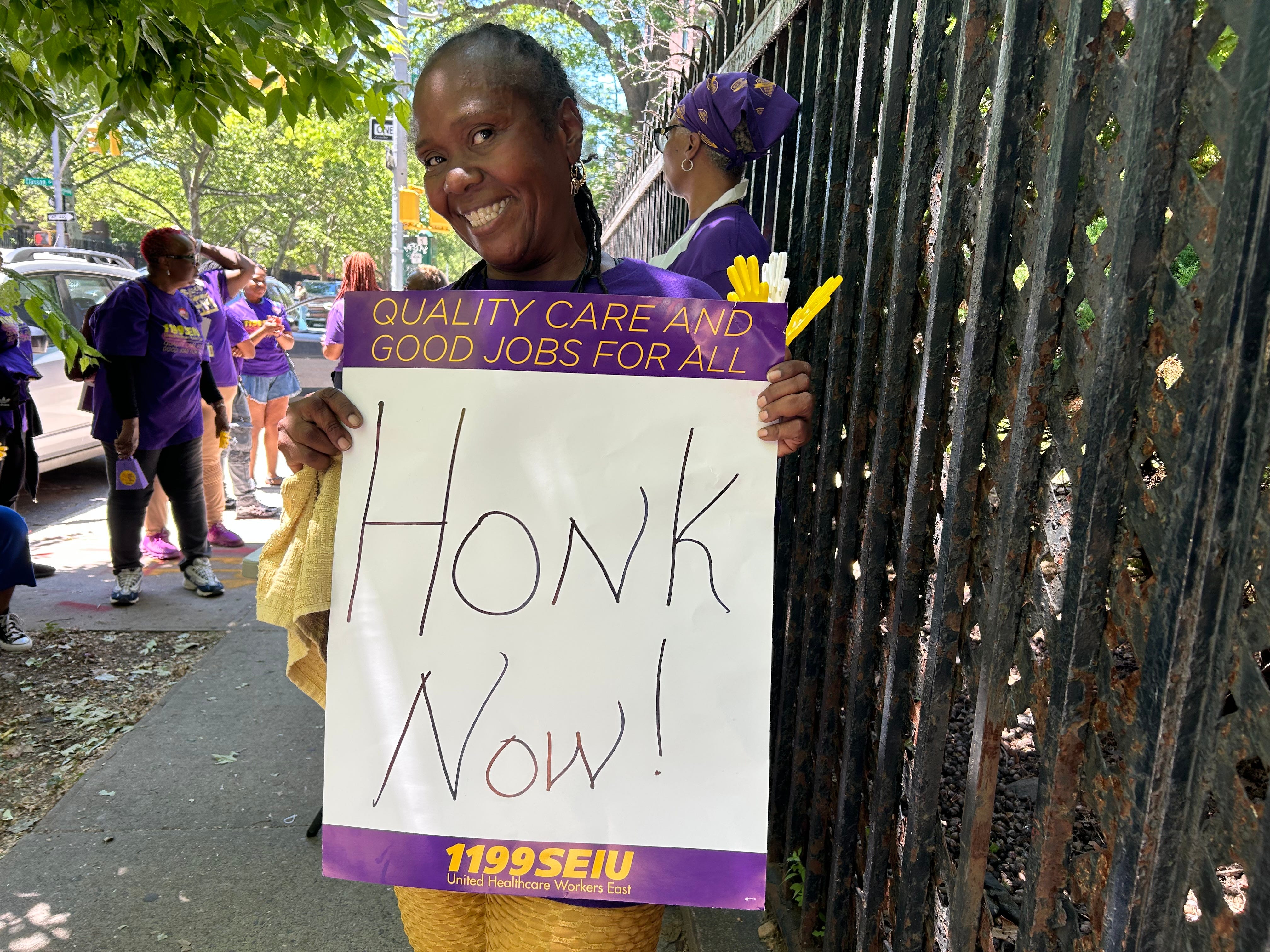
On a brilliant, sunny Wednesday afternoon, a group of women in purple t-shirts huddled along the sidewalk of Willoughby Street in Bed-Stuy, Brooklyn. Behind them was the gothic black metal fence surrounding Mercy Home for Children, the sprawling brick building where all of the women worked. They were out front, today, in their 1199 SEIU union t-shirts. They were on a picket line. They want a contract. They want respect.
Mercy Home is a place that takes care of children and adults with developmental disabilities. It has more than a dozen locations across New York City. Since October of 2025, the employees have been trying to negotiate a new union contract with the company. The union says that Mercy Home pays its workers less than their peers in the city, and significantly less than people who do similar work in nursing homes. The company is offering only paltry raises. Yesterday’s picket line was an attempt to prod the negotiations along. I went out there to Willoughby Street to speak to some of the women about what their jobs are like.
Nadine Johnson
“I’ve been working at Mercy Home for 23 years. I’m a medical direct support professional. I take my individuals to my appointments, make sure they don’t miss anything, and just teach them everyday life skills. But the most important thing is medication, and making sure they get to see their doctors.
We need more money. Everything is going up but our pay. Gas, rent, electricity, everything has gone up. So we just want a decent wage to live. That’s it. After 23 years, I’m not even making $20 an hour. And that’s sad. That’s very sad. My son works in the mail room, and he makes more than me. That’s a shame. For the job we do, the effort, we treat these guys like family. It’s so unfair. So unfair.
My day starts off dropping off individuals to programs right here at this office. Then I run around and do my appointments. After my appointments, I’m running to sit with another individual who’s in a nursing home right now. Then I’m running from there back here to pick them up and take them back to the residence. So by the time I get back, my day is done. I’m in the streets all day long. Show me some respect with my pay. All I’m asking for is fair pay and respect. That’s it.
Negotiations with management have been terrible. They are not giving at all. It’s like pulling teeth. They’re not negotiating. They’re stuck at this certain number, and it’s doing nothing for anyone. They wouldn’t want those number. Two percent [raise]! That’s nothing.
We literally do the work. They sit back and get the pay. That’s not fair. Come on, at least give us a decent wage. We’re not asking for much. Bring us up to $20 at least. We’re not even there. That’s sad!”
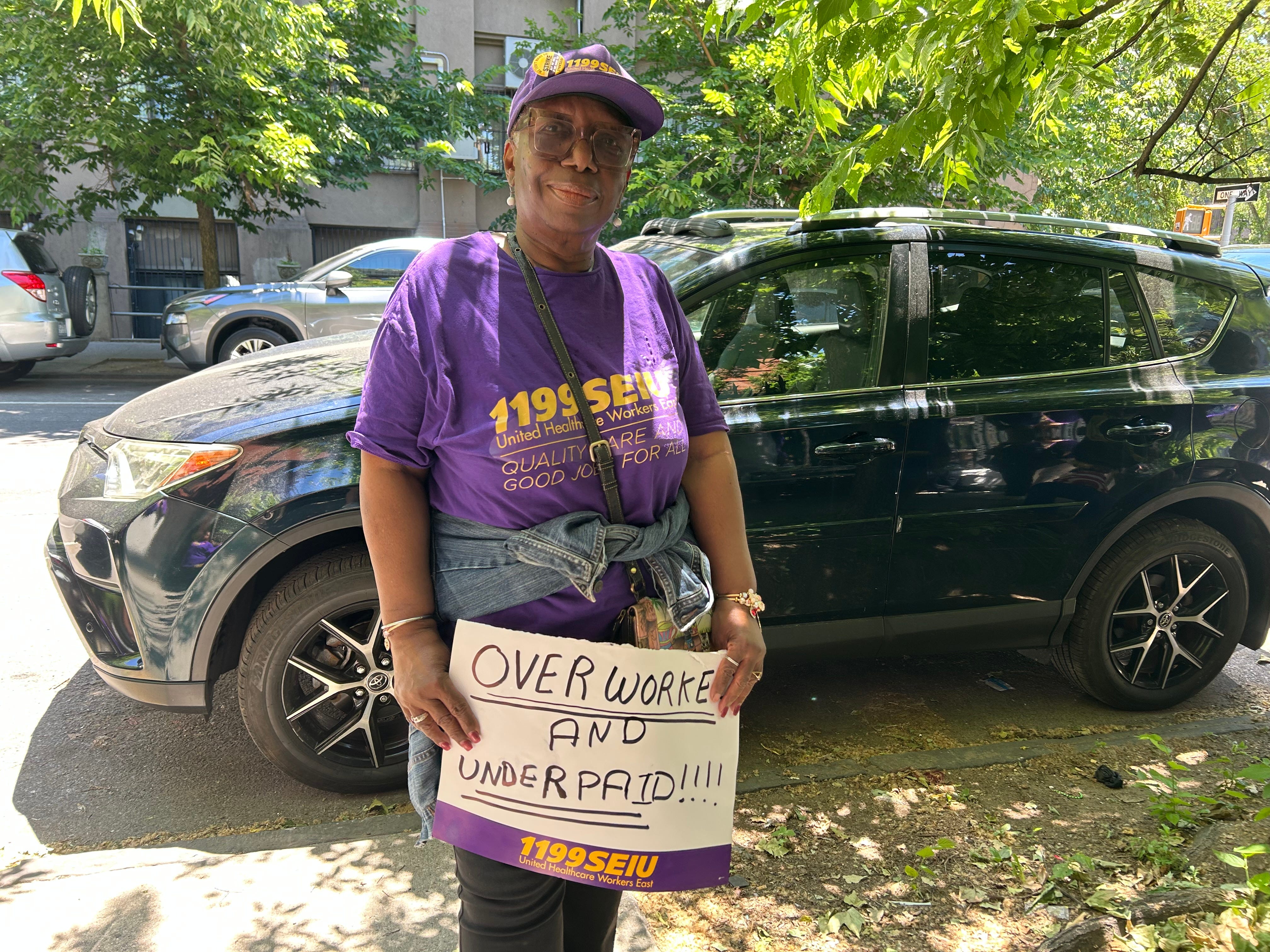
Mona Ford
“I’ve been here 20 years. I’m an overnight direct support professional. I work overnight shifts, like last night. We work from ten in the night until eight the next morning. For the past four years I’ve been doing this. I did 13 or 14 years on the evening shift, which is from three in the afternoon until ten at night.
You have to cook. When the individuals come off the bus, you have to get them ready to get their snack. After snack, they go to the recreation room, and after that they come back. They have dinner. You take them up and you shower them. You give them the medication. So we’re doing [Licensed Practical Nurse] work when we give them meds, because you have to pass this exam every year so that you can give medication. And after that, you have to sit and do the goals—all their goals, what they can do, what they can’t do.
So it’s a long haul, and you never finish. We have runners. They run out the building if you’re not watching. They’ll go out one stair and come down the other. You have to keep an eye on them at all times. Right now we have three people here, but at my other [location] I have 13, all ladies.
I like the work. If not, I wouldn’t be here. The individuals—some of them have no one but us. Some of them, bank holidays, Christmas, birthdays, no one comes to see them. We spend more time with them than we do with our own families. We’re always there. We’re nursemaids, we’re housekeepers, we’re the doctors, we’re the cooks, we’re family, we’re friends. Everything. Some of them were there from [the time they were] babies. And now they’re getting older.
It’s been nearly two years, and we need a contract. I think it’s unfair that they just, they’re not coming to the bargaining table trying to help. If you are negotiating, you bring your part and I bring mine and you meet in the middle. They are not doing that.
We need respect from management, from the office. And proper pay. That’s what we need. They want to speak to you as they like. As I told them before, they have a plantation mentality. They think we are slaves to them. For these past [snowstorms] that we had here last year and early this year, some of our staff worked five and six shifts straight. They didn’t get home. You would think they would show us at least a little bit of respect, knowing that we are there for the individuals, not for them. They don’t care. They think we have to do it, and we have to take whatever they pay us. It’s not fair.
We’re under $19 an hour, after 20 years. Don’t come to work here.”
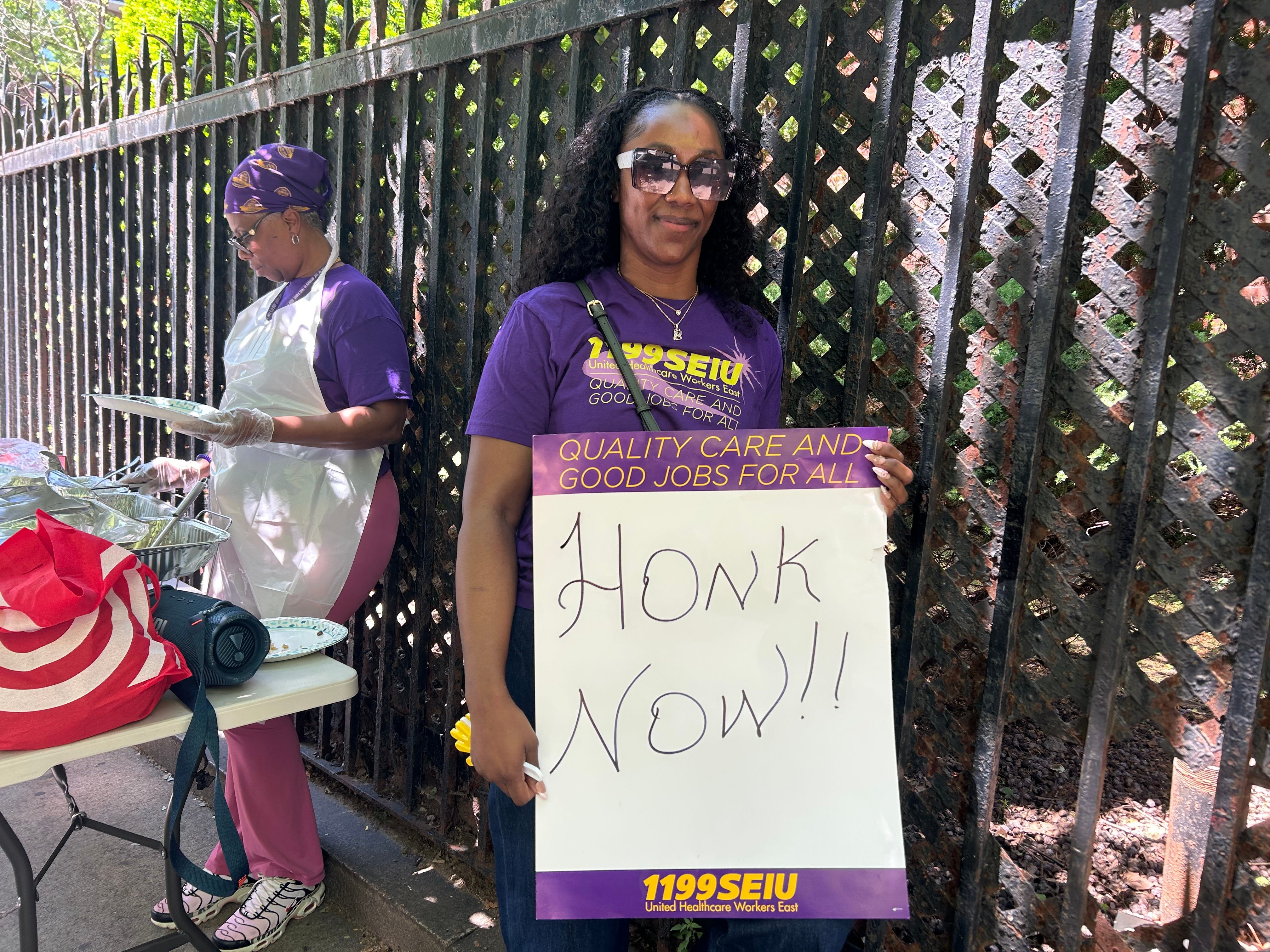
Chevelle Hall
“We’re not getting enough pay. We’re overworked. Three people cover the night shift. If someone doesn’t come in, two people work. Where does that pay go? It’s a three person job. Two people do the job, where does that other money go? We have three individuals each. I’m responsible for three girls, she’s responsible for three guys, and if that person [doesn’t come in], there’s three more. We’re doing medication, we’re getting them up, we’re getting them showered, we’re making sure they’re eating. We’re helping them. We’re their hands, their eyes, their mouths. During the day, they go to their programs. It’s like school, a little bit.
I started a year ago. After me, a lot of people started, and they stopped. I’m only still here because of the individuals. You come here and you grow a bond with them, and you see that they really need you. You don’t want people to come in and take advantage of them, so you’re there to help. We’re there, and we’re helping. I think the least you could do is to take care of us. We’re taking care of them.
Some of them, their parents are still in their life, or their family. Most of them, they’re not. We are their family. We are their friends. We are the person they see every day. We will celebrate the holidays with them. It’s we and them.
We would like daycare here. We would like more pay. We want more than the 2%. Everything goes up but the pay. We have kids! We’re leaving our families at home to help take care of [the people here]. At least we could get the basics.”
More
Find out more about 1199SEIU here. Find out how to contact Mercy Home for Children here. Find out how to contact your New York City Council representative here. Get in touch with a union organizer to help you organize your own workplace here.
Related reading: On the LIRR Picket Line; At the May Day union rally; If you don’t have a union, someone is stealing your money.
There are a lot of working people in America with a lot of legitimate issues, but there are not very many labor reporters to write about them. How Things Work is one very small part of trying to fill that hole. You can help support independent labor reporting by becoming a paid subscriber here. It’s just six bucks a month or $60 for the whole year, and it is the only way we keep on going, and keep this site paywall-free so that anyone can read it. Rock on my friends.
The economy as it is now runs on exploiting all workers at the bottom- we desperately need new systems with new incentives- I used to work at a human service agency and know this issue. Pay is also low because society doesn’t care about the people these women care for. Society believes people with intellectual/developmental disabilities are unproductive etc. if we solved for everyone’s wellbeing- if wellbeing of workers/clients/families was the incentive- we’d have different systems.
Employers don’t pay these people because they don’t respect the work these people do, but what is unsaid is they actually don’t respect the people their employees serve. People with disabilities, mental illness, and the poor generally are often see as annoyances, and best ignored if at all possible. People doing this work are looked at as having no valuable skills, just an ability to endure the hard work it takes to serve people who can have a variety of disadvantages. The workers understand developing a relationship with those they care for is crucial. Developing a relationship in a social service setting is a skill that has gone unrecognized for decades. A reason this injustice is decades old is because this country continues to only value individuals according to what they can contribute financially and economically, not in the capacity for concern and compassion.