
Capitalists Implicitly Expect Us to Save Them From Themselves
The unspoken contradiction of optimistic forecasts.

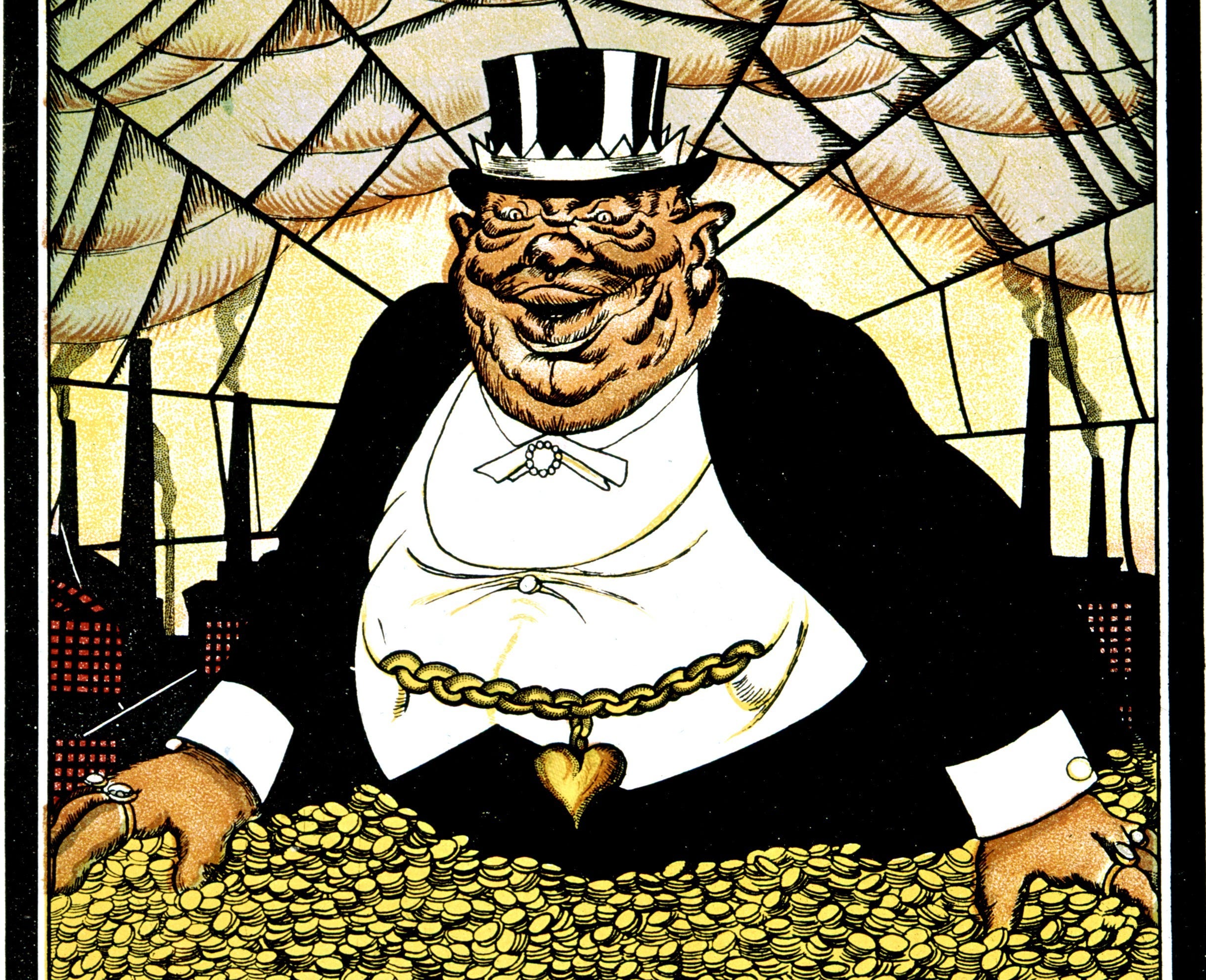
There is a noteworthy and little-discussed contradiction at the heart of our nation’s reckless ongoing exploration of new frontiers of economic inequality. It is the underlying assumption by capitalists that their political opponents will save them from themselves—and that they are therefore absolved of any responsibility for trying to curb their own most destructive impulses.
This dynamic leaps out in the ongoing discussion of how the AI era will supercharge inequality, and what to do about it. Last week, much of that discussion centered on a widely discussed report projecting a downward spiral of AI-fueled automation of white collar jobs, which would not be replaced elsewhere in the economy, which would then cause a drop in consumer spending and a gigantic recession.
This scenario prompted a good deal of pushback from other analysts. The most high profile report disputing it came from the enormous financial firm Citadel. Here is a key paragraph from that report, arguing that an AI-fueled collapse of demand would not play out as feared. The bolding is in the original:
The critical variable in AI displacement is the elasticity of substitution between AI capital and labor. If that elasticity is extremely high – i.e. firms can substitute nearly all human labor with automated systems at relatively stable cost – then labor’s share of income could collapse. In such a world, capital income rises dramatically while wage income contracts. But even here, aggregate demand does not automatically implode. Capital income has a lower marginal propensity to consume than wage income, but it does not have zero spending velocity. Profits can be reinvested, distributed, taxed, or spent. For demand to fall structurally, redistribution mechanisms would need to fail persistently, and investment opportunities would need to dry up simultaneously. Democratic nations facing such displacement risk would generally be expected to err towards in regulatory and fiscal policy shifts that offset the worst-case outcomes, further limiting substitution elasticity.
I want to focus on that last sentence. Citadel says here that if the economy does begin to suffer the mass layoffs and rapidly increasing fortunes of the very rich due to AI that many predict, it will cause our government to step in with “regulatory and fiscal policy shifts that offset the worst-case outcomes.” In plain language, that means higher taxes on the rich and on the corporations that are reaping the profits, stricter regulations on AI firms, and various redistributive economic policies that move wealth from the winners in the AI economy to the losers. Their argument not to fear the worst, in other words, rests on the assumption that the government will recognize the worst outcomes happening and step in to prevent us from descending into economic dystopia.
This same logic prompted Anthropic CEO Dario Amodei—the most liberal of the AI CEOs, for whatever that is worth—to call for more “progressive taxation” on the rich and, potentially, on AI companies themselves. The implication is that, yes, the job automation and extreme concentration of wealth that you fear from AI will happen, and the solution must come not from the industry itself, but from government.
Here is the simple point I want to make today: The class of people telling us that government will step in to prevent the worst economic outcomes of our era is the same class of people who are working to prevent the government from doing so! Citadel, for example, is owned by hedge fund billionaire Ken Griffin, one of the biggest Republican donors in America. One of the biggest donors to Donald Trump’s Super PAC is the president of OpenAI. Not only is the AI industry money flooding into the midterm elections mostly going to Republicans, but even the bipartisan spending is designed to head off regulation of the AI industry by Democratic states and national officials. (Even Dario Amodei himself, the left-most outlier, can only bring himself to call for the rather mild actions of progressive taxation and “a resurgence of private philanthropy” to head off disaster, rather than confiscatory wealth taxes and state ownership.) All in all, the political spending of those who profit the most from the AI industry is geared to ensuring that those crucial “regulatory and fiscal policy shifts that offset the worst-case outcomes” never happen.
This is a neat trick, no? Those who benefit the most from unequal distribution of wealth can freely agree that the massive job automation and increasing inequality that is likely coming would be devastating for our economy and social stability. But, they add in a soothing tone, “Don’t worry—the government will step in to save the day. Although, not if we can help it.”
It’s an elegant example of the sin-purifying illusion of capitalism itself. The rich are asked only to act in their own best interests. In doing so, they are just following capitalism’s incentives, like everyone else. You can’t judge them for that, can you? At the same time, we allow them to take a step back from their own political actions, don their “Analytical” hat, and tell us that their own efforts to grab every last dollar for themselves and allow society to crumble into hellish inequality are unlikely to succeed—probably, in a democracy, the government that they are busily trying to co-opt for their own interests will rise to the occasion of preventing them from carrying out their own economic wishes. At least, to some extent.
In case you have never noticed before, capitalism is, at its core, insane. Once you start looking, you can see this very same dynamic in action everywhere. Climate change? “World governments will eventually navigate us through this problem,” say the capitalists, as they drill oil and make the problem worse as fast as possible. Public health? “I’m sure the government will figure it out,” the capitalists say, while spending freely to torpedo any efforts that might detract from private health insurance profits. The winning class in capitalism is able to launder its own moral responsibility by shrugging and pointing to the incentives of the game they are playing and assuming that the whole system will self-correct before it blows up.
When the rest of us put on our own “Analytical” hats, it is clear that both A) the capitalists cannot evade their own moral responsibility in the eyes of a just god, and B) until that god comes down to earth, we had better change the rules of the game or else they will just keep doing what they are doing. Analytically speaking, the sad truth is that creating the political will for billionaires to acquiesce to allowing a system that they have captured to rein in their own power usually requires whole lot of people to get Luigi-ed. Those of us asking to tax the rich and have public health care and seriously slash carbon emissions and socialize the gains of AI are actually trying to build an off-ramp before society reaches the more extreme point. It would be nice if the rich would help us with that, rather than fighting as hard as possible against it. They stand to benefit more than they think.
More
Related reading: Confiscate Their Money; Enough Wealth to Warp the Universe; On Having a Maximum Wealth.
You may have heard about the brothel workers in Nevada who are currently trying to unionize. An important campaign for the labor movement to support. Some of those workers have been fired by their boss as retaliation for exercising their right to organize. Here you will find a link where you can support those workers.
The AI industry has many billions of dollars, but independent media does not. Here at How Things Work, we need your help to survive and thrive. If you have read this site for a while and you enjoy it and you are not destitute, I ask you to take a quick second to click the link below and become a paid subscriber. It’s six bucks a month, or $60 for the whole year. Your support allows me to keep this site paywall-free so that anyone can read it, regardless of income. If you can afford to support independent media, please do. Thank you all for being here.
Socialism for the rich. I’m less inclined to think that there will be a sudden collapse of white collar jobs and more of the usual: increased productivity for workers who will realize none of the gains, but be simply asked to do more work per hour. In other words fewer jobs will be created while workers are pushed closer and closer to total burnout. The question is will white collar workers have enough and organize against this once and for all?
What was maybe most illuminating about the Citadel quote was their assertion that “capital”
income would continue to grow even as “wage”
income collapsed. The implication being that big tech would not suffer from AI job loss. How reassuring…..