
You Work For the Bad Boss You Have, Not the Good Boss You Wish You Had
Leave the military.

In every job, there is some gap between the advertisement and the reality. The outdoor job boasting “fresh air every day” consists of picking up trash. The service job “perfect for sunny personalities” consists of getting yelled at by angry customers. The day care job that offers “unlimited cuteness” consists of cleaning up poop. This is how it goes. We must all endure some amount of hastily concealed tribulations in order to pay the bills.
Likewise, we must persevere through bad bosses. We must learn to navigate pernicious supervisors, backstabbing managers, and incompetent executives as the price of gainful employment. Good bosses are a stroke of luck, rather than a baseline expectation. If we all limited ourselves to workplaces that were free of bad bosses, it would take ten years to find a job.
Mostly, this is to be expected—an inducement to aspire to a promotion, or to start a union, rather than a catastrophe. But there are some jobs where a bad boss is a bigger deal. There are some jobs where a bad boss can very quickly get you into a genuine moral crisis. If you have a job like that, shrugging off what the bad boss is doing can become not an act of resilience, but one of gross negligence.
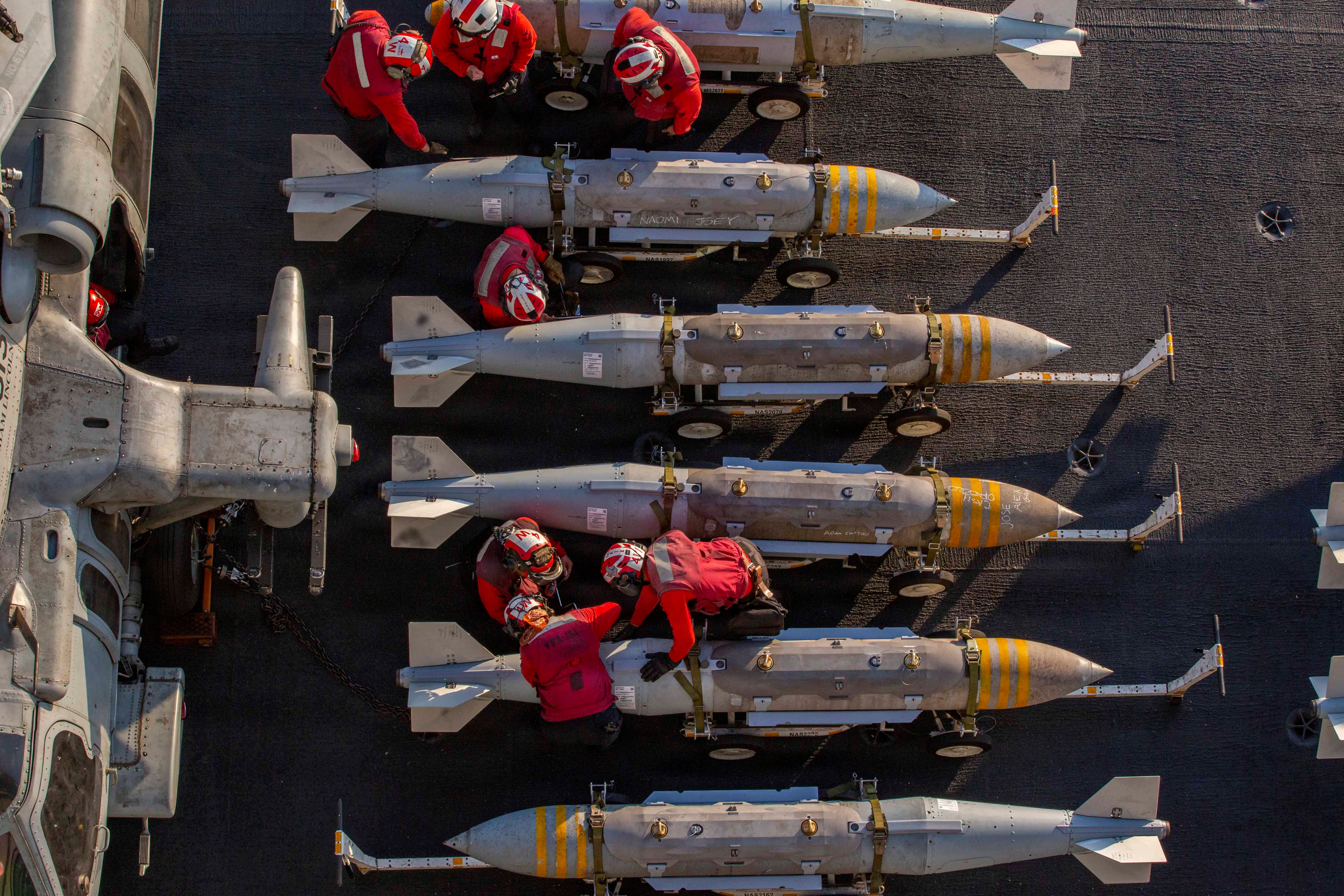
The military is one job of this type. There is more moral urgency attached to the military’s conduct of its affairs than to, you know, a restaurant’s conduct of its affairs, due to the fact that the military kills people. There are higher stakes to poor management decisions. If you are a line cook and your boss tells you to cook a dish improperly and you acquiesce for the sake of keeping your job, you can be forgiven. If you are a member of the military and your boss tells you to kill innocent people or bomb their homes or snatch their freedom and you acquiesce for the sake of keeping your job, forgiveness is not so certain. You become not a beleaguered employee, but a true villain. The space that the world is able to afford you as a matter of sympathy for your workplace annoyances shrinks down to almost nothing once guns are involved.
People join the military for all sorts of reasons: For economic opportunity, for adventure, for patriotism, for sheer lack of options. Most soldiers, it is safe to say, believe they are doing something good. Even those who are not ultra-patriots probably believe—and are told, by ads and by supervisors and by TV and by politicians and by the public—that their jobs are, on balance, honorable ones. They do something difficult, and they believe they do something necessary, and they take a certain amount of pride in that, as anyone would.
But the military is a gun in the hand of the Commander in Chief and we have a Commander in Chief who is dumb, narcissistic, unpredictable, and dangerous. The bad boss problem, for soldiers, is everything. It is the difference between being honorable and being the violent foot soldier of a thug. Which situation is closer to reality now, do you think? Being a soldier is not inherently righteous. That is a fairy tale they tell teenagers in order to get them to join the military. The righteousness of an army is wholly dependent on the righteousness of the cause that the army fights for. (Teenagers learn this, too, about other armies in other nations. We are careful never to tell them to apply the principle to the United States itself.)

It is a moral imperative for members of the US military to leave their jobs as soon as they are able to do so. The reason for this is simple: They have a bad boss and he is making them do bad things. He has made them murder boaters illegally on the high seas. He has made them kidnap the head of a sovereign state and kill many people surrounding him. Now, he is making them carry out an ill-conceived and unnecessary war in the Middle East that has killed nearly 1,500 civilians, including more than 200 children. These grave moral crimes, all of which violate US or international law (not that it has mattered in practical terms), are being carried out by United States soldiers who surely imagined that their military careers would be ones made up of righteous, praiseworthy acts. Instead, these soldiers have been enlisted as direct or indirect killers of civilians, terrorizers of innocents, and destroyers of global stability. Are we meant to wave off the complicity of members of the military in these awful acts? Here in America, when we are talking about American soldiers, we typically say they are honorable public servants and dismiss any blame for the havoc they wreak. Whereas if we are speaking about other soldiers in other nations, we expect and call for them to be killed by our own soldiers because they are carrying out equivalent duties. I hope I do not have to point out the ethical schizophrenia of this approach.
My purpose is not to demonize members of the military. On the contrary. People who joined an organization with noble intentions, who were told that they were serving the purest interests of their country, are now in the position of being foot soldiers for a gangster-style president who is quite possibly the single biggest threat to peace on earth. It is important that we speak honestly about the fact that these soldiers are in the perilous position of risking their lives in order to carry out villainous goals. That would be a tragedy not only for the victims of American imperial overreach, but also for the American soldiers themselves, who will be cursed to live their lives with the knowledge of what they have done. You may have joined the organization imagining what good it could do with a good boss. But that is not the world you have actually entered. In this world, the world that exists, you are an armed member of a deadly organization run by a bad boss. He has done and will continue to do bad things. And who will have to carry out the bloody acts inherent in those bad things? You will. It’s a bad deal. While you may have come to find yourself in this position through a series of well-intentioned actions, the fact is that the only ethical thing to do is to do your utmost to remove yourself from a job that might ask you to kill, unethically, on behalf of a bastard.
The military is not the only sort of job in this same position today. Many well-intentioned people who went to work in, say, the State Department, or the CDC, or other branches of government may now be faced with a similar moral dilemma. Versions of this exist in the private sector as well: You loved computers because they were neat, and you were good at math, and then you look up one day and you are building targeting software for Palantir that will be used to blow up poor people overseas. You need to quit your evil job. It is easy for this conversation to descend into a morass of blame—“You never should have worked there in the first place!” “I went there to do good things!”—but that sort of hollering is ultimately less important than what you can do right now, which is to stop working for an evil boss who will surely make you an accomplice to evil things.
It might be cool to be in the military and you might love the work and you might feel a strong bond of brotherhood with those you work with but there is just no way to avoid the fact that you are there to follow orders and the person giving the orders now is bad and the result will be that you will do bad things, and that will be your responsibility, your fault, and your legacy. Your life is worth more than that. You are not a bad person. You do not want to be a mere tool of a villain. When the boss is going to drag your soul to hell with his, it is time to do something else.
More
Related reading: When Do You Need to Quit Your Job?; Quit Your Evil Job; Leave the Military; Leave the Military Now; We Are the Bad Guys.
I published a couple of freelance pieces in the past week: One about the dreary Jeff Bezos era of the Washington Post, in the Columbia Journalism Review; and a much stupider one about the TV show “Alone,” in Flaming Hydra.
This publication, How Things Work, has no paywall. It is free for everyone to read whether they can afford to pay or not. This is possible because of the support of readers just like you who choose to be paid subscribers. So if you like this site, and you can afford to pay the modest subscription price, I ask that you click that button below and become a paid subscriber today. It’s easy, it’s cheap, it keeps this place open for all, and it makes you feel good. Thank you all for being here today.
I want to add lawyers for the DHS who advocated in immigration court for the removal of asylum seekers without due process, or who have enabled their removal by asking that the proceedings be dismissed, or who have advocated for their "pretermission" removal to third party countries (like Uganda), to this list.
The thing is that it has been obvious for a very long time now that the US military was going to be ordered to do evil things like this – and as you have said, when we say "evil", we don't mean by our standards as left-wingers, but by *their* standards as people who sincerely believe that they are serving something greater than themselves.
It was obvious on 6 November 2024, when Trump was confirmed as the winner of the election. It was a very real possibility for months prior to then. It has continued to be obvious since then, and only more so as time has worn on, and more such evil things have, in actual fact, been ordered and carried out. A whole bunch of soldiers and their families seem to have only just become aware of their circumstances and seem to expect us to play along with the canard that it was only reasonable for them to do so now.
No. This has not been a matter of reading the signs; this has been a matter of reading the writing on the wall, a wall so big and adorned in its writing so clearly that the message is legible from any distance and angle. There has been ample time and ample evidence that US soldiers were going to be made into instruments of evil even by its own standards.
Even if we accept the argument that, in the minds of these soldiers, it's incompetence and not active malice that has driven this gross negligence, that would not be good enough. At a certain point, incompetence becomes its own form of malice, and in any event that degree of incompetence renders you unfit to be a soldier; unfit to be a professional; unfit to hold a position of trust; unfit to wield any kind of power.