
"What Is Going to Happen?"
How to reject a new normal.

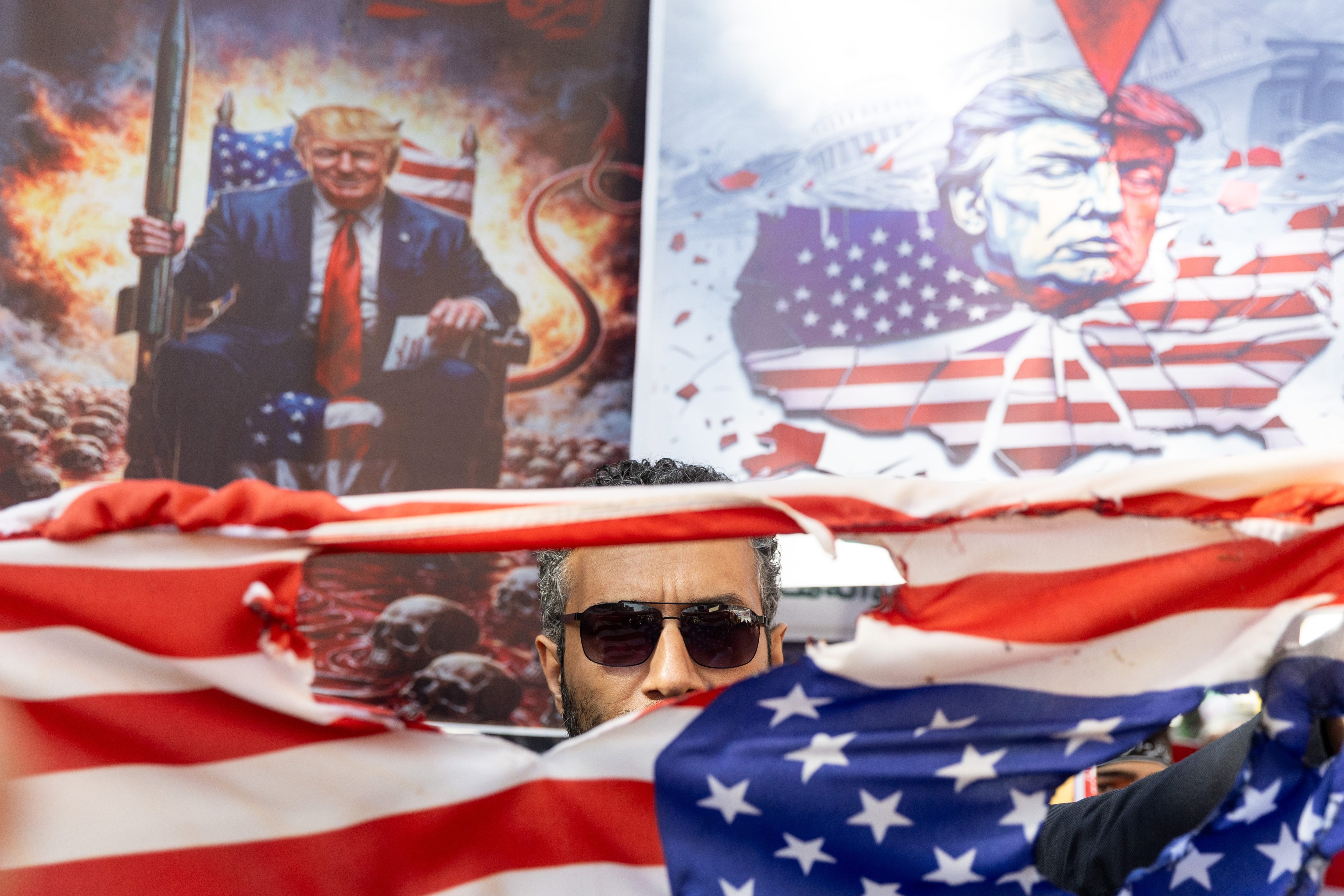
One year ago today, I was getting ready to head to DC to cover Donald Trump’s second inauguration. It proved to be an event marked by narcissism, grotesque obsequiousness, and Trump’s casual dismissal of the very people who had supported him, all behaviors that have continued unabated to this day.
The question that I am asked most often by readers desperate enough to imagine that I have an answer is some version of: “What is going to happen?” Lurking inside this impossible query is something worth discussing. What most people are looking for is not an omniscient prediction of the future so much as an educated guess about whether this is the new normal. Everyone knows that the Trump administration is doing bad things. But what many caring and concerned people really want to know is whether we are living in an exaggerated period of normal bad politics—an administration in which the worst characteristics of Reagan and Bush and Nixon and Pat Buchanan are magnified, but which will, like all Republican administrations, provoke its own backlash, and then be followed by some level of leftward retreat—or whether we are at the very beginning of a qualitatively new period of American history, one marked by authoritarianism and fascism, in which our fragile electoral democracy will at last be kneecapped so badly that it will not be able to grab the political pendulum and haul it back in the opposite direction.
I do not have high enough confidence to predict one or the other of these outcomes. There is only one aspect of this question that I have high confidence on: That things can still go either way. This is, in itself, a useful thing to know. It tells us that the future is uncertain and that our own behavior will help to determine what actually happens. It is, in other words, a mandate to continue fighting. Anyone who, after a single year of this administration, does nothing but declare that the worst outcome is certain is effectively an enemy to the better outcome happening. Stay away from these people.
There will be many pieces written in the next week listing all of the various outrages of the past year. I am not going to do that. What I want to do here is to touch on the two primary factors that are, I think, the most relevant to answering the question of how temporary or permanent our predicament will prove to be.
Information
The Trump administration, and the Republican Party in general, has attacked America’s educational system from top to bottom. It has systematically tried to restrict what can be taught in public schools in red states. It has, where possible, overruled fact with religion. It has gone after individual teachers and their unions. It has defunded prestigious universities, and used government funding as a hammer to bully universities into adopting highly politicized codes of conduct, including drastic restrictions on free speech in the classroom. From kindergartens all the way up to grad schools, it is engaged in a project of trying to change what is taught to students in a way that suits right wing sensibilities.
The Trump administration has also attacked the media. The president has sued multiple news outlets for true reporting. He has used the government’s ability to approve corporate mergers as a way to push media companies to censor their news divisions. His billionaire allies, seeing the writing on the wall, have begun meddling in the editorial operations of news outlets they own in order to make them more friendly to the administration. On top of these attacks on traditional journalism, Trump’s allies have also rigged social media algorithms to turn Twitter into a right wing propaganda machine, and are aiming to do the same thing with other popular apps. The CEOs of the biggest tech companies, which ultimately control the majority of America’s information environment, have proven themselves willing to monkey with the information that they deliver in order to serve their own financial interests by maintaining positive relationships with Trump.
All of these things, together, are having the broad effect of making the information that hundreds of millions of Americans receive more right wing, more Trump-friendly, more propagandized, and less honest. These shifts in information range from a school child in Oklahoma not being well-informed about the theory of evolution to a grandmother watching CBS News not being able to see a story about the administration’s human rights abuses to a bored office workers being bathed in right wing memes just by lazily scrolling Twitter all day. In aggregate, over time, the result of this trend will be to move public opinion to the right—most notably by reducing the prominence of aggressive, critical truth-telling in all corners of the public sphere. Outright corporate and government censorship and the self-censorship that teachers and journalists and other public figures engage in out of a sense of self-preservation both contribute to this effect.
If this continues, it means that, over time, there will be a strong force that tends to erode public knowledge about the bad things that the Trump administration does, and therefore also tends to weaken public opposition to the administration. If you are a politically astute person who is immersed in a media environment that still abounds with good reporting, this may sound absurd. But when you look at the big picture, it is fairly clear that this is a powerful trend. It is easy to laugh at the clumsy propaganda of authoritarian governments throughout history. But there is a reason why it exists: It works.
Institutions
Much has been written about Trump’s attacks on civil society—his successful neutering of law firms, universities, media companies, and so on. This is real, but only a part of his remarkable ability to utterly disembowel institutions that had until very recently imagined themselves to be the most powerful ones in America. The ongoing failure of these institutions to police the boundaries of their own power has played a key role in enabling Trump to collect all of that power in his own two hands.
Why have so many institutions—trillion-dollar companies, the world’s most prestigious universities, the United States Congress—faltered and broken in the face of this kind of idiotic man? The answer lies in the nature of institutions themselves. Institutions are entities built to wield power in the context of a particular set of rules and social arrangements. By ignoring all of those rules and social arrangements, Trump has left these institutions befuddled about how to proceed. He is like a chess player who declares that all of his pieces are queens, or a football player who pays off all of the refs and rides a tank onto the field. “Ermm, I don’t believe that’s allowed…” his opponents say, as he declares himself the winner. The same set of rules that these institutions bought into as the basis of their own power have become an anchor on them, in the face of an opponent who cares nothing for rules at all.
Let me use organized labor as an example. It is one of the most important institutions in American life, the one capable of maintaining the power of working people in the face of the constant assault of capital. The Trump administration came in and tore up federal union contracts and carelessly fired hundreds of thousands of unionized workers and shut down the NLRB, which enforces labor laws, and in a matter of months carried out the most devastating program of union-busting that we have seen in a century. And guess what? In an objective, good-faith sense, almost all of these actions were illegal, or at the very least in gross violation of the spirit of the law. And guess what else? Trump did not care about that fact, while his opponents—big labor unions—did. As they ran to court over and over again, he simply carried out his will. Though some courts rolled back some portions of what he has done, the overall effect after one year is a drastically weakened labor movement whose institutions have been mostly futile in the face of what is happening to us all.
They believe too much in the rules. That can be useful when your opponent also believes in the rules. But when your opponent is in charge and doesn’t care about the rules, then the rules become nothing but a weight around your neck. For example: It is illegal for federal workers to strike. When Trump tore up their union contracts, they should have gone on strike anyhow, because it is a form of direct power independent of mutual agreement on the rules, which did not exist. That proposition is not something that the institutions of organized labor as currently constituted were able to wrap their heads around with the necessary speed. So, the unions were smashed in the real world. They continue to complain about the rules being broken.
This basic process has happened across the entire range of institutions mentioned above. They were built to operate in a world in which the rules meant something, and now the rules mean nothing. The final insult is that the government, which is supposed to enforce the rules, is the one now gleefully breaking them. In search of fairness, companies cannot turn to the SEC, schools cannot turn to the Education Department, unions cannot turn to the NLRB, lawyers cannot turn to the Department of Justice—all of those things, which the institutions have been trained to see as the referees and enforcers of fairness, are now their outright enemies.
Institutions can either rapidly adapt to this new reality, or be broken. For the most part, the bigger the institution is, the less able it is to rapidly adapt to anything. And so they are being broken, everywhere you look. And all of their former powers accrue, by default, to the White House.
So?
Both the capture of the information environment and the weakening of institutions will serve to strengthen the Trump administration over time. Both are like implacable flowing rivers that slowly wash away the obstacles to Trump’s power. Considering how far both of these trends have progressed in a single year, it is scary to contemplate where we will be after three more years. So what are the prospects for countering these effects?
People naturally see all of this demoralizing capitulation and ask, “Where will the opposition come from?” The answer is to look in a mirror. The opposition will come from people. I say this not as some feel-good slogan, but as a simple statement that anyone can work out by process of elimination. Institutions may fail, but the people who made up the institutions are still here, and are pissed. Universities may capitulate, but the teachers and the students are still here, and still pissed. Labor unions may be persecuted, but their members are still here, and still pissed. Companies may bend the knee, but the workers who make the companies go are still here, and still pissed. The crumbling of institutional shells still leaves the people who were inside the institutions. And you can rest assured that hundreds of millions of people just like you can see what is happening. And they are pissed.
Our collective ability to make it through the Trump era without being crushed depends on all of us doing something to directly counter the forces that tend to drag us into the dark place. Teachers can teach the truth. Journalists can write the truth. Working people can go on strike. Regular people can march in the streets and organize their neighbors and get good candidates elected. Though institutions may not be nimble enough to survive what is happening, people themselves are.
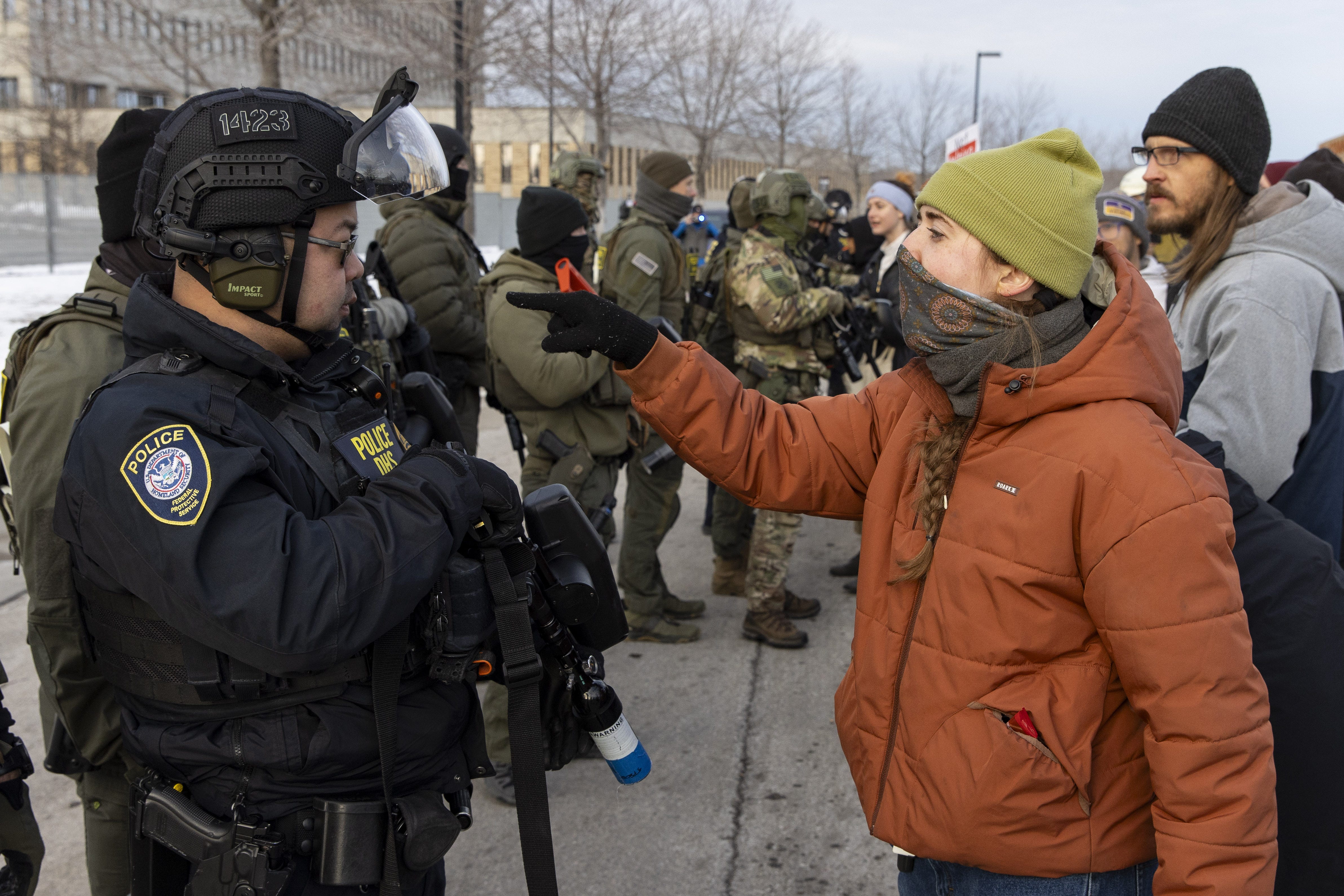
If this sounds too simplistic to you, I urge you to look, for example, at the organized community resistance to ICE that has arisen in Chicago and Los Angeles and Portland and New Orleans and many other cities where immigrants are being persecuted by government forces. All of these grassroots resistance efforts arose quickly, in response to ongoing events, and organized themselves across a large area with great speed, and with great effectiveness. This is the work of people who are tuned into the real world. It can be done, and it is being done, and its principles can be applied to a wide variety of fascism’s manifestations.
Next week I am going to Minneapolis, the latest city that is resisting in force. A large coalition of labor and community groups have called what is, in effect, a general strike for January 23. If you are a leftist who has long dreamed of a general strike: Better be there. If you can’t be there, better do that in your own city. Better do something, somewhere. We will do this, and then we will all wake up the next day, and the world will still be here, and we will all have to do more, and more, until the outcome becomes clear.
Either we will save ourselves, or we won’t. Go ahead and start writing the story of the next year right now. If you don’t, your enemies will write it for you.
More
Related reading: Now We Will Get What We Asked For; You Are Invited to the Predator’s Ball, as Food; They Are a Minority; The God of Solidarity.
Here is where you can donate to an organized labor fund to support workers who have been impacted by what is happening in Minneapolis right now. Here is where you can donate to support the nurses at NYSNA who are on strike in New York right now. Here is where you can get in touch with an organizer who can talk to you about unionizing your workplace right now. When in doubt, join the labor movement.
Thank you all for being here. I like to think that independent media such as How Things Work play a small part in resisting the downward spiral of our information environment. My ability to publish this site—and my ability to do things like travel to Minneapolis in order to report this week—exist wholly because of the financial support of readers like you. If you would like to help How Things Work keep going in 2026, take a moment to become a paid subscriber right now. I also have a reporting fund, to pay for my travel and reporting costs. Links to both are below. All support is greatly appreciated. Rock on my people.
I completely agree on all counts, but would go further by pointing out how darkly cyclical these two things can become: As information gets skewed to the right, when the Trump Regime continues to break all the rules then we stop hearing about it or we get assured that the rulebreaking is either not happening, or is actually a good thing. I think that we are far from that sort of world, but watching the heads of the Regime try to bend reality over the shooting of Good in Minneapolis in spite of the video evidence, and then seeing the right wing propaganda machine actually get some traction with that narrative, makes me very uneasy.
If we are no longer a government of laws not men, because a group of rich men corrupted our processes to rise above the law…we will have to create something better that will form
A more perfect union