
Notes on Access Journalism
Why are they so happy to see you?

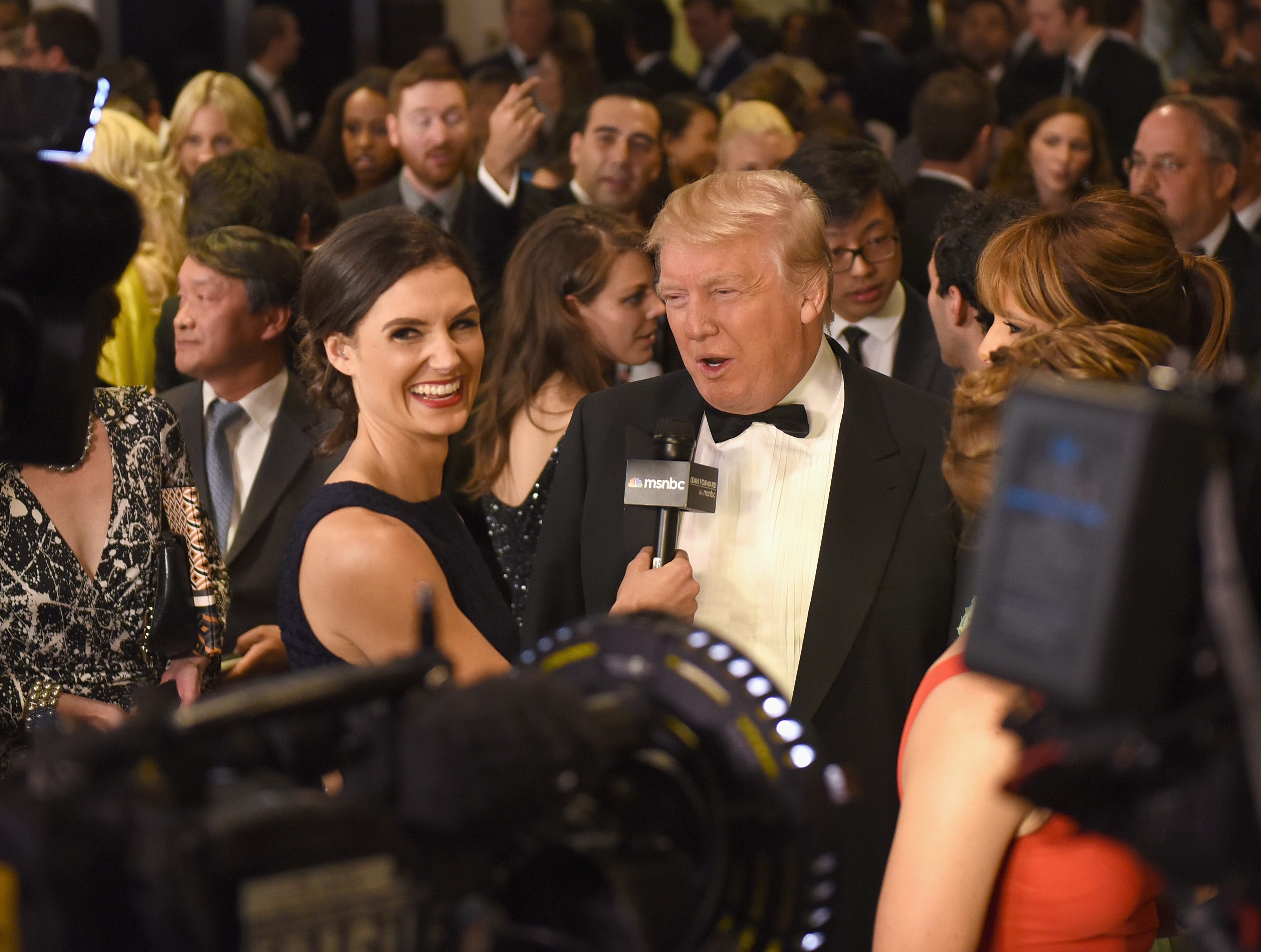
In order to operate effectively, journalism must be powerful. Not the power of beautiful language, but tangible power—the social, cultural, political, and economic power to assert and protect its own interests. In this, it is no different from any other endeavor that involves clashing with the competing interests of powerful people. If you don’t have the power to protect yourself, the other powers will crush you.
People in journalism tend to dislike talking about their field in these terms. Fifty years of weaponized political attacks on “media bias” have succeeded in making journalists gun shy about speaking plainly. “Power” smacks of politics, which smacks of partisanship, and journalists have been trained to see this as a road leading towards a rhetorical battle better left alone. That does not change the reality, though. The practice of journalism involves finding and sharing true information about powerful people and institutions. It involves prying open doors that powerful people and institutions would rather keep closed. How do you either convince or force them to open those doors? With power. You must have something to offer, and something to threaten with. A carrot and a stick.
For journalism, the carrot is access to an audience. Powerful people want that. The stick is—not to be grandiose about it—the truth. Journalism can tell a lot of people true things that may make you look bad. (Sensationalized smears can also serve this function, but we are discussing real journalism here, which holds the truth as its purpose, and not its more nakedly weaponized cousins.) Powerful people don’t want that. These are the twin incentives that legitimate journalists wield.
An important piece of context about being a journalist is: As a rule, powerful people don’t want to talk to you. Why would they? They are already powerful. The status quo is their friend. Talking to journalists offers uncertain upside and a lot of potential downside. Yes, they want to get in front of your audience, but they don’t want to end up at the center of a negative story. In a vacuum, the starting position of most of the people that journalists want to talk to is a closed door. The logical move for really powerful people is to try to get the audience of journalism without the risk, by building their own parallel simulacrum of a media ecosystem that works only for their own interests. This already exists everywhere from Fox News to Access Hollywood. This is the form of journalism that powerful people prefer. If real journalism is going to exist, it must find a way to overcome the fact that, as a class, the people it wants to cover have every incentive to ignore, avoid, and discredit it.
The easiest card for powerful people to play against journalism is access. Access to them. Why did a politician vote that way? What does the police chief think about those protests against his cops? What is a CEO doing about his company’s scandal? Why did that famous celebrity do a racist rant on social media? The answer is: no answer. They will not talk to you about it. That is their power. What will you, a journalist, do about it? Lecture them about their responsibility to help create a robust public discourse?
Access to powerful people and institutions who would rather not give you access has always been a fundamental quandary for journalism to solve. There are only a few ways to solve it. One way is for journalism to fold. You say to the powerful: “In exchange for access, we will be nice!” You write puff pieces. You censor yourself, to greater or lesser degrees. You don’t act in ways that would piss off the people you need access from. Fox News types do this, sure, but even the most legitimate beat reporters—who must maintain access to the most important newsmakers on their beats in order to do their jobs—struggle with this temptation. It is a way to make the people you write about happy, and to make your job as a journalist much easier. Unfortunately it also eliminates much of the value of journalism.
Another, more honorable approach is to forswear access. If the powerful refuse to give you access if you write honestly, fuck them. Writing honestly is not negotiable. So you do your job without access. You can write a profile of someone without speaking directly to them, by speaking instead to a variety of people who know them. You can write about what is happening inside of companies without the company’s help, by cultivating inside sources. You can write about what politicians are doing without their official statements, by seeking out well-informed leaders. You can cover events without being granted press access, by going in with the public. You can write incisive, observational work just by learning a lot about things. And you can always talk to the majority of people on earth—regular people—who do not have the same contentious relationship with the press that powerful people do. You can build a healthy and worthwhile journalism practice by finding ways to tell the truth without access to people who would rather not talk to you, treating access as an occasional treat, rather than as the foundation of your work. Indeed, this is the variety of journalism that I and most of the best writers I know have practiced for most of our careers. Out of necessity.
But it is important that someone gets some access. Most US Presidents do not want to talk to me, but as long as they are talking to the AP or the New York Times or whoever, I can still hear from them. Most CEOs do not want to talk to me, but as long as they are talking to the Wall Street Journal, they are at least talking to someone. And so on. Because information is public, journalism is a collective practice. We don’t all need to do everything, but we all—journalists and readers alike—have a vested interest in someone somewhere doing everything. In order for the doors of access to stay open, the powerful must have some fear of journalism. This is the unvarnished truth. Not fear that we are going to unfairly smear them, but fear of the fact that journalists will find and publish the truth no matter what. This is what creates the incentive for the powerful to talk to us, in order to at least tell their side of every story. This incentive serves all of journalism, and informs all of the public. We can never let this go, or everyone who cares about the truth is done for.
Creating and protecting the power of journalism—the power that balances out the competing power of the powerful people we write about—is also a collective responsibility. Whether we personally get access or not, every journalist is responsible for doing our part to build the power necessary to make journalism itself a force to be reckoned with; to make it a force powerful enough to exist, and serve the public good, on a playing field where powerful interests would rather crush it or co-opt it or marginalize it. That does not imply anything devious. All that is necessary from us is to tell the truth. The truth is journalism’s power. The truth is journalism’s credibility. To pursue hard stories, to write incisively without fear of retaliation, to report aggressively because things are important, to resist the urge to allow ourselves to be flattered or bought off or intimidated by society’s various power centers—that’s on all of us. A high school newspaper editor speaking the truth about a bad principal and an investigative journalist grinding through leaked documents and online journalists losing their jobs because they pissed off some litigious rich guy are all, in the broadest sense, doing the same thing: Keeping journalism strong by doing what journalism is supposed to do.
Those who get the access do not get it on their own. They get it, in part, thanks to the power that all journalists help to create. So the access carries responsibility. If you get access to the president and then sit idly by as he rambles without answering your question, you have failed to live up to your responsibility to the public. If you get access to the wife of one of the world’s richest men and come away with nothing juicier than “‘I am not talking politics,’ she said. ‘No, no, no, no, no. No way,’” then you have failed to live up to your responsibility to your audience. If you get access to the editor-in-chief’s chair at an entire national news network and proceed to shut down critical reporting and run puff pieces about the nation’s most powerful people, you have, in a real sense, failed to live up to your responsibility to journalism itself. It’s not just about you and your shitty job, here. You get the access because thousands of journalists did thousands of stories to build credibility with an audience to give you the leverage to make the powerful people come to the table. Squander that, and you are not just advertising your own shamelessness; you are squandering something that you are too stupid to know is valuable, like a toddler gleefully tossing a Rolex watch off the side of a boat.
This weekend, the journalists who do not understand journalism will gather in a Washington ballroom for the annual White House Correspondents Association Dinner. This grotesque little schmoozefest is extra-revolting this year, what with the Trump administration’s overt attacks on the free press. But in reality, it has always been revolting, independent of the party in power. It is revolting not because a particular political attendee did a particular bad thing and then shared a cheery evening dining with Wolf Blitzer. Rather, it is revolting because it embodies the elevation of access over journalistic value. It is a ceremony that shows the entire nation what it looks like to make the deal to have access in exchange for giving up the demand to use that access for the public good. It is a spectacle in which a room full of many of the most prestigious and highest paid journalists in America proudly celebrate their own neutering. Happy pets coming home from the vet with no balls, still wagging their tails. They’re just happy to be there.
Access is nice. Access is alluring. Access is also dangerous. It is a drug prone to causing grandiosity, narcissism, and delusion. Like all drugs, it is healthier when used sparingly. Make them open the door grudgingly. If they’re too happy to see you, it’s a trap.
More
Related reading: The Press Is the Government’s Enemy and That Is Good; The Public Good, Not Patriotism; Fuck the White House Correspondents Association Dinner (2012).
Occasionally I like to shout out some good books that have come out in recent weeks. Here are three from writers that I respect: “The Billionaires Have Two Parties, We Need a Party of Our Own,” by Les Leopold; “Chains of Command,” by Brian Callaci; and “How to Sell a Genocide,” by Adam Johnson.
For the 23rd consecutive year of my journalism career I will not be attending the White House Correspondents dinner. Instead I will be chilling with you—my treasured, wise readers. How Things Work is an example of an independent media outlet able to exist wholly outside of the grasp of the Washington, DC black hole. Credit for this goes to all of you, who enable this publication to exist by becoming paid subscribers. You can join the ranks of paid subscribers for just six bucks a month or $60 for the year. It’s a good cause and I think it is worth the money. I thank you all for doing your part. Keep coming back.
Excellent!
“Happy pets coming home from the vet with no balls, still wagging their tails. They’re just happy to be there.”
That made me feel like Les Grossman did after the grip punches the director in the face. Nicely done.
1. The “media bias” scapegoat is so transparent at this point. You can bank on the person employing it being a hater of truth. Those who utilize it regularly despise the inconvenience of true journalism exposing their words and actions as being shitty.
2. Really looking forward to the updated World Press Freedom Index in the coming days. I’m feeling a sub-65 drop for the U.S.