
Enshittification Relies on Broken Economic Math
Pay no attention to the externalities behind the curtain.

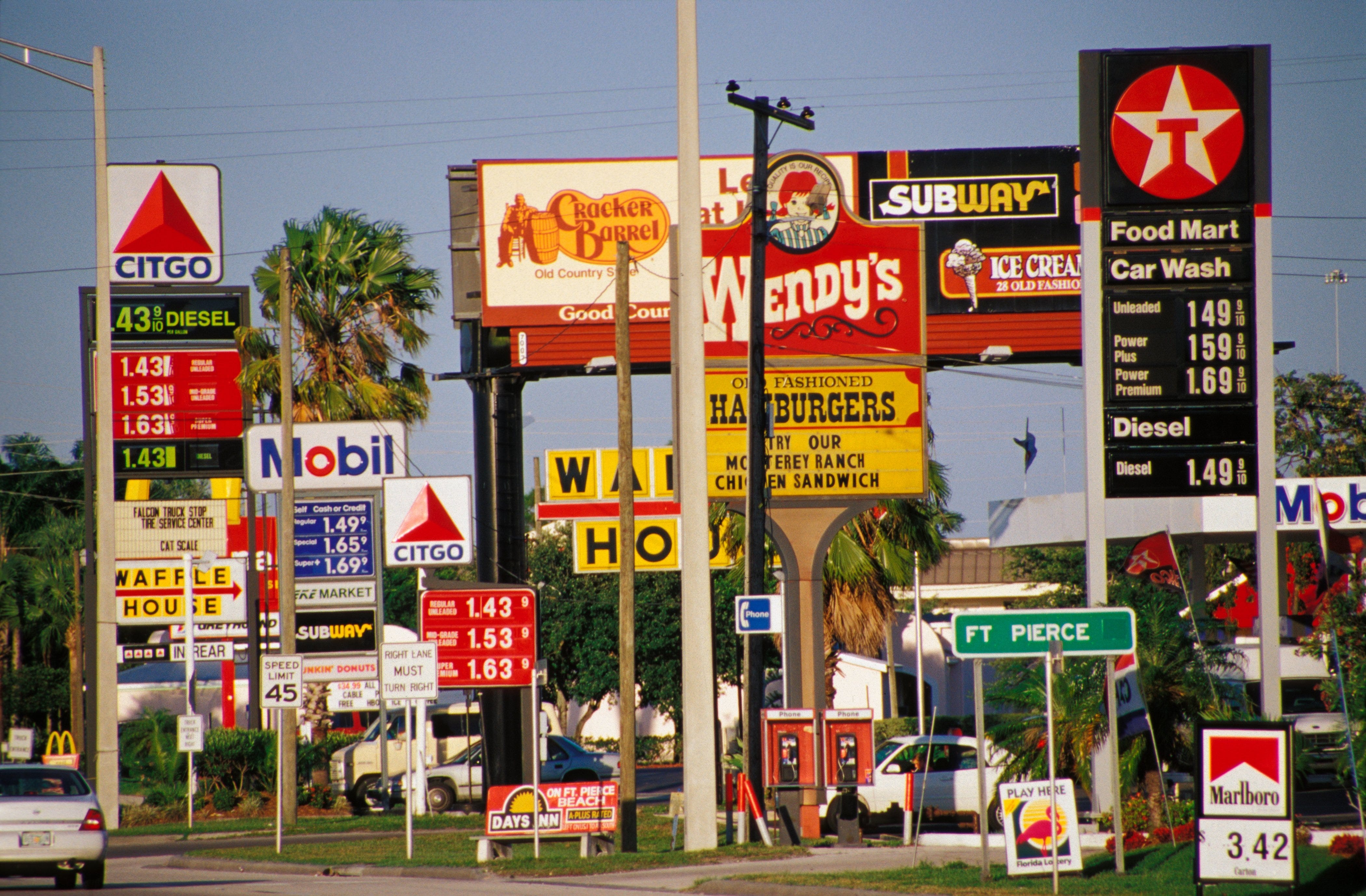
A quintessential quality of modern American life is the inescapable feeling that once-good things are subtly but surely being degraded. Things that once seemed to be abundant and free transform into consumer experiences. Existing consumer experiences slowly become worse. Prices rise; customer service becomes harder to access; functionality grows hostile; companies seem to grow more predatory. “Enshittification” is a quasi-formal description of the unfolding of this process. But most people, I think, experience it as a sort of ambient deterioration in the smoothness of life—a series of tiny obstacles to daily living being erected where formerly there were none.
Because we all live inside of this process, and because its transformations are mostly gradual, it can be difficult for people to put their finger on exactly what is happening. Often, Americans must go somewhere else and be staggered by the accumulated differences in order to see how far we have drifted away from our ideals. In that vein, consider this from Cullen Roche, an investor and writer, who went to the Tour de France:
I went to the Tour de France last week and it feels like a perfect microcosm of how Capitalism and Socialism differ (and why America is diverging economically and stagnating socially).
As an American I couldn’t believe how poorly they monetized the event. You have millions of people watching and 99% of them watch for free.
The result - the median rider in the event is earning $250K a year, but the public has an event that is loved and accessible by all. The broader result is you don’t get the private (and public) investment that coincides with such events in the USA because it’s not being monetized well. That is, the teams earn less, the riders earn less and municipalities hosting earn less. So the aggregate result is everyone is poorer, on average, in the long-run because they don’t capture the economic value of the event well.
BUT, the Europeans love their bikes. Boy do they love their bikes. And you see the happiness and social value of making this a public good instead of a private profit maximizing endeavor. So there’s social value in NOT monetizing the event that **arguably** makes it a better overall social value than the Capitalist model.
In short, the American model creates a wealthier, more capitalized industry, while the European model sacrifices financial maximization to generate a widely distributed, unpriced public good. Which is better? Most certainly a mix. The hard part is getting the balance right.
Roche is a thoughtful writer on finance. His observation is interesting for the way in which Economics Mind struggles to embrace a conclusion that, to most people, seems obvious. While he has been struck in a very human way by the absence of ubiquitous advertising shit, his analysis of it helps to show how American capitalism has led us astray.
Due to the less aggressive monetization of every square inch of everything by the Europeans, Roche concludes that “the aggregate result is everyone is poorer, on average, in the long-run because they don’t capture the economic value of the event well.” Is everyone poorer? Certainly the Tour de France riders and their team owners and the Tour de France itself take in less money than they would in America where all aspects of the event would be turned into sponsorship opportunities. But how does that notional amount of money compare to the value of “the happiness and social value of making this a public good instead of a private profit maximizing endeavor” that Roche recognizes as the benefit of the European method?
There is no easily quantifiable answer to that question. And that is the problem. The way that America’s version of capitalism proves its utility is by adding up all of the profits created by the privatization of public goods without subtracting the value that has been destroyed by the same activity. We have created the largest enshittifying machine in world history by employing a financial logic that leaves out half of the equation.
Take a scenic countryside and fill it with billboards. You can calculate precisely the amount of profit that has thereby been created for advertising companies, and the associated rise in profits for the companies that attract more customers with the billboards. But what is the cost of the destruction of the scenic countryside view? Don’t ask! It would, of course, be something of a philosophical project to place an exact dollar value on the lost beauty. The bigger problem is that, in our economic system, we do not even try. Across our economy, externalities are simply ignored. Their costs fall on the public’s shoulders. This is not a novel observation— “privatize profits and socialize costs” is what makes the “too big to fail” business model so successful. What is remarkable is the extent to which our government regulations, our views of common sense business practices, and our whole conventional wisdom about the way that material progress should rationally unfold all seem to proceed calmly towards oblivion without even trying to calculate what should be on the “minus” side of the ledger.
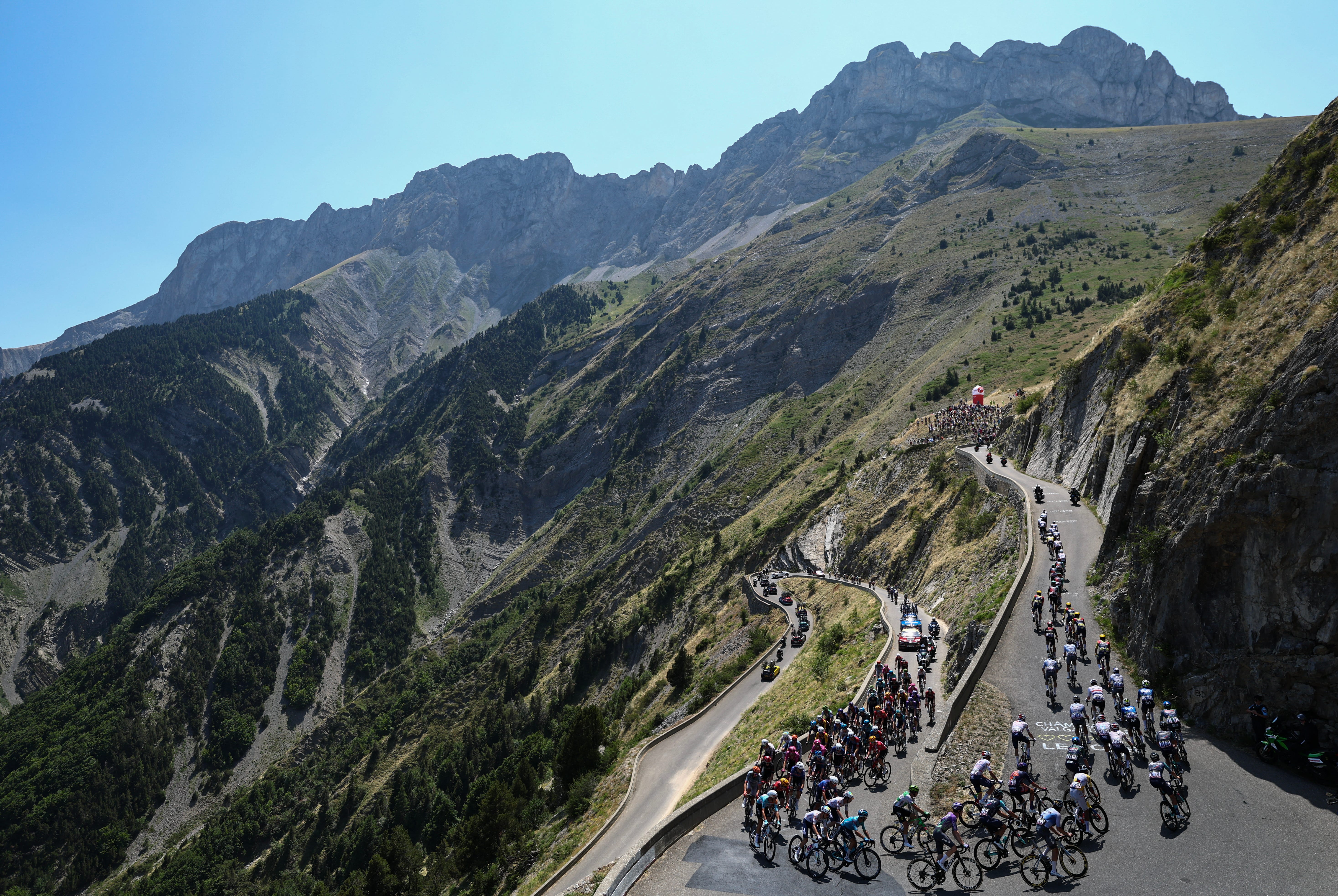
The failure to realize that ignoring these costs to public welfare does not make them disappear accounts for the nagging disquietude that enshittification creates in the public mind. Websites that used to be useful become morasses of scams and pop-up ads. But you can’t argue with the profits! Rather than build dense housing in urban areas, we build endless ugly, low-density sprawl. Land is cheap! We defund public schools and public transportation and public health services and watch corporations eagerly fill the gaps. The S&P is booming! And, yes, we gape at a beloved national sporting event that fails to make itself dramatically less enjoyable in the name of corporate branding. All that money they’re leaving on the table!
It is not news that this form of ruthless, profit-first capitalism is misguided. (The concept of “environmentalism” was created to address this clear gap between economic logic and human survival.) Nor is it news that many of America’s most profitable industries owe their success to a failure to price in their externalities. (Try recalculating the profits of tobacco companies after you make them pay for all of the medical care for people with lung cancer.) The thing that is remarkable, that makes me admire the audacious cleverness of capitalism itself, is that the understanding of these flaws among intellectuals has done almost nothing to engender in the general public, in the ranks of most non-left elected officials, or even in the professional financial commentariat an urgent desire to wave their hands and yell, “hold on a minute!”
Financial impact statements that are used to justify public economic subsidies for corporate projects, annual corporate financial reporting, talking heads on CNBC discussing whether we should or should not be happy about the latest corporate actions, county commissioners explaining to their constituents why they support various development projects and not others—all of these things, routinely, are injected into the public consciousness and processed into conventional wisdom without any systematic attempt to price in their costs to the public good. The governor of Louisiana can brag that Meta is spending $50 billion on a gargantuan data center in one of the poorest areas of his state, but everyone uneasy about its impacts have no comparable figure of its costs to lay on the other side of the scales. It is not that it is impossible to calculate and incorporate such a number; it is that our system is not built to try. These uncalculated costs do not accrue to corporate balance sheets and are not reflected in stock prices, and therefore contribute to the eerie feeling of seeing the stock market reach new all time highs at the same time that we fear that the industry powering it may destroy us all.
If there is anything useful to be taken from all this for regular people, it is the knowledge that, yes, those costs are real. They are not just feelings! They are economically real! We ignore them at our peril! You’re not just an anti-progress wacko for feeling uneasy about the American version of economic development. The fact that we have not spent nearly as much time on the project of quantifying these costs and integrating them into all of our political-economic decisions as we have spent on being dazzled by the “revenue” column is a systemic failure on our part, and one that we will pay for eventually. When Americans look at a big fun public event in another country and wonder, sincerely, “Shouldn’t this be more enshittified?” it is not a sign of our superior economic insight. It is a sign that capitalism is making us fucking insane.
More
Related reading: Public Ownership of Public Goods; Everyone Into the Grinder; State Power Versus Capital Power.
If you want to read some good writing about the Tour de France itself, see the recent reporting of Patrick Redford at Defector.
In an ideal world journalism would be a publicly funded good. Sadly that is not the world we live in. In this world, journalists must appeal to you, our readers, in order to fund ourselves, while billionaires cackle with glee at our desperation. How Things Work exists only because readers just like you become paid subscribers. That’s how I keep this place paywall-free. If you can afford it, please take a quick second and become a paid subscriber right now. Cheap!
“Shouldn’t this be more enshittified?” it is not a sign of our superior economic insight. It is a sign that capitalism is making us fucking insane.
Amen to that.
There is still profit -- I bet those French towns full of race watchers sold a lot of food, beverages, and other amenities, which turned dollars into the local economy... Smaller scale capitalism, but without logos branded on everything. Fun to compare a French racer's uniform with a go-go USA stock car and it driver all branded with logos.