

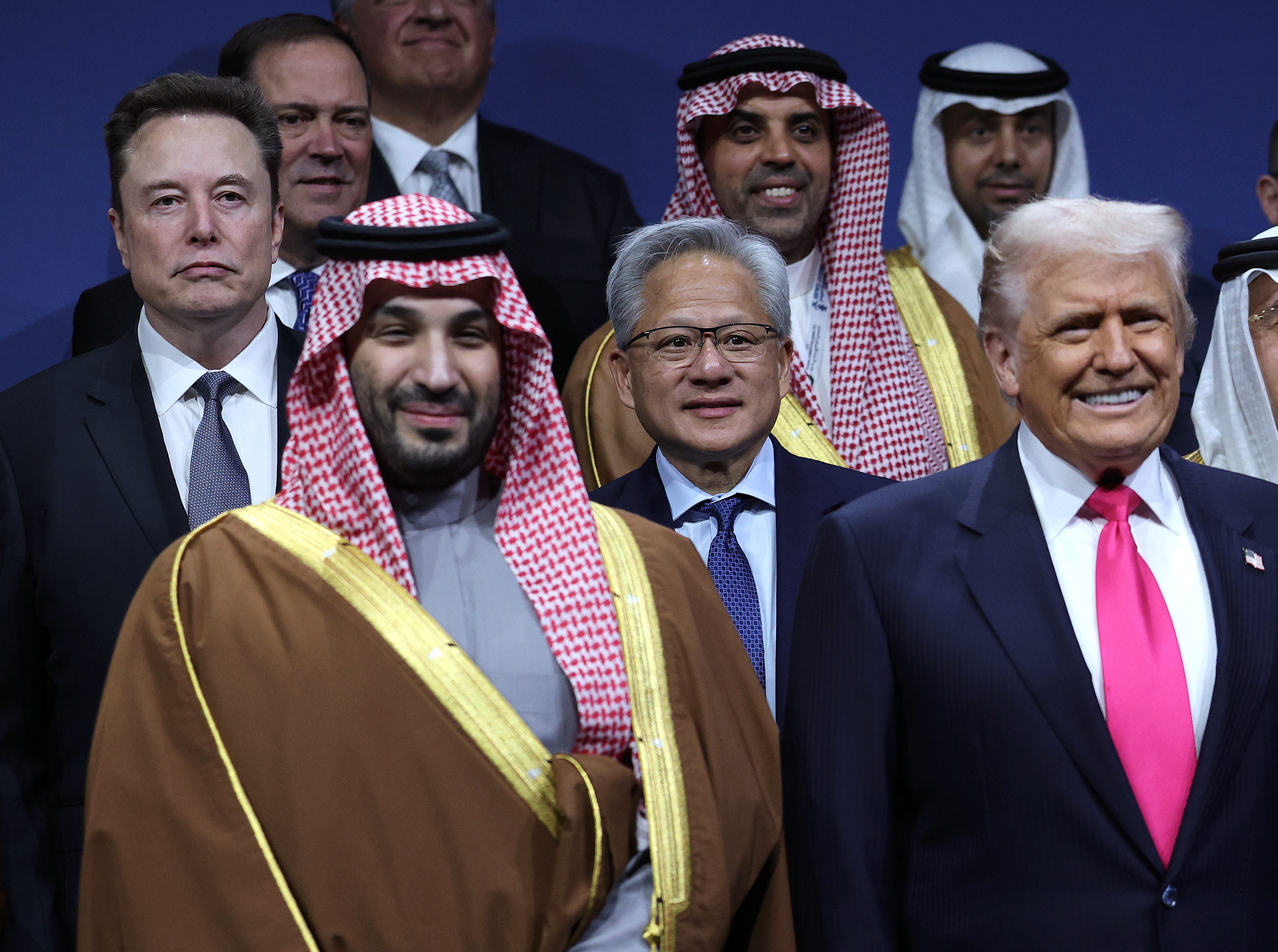
Politics is a good investment. For businesses, interest groups, and wealthy individuals, spending on politics offers one of the more attractive potential returns on investment you can find anywhere. For a one million dollar donation today, you can get the most powerful politician in the world to threaten your competitors or get the federal government to support your deadly chemical. Even in less overtly corrupt times, political spending has long been one of the few arenas where 1000x returns are plausible—a million bucks spent on lobbying firms, candidate fundraisers, super PACs, and lavish trips for Congressional staffers can easily become a billion dollars in government contracts or favorable legislation.
Since the 2010 Citizens United ruling threw the floodgates open, political spending has increased, and with it, public concern. Sure. With each passing election cycle, more direct and indirect spending floods into campaigns, inevitably transforming many of our elected officials further into marionettes that dance at the whim of their paymasters. It is odd, a decade and half into the post-Citizens United world, that mainstream political reporting has changed so little. The news is still in love with narratives about Small Town American Values and public polling. In fact, simply reading publications that track who is giving money to whom is often the most effective way of monitoring what politicians are doing, and why. A large majority of political communications are just a heap of bullshit covering up various implied obligations in return for payment. Everyone kind of understands this in the abstract, yet the power of narrative on the human mind is so strong that people would find it grotesque if this were the dominant frame of reporting. People want glossy campaign videos, damn it. Life is hard enough already.
In 2020, total “dark money” spending (from groups that do not need to disclose their donors) on the federal election cycle was a billion dollars. In 2024, it doubled to nearly $2 billion, with an unknown amount of additional spending that can’t be reliably tracked. Corporations and other interest groups can give unlimited amounts to super PACs, which can spend it more or less however they want in order to help out preferred candidates. Reporting requirements, particularly for spending in the lightly regulated online landscape, are easily evaded. It’s not that America has no restrictions on political spending today, but we have closer to no restrictions than to “meaningful restrictions.” The two-party system guarantees a race to the bottom in the attempt by both parties to hoover up as much cash from influence-seekers as possible. Any move by one party to tap into an even more corrupt and compromising source of funding will always be matched quickly by the strategists of the other party, in the name of the greater good of winning elections. Any legislative attempts to pass a law rolling back the harms of Citizens United will itself run into—haha!—a wall of spending to block it. Therefore there are virtually no structural impediments to the increase of political spending, and the increasing capture of politics by money, as far as the eye can see. Part of the money is dedicated to taking steps to ensure that nothing will threaten to restrict the freedom that the money now enjoys.
Elon Musk gave nearly $300 million to Republicans in 2024. The super PAC representing the crypto industry—an inherently predatory industry that detracts from the public good by its very existence—has nearly $200 million to spend on the upcoming midterms. Google co-founder Sergey Brin has given $20 million to a new group designed to fight against California’s proposed wealth tax on billionaires. These are all straightforward examples of some of the main dangers of unrestricted spending in a democracy: Very rich people are able to make their own weird personal whims into national political issues; Corporations are able to use politics as a way to protect their own profits, to the public’s detriment; the wealthy are able to write checks to prevent proposed laws that might cost them money. I don’t think I need to dwell too much on the extent to which our system of campaign finance is poisonous and potentially deadly to our pretenses of being a democracy.
No, I want to make an even simpler point—one that, I think, gets lost a bit in the justified gnashing of teeth over dark money’s rise in each political cycle. Which is this: Rich people and corporations have not even begun to spend what they are capable of spending in order to buy political influence. If you think that we have too much money in politics now, well, it can get much, much worse.
The six largest political donors in 2024 were all billionaires who gave more than $100 million each to Republicans. (The largest individual donor to Democrats was Mike Bloomberg, who gave $65 million.) Elon Musk’s net worth today, thanks to recent valuation of SpaceX, stands at $845 billion. The $300 million he donated in 2024—which made him the single most influential donor in America—represents 0.035% of his net worth. That is the equivalent of a $77 donation from an American with the median net worth of $193,000.
What does this tell us? This tells us that Elon Musk was able to buy his way directly into the White House, and make himself one of the most feared figures in national politics, for a sum that he would not even notice spending. Consider now if he decided to spend, say, ten times as much on the next election. Three billion dollars. More than the entire amount of dark money spent in 2024. Would he notice that much spending? Not really. And what if he spent ten times that much on the following election? Thirty billion dollars, triple the total amount of money spent on every House and Senate and presidential candidate in a full election cycle? Would he notice that? Not really. He spent more than that on Twitter. That amount of spending is immaterial to his life.
In other words, Elon Musk could, if he cared to, become by far the largest donor in every single state and federal election race in America in a given campaign cycle without even feeling it. What we all saw in 2024—an internet-poisoned insane man pursuing his weird and racist personal obsessions shoulder-to-shoulder with an aspiring dictator—is nothing, absolutely nothing, compared to the sort of financial influence that Musk could wield if he decided to pursue his goals in a more systematic way.
Musk’s great wealth makes him an outlier even among billionaires. But the same principle applies a bit further down the Forbes list. The third largest donor in 2024 was Miriam Adelson, who gave Republicans about $150 million. That is 0.4% of her net worth of $38 billion. She too could easily 10x her political spending—and, given the fact that she controls casinos, could likely reap a regulatory windfall in return. Hedge funder Ken Griffin gave Republicans $108 million, just 0.2% of his $50 billion net worth. In the name of deregulating Wall Street and fighting against economic populism, what is to stop him from upping his political spending to a billion, or two, or three, or ten? There is zero lifestyle difference between having $40 or $50 billion, but there is a great difference in potential power between spending $100 million on politics, or a hundred times that.
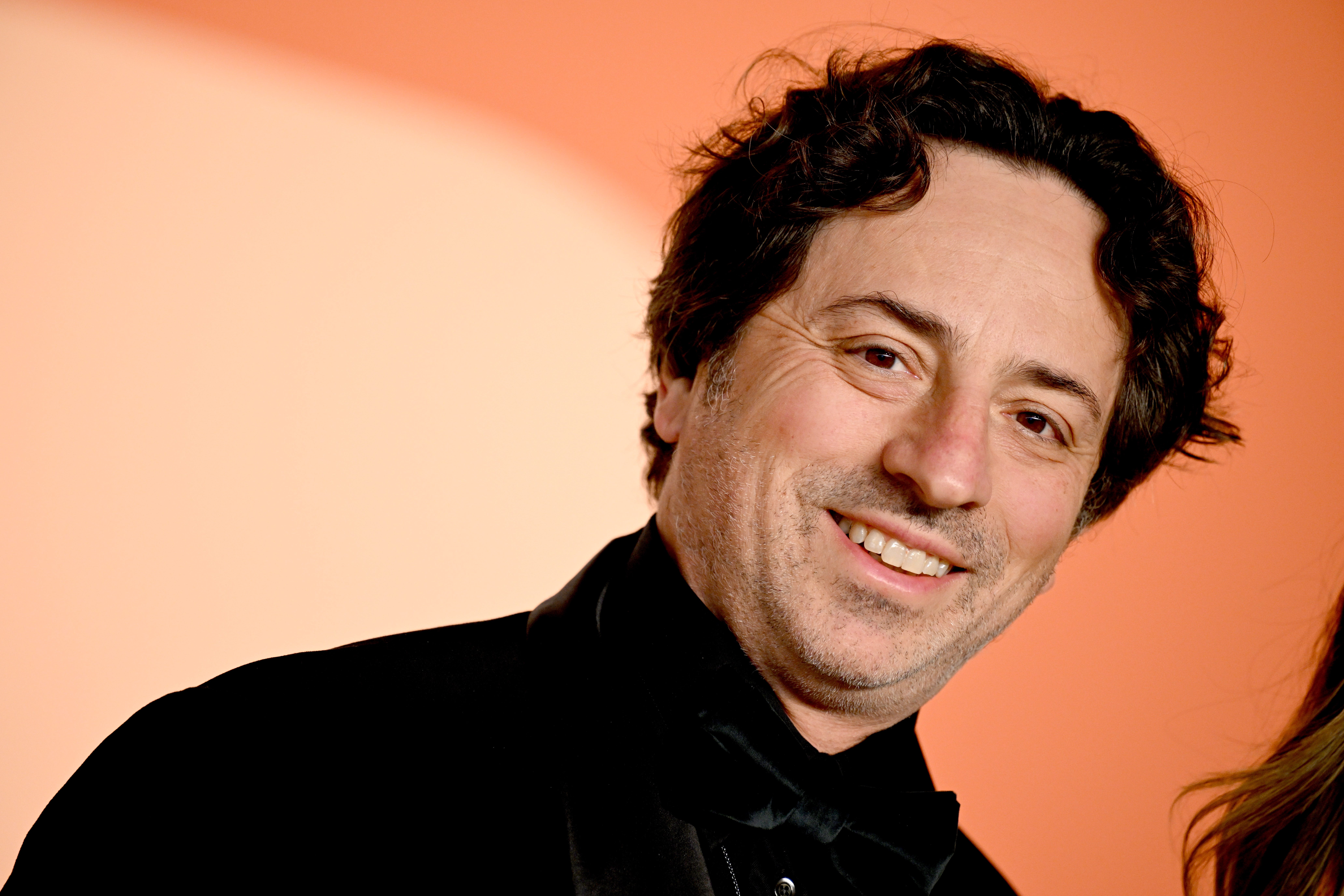
The proposed California wealth tax, a one-time charge of 5% of billionaires’ wealth, would cost Sergey Brin about $12 billion. He has thus far put $20 million towards fighting it. Consider how much more it would be economically rational for him to spend, if necessary.
And what about corporations? The main super PAC representing big tech and AI companies raised $125 million last year. Goldman Sachs estimates that these same companies will spend over $500 billion building out AI capabilities in 2026. What, do you think, would be a reasonable amount to spend to protect a $500 billion investment if these companies truly believed that it were threatened? It would be foolish not to be willing to spend, you know $100 billion or more, if it seemed to be a political necessity. The level of corporate spending today—high enough, of course, to make the tech industry one of the most powerful players in Washington—is only as low as it is because they do not perceive any serious threat on the horizon that would call for the spending to be higher.
Meta’s $65 million investment in election spending this year, fighting against state-level AI regulations, may seem scary. Now, imagine what a $65 billion investment in political spending would buy. This scale is within the realm of possibility, given the total amount of AI investments happening now.
If you are a human being who is capable of understanding the dangers of money in politics, this perspective is important. America’s essential problem is that we have an economic system that concentrates huge amounts of money in few hands, and a political system in which we allow money to directly buy power. The outcome of that combination is easy to grasp. The most unsettling thing about where we are in our devolution is that the vulnerabilities of this combination are not even close to being fully exploited by the forces of capital yet.
“Do campaign finance reform” is the most direct solution to this, but the more relevant question is “How?” How do the forces of economic equality and progressivism compete in this landscape? One somewhat encouraging fact is that while we should never minimize the ability of money to buy influence, it is also not completely impervious to other factors—a billion dollars could buy Mike Bloomberg a successful presidential campaign, for instance. Money is very effective at bribing politicians and creating propaganda, but it is somewhat less effective for buying the enthusiasm of the people. That is an arena in which organized people power can compete with organized money, and win.
More practically, the people need their own organizations that can bring together the combined political and economic strength of tens of millions of working people in order to compete with the interests of billionaires. What are these organizations? They are unions. Organized labor is the counterweight to organized money. We must get millions more Americans into unions, and the political power of those unions will increase and help to balance out the oligarchy. This is the path. Not throwing money directly at Democratic politicians who can always be out-bought by wealthy interests. No: Building our own institutions that sit outside of electoral politics that can effectively wield power on behalf of the entire working class. If you find the constant pleas for money from shitty Democrats to be exhausting, and you find the economic odds of trying to outspend centibillionaires daunting, and you wonder where you should be putting your efforts in order to not waste them… welcome to the labor movement, my friends.
More
Related reading: Enough Wealth to Warp the Universe; Confiscate Their Money; There’s No Justice Without Power.
I wrote a book called “The Hammer,” which is about this very topic: Why the labor movement is the single best tool for fixing America’s single most important problem. You can order the book wherever books are sold. I bet you would enjoy it. Another thing you can order is a fly How Things Work t-shirt, which looks great on everyone. Another thing you can do is Stand With Minnesota, where PEOPLE POWER LIVES.
Billionaires can buy entire media companies, and make them suck. Independent media, on the other hand, can be cool—but we rely on the support of lots of readers to keep us going. How Things Work has no corporate sponsors, and no paywall. This place is free for anyone to read, regardless of income. In exchange for this, I just say, to all of you: “Hey, if you like reading this site, and would like for it to continue to exist, and you are not broke, please become a paid subscriber.” It’s not too expensive and it keeps this place going for everyone. I appreciate each and every one of you for being here. Thank you.
Painfully insightful as always with stellar writing. There is unfortunately an element of hopelessness in efforts at counterbalancing the avalanche of money in politics. I say this as a resident of the South where the love of guns and authoritarianism is accompanied by a hatred of government and unions which has become deeply ingrained. Certainly the latter are deeply flawed, but they are the only real levers of influence available to the non-billionaire class and which “We The People” have any direct input over. Then again the way Trump / MAGA are going elections may be meaningless as well.
Thank you for this article. It clearly illustrates the outsized role money can play in modern elections. The comparison showing that Musk’s $300 million in spending is equivalent to a $77 donation from someone with the median American net worth of $193,000 is striking and unsettling. Many Americans already sense that wealth exerts disproportionate influence in politics, but this example puts that imbalance into stark perspective.