
Kamala Harris May Have Made Mistakes
In the midst of everything, a book tour.

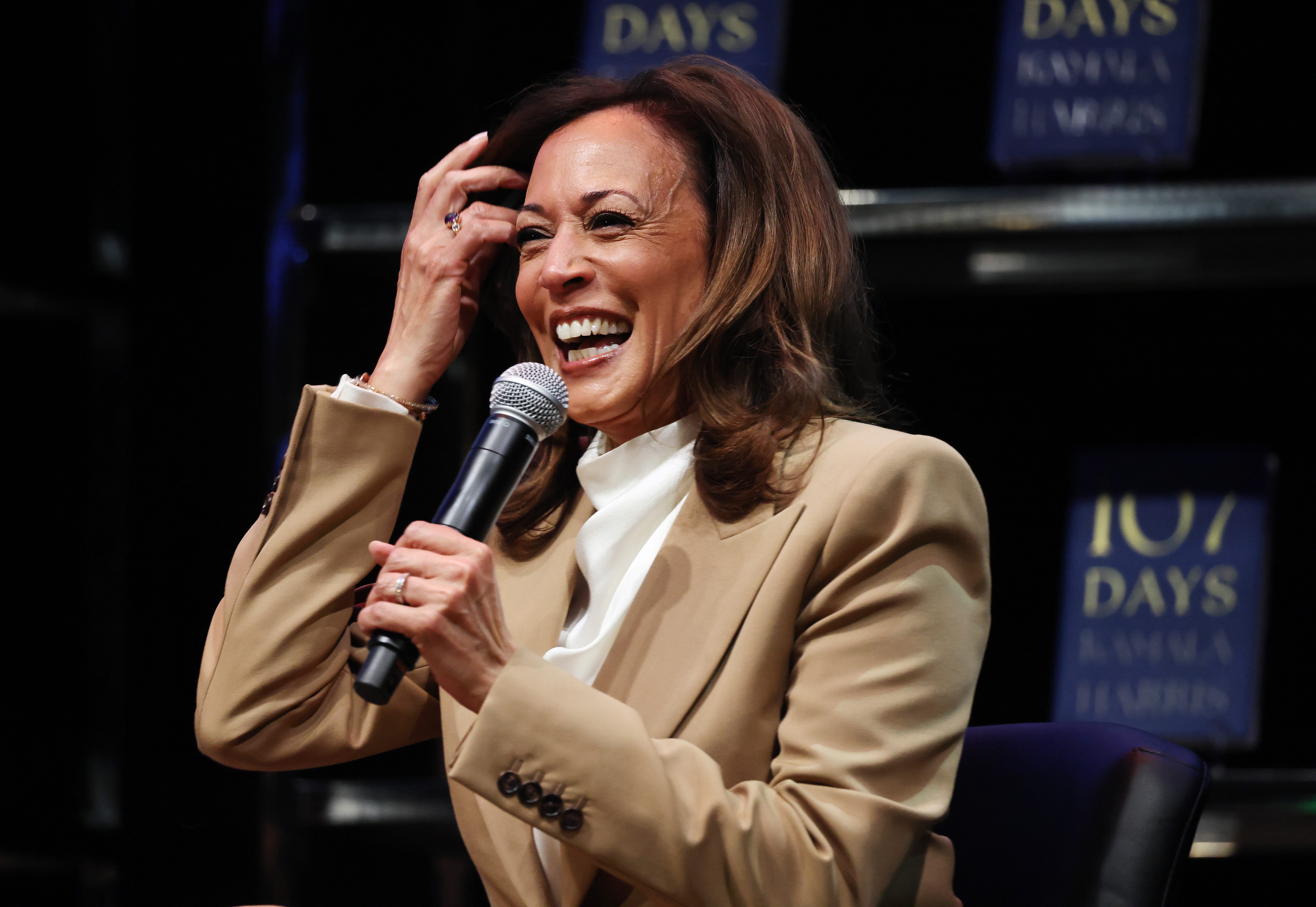
If a very few things had gone differently in the chaotic second half of 2024, we would not be talking about ICE abductions and National Guard deployments and the malevolent dismantling of government services, because Kamala Harris would be in the White House. Instead, she is on book tour. Last night, she came to the Saenger in New Orleans, sitting below a roof of twinkling lights, surrounded by ornate carvings adorning the top edges of the historic theater. I bought a ticket in the very last row of the top balcony to see if she had something to say.
As a matter of record, she never had much to say, which was one of her problems as a presidential candidate thrust onto the ballot a few months before Election Day. (107 Days before, to be precise, a number that she has turned into the title of her book.) Though Harris had some worthy moments in the Senate grilling various villains in her prosecutorial tone, she was an unsteady and ill-defined presence in the White House, never able to define herself as something all her own. Whether this was due to Joe Biden marginalizing her or due to the combination of her own sometimes inscrutable communication style and her own lack of strong, clear political beliefs is now beside the point. She lost to Donald Trump and now he commands the world’s mightiest army and she is a self-employed author like the rest of us.
The crowd at the Saenger was a friendly one, made up of mostly women—moms and daughters, groups of friends, older black women in their sorority colors—who were willing to buy a ticket to see Harris speak. It was a reminder that she had carried the hopes of many women of color on her shoulders, and that Trump’s triumph represented, among other things, America’s rejection of those hopes. Presidential candidates contain multitudes. Was Barack Obama a hero of American civil rights who embodied an enormous step forward in our nation’s sordid, racist history, or was he the guy who killed a US citizen with a drone strike and sacrificed a historic opportunity to move towards economic equality by turning post-recession policymaking over to Wall Street? Well, he was both. Likewise, the crowd last night showed that Harris’s closeness to becoming America’s first woman president, and the near-miss of having a Howard University grad in the Oval Office, were meaningful and have not been forgotten.
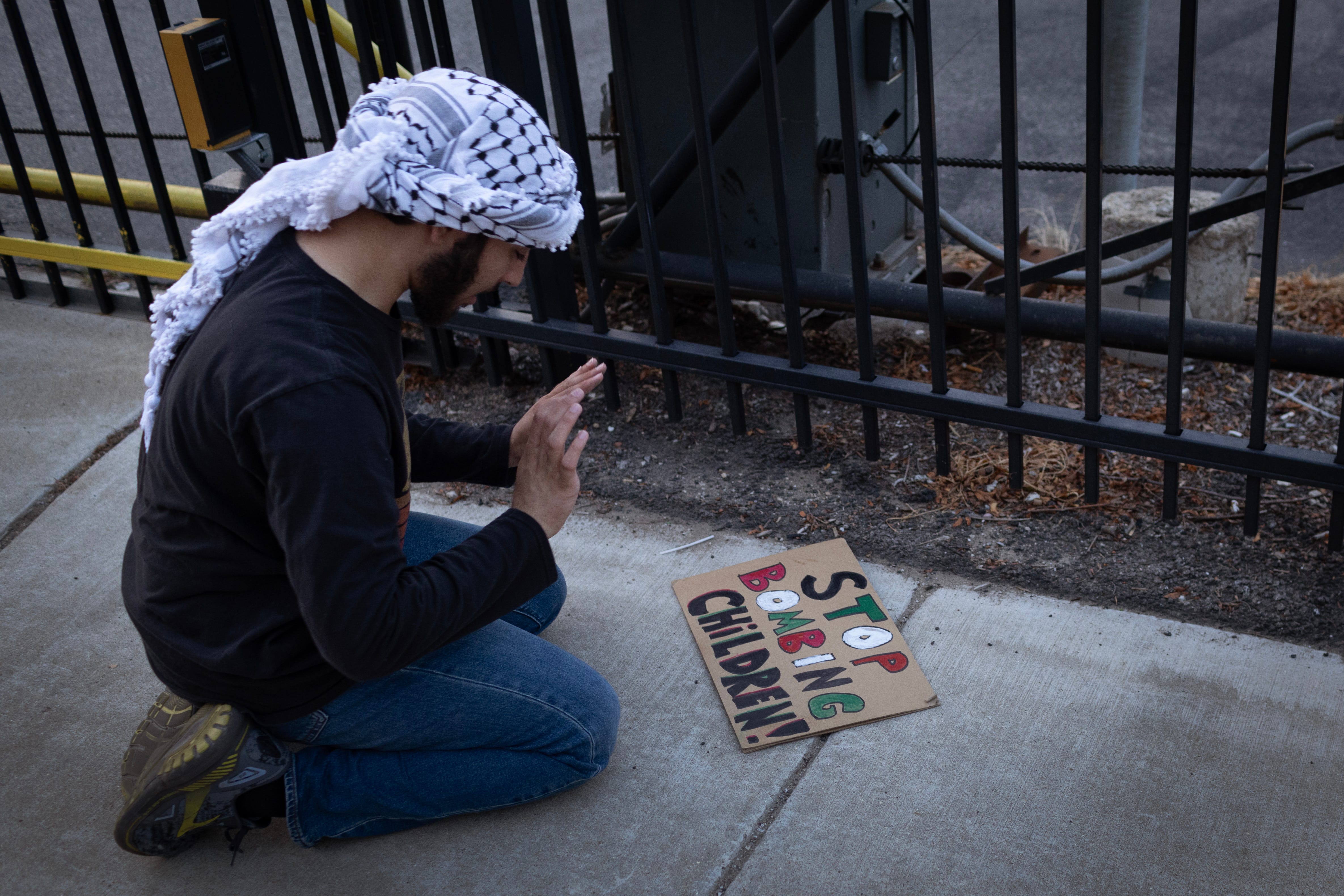
These are useful things for me to remember, because my strongest memory of Kamala Harris’s campaign is something very different. I remember covering the Democratic National Convention in Chicago in August of 2024. Kamala Harris’s big moment. As it was happening, thousands of civilians, thousands of children, were being massacred in Gaza by the Israeli government, using weapons and aid supplied by the Biden administration. Pro-Palestine protests thronged the streets of Chicago. A group of DNC delegates—Harris supporters who disliked genocide—spent all week trying to secure permission for a single Palestinian-American to speak on stage at the convention. And they were denied. They were shut down, marginalized, mocked, discarded, dismissed as politically dangerous, all while Democrats in Chicago partied and children in Gaza died. That act of callous, inhuman political backstabbing soured me on Kamala Harris in a way that has never left me. Harris never spoke out forcefully against Biden’s Israel policy, never separated herself from the blood on his hands, never stood up to call it a genocide. She saved her criticisms for her book. In Gaza, tens of thousands of people, tens of thousands of children, starved and froze and died.
Harris was gently interviewed last night by Brandan “Bmike” Odums, a very cool New Orleans artist and activist who is, by his own admission, not a journalist, and who conducted the interview in an airy, feelings-first way that was probably quite resonant for much of the crowd but which made me, as a journalist, grind my teeth in frustration. This is why journalists are miserable and unpopular people. We can never just enjoy hearing Kamala Harris talk about the emotional palimpsest of her upbringing and the moments that shaped her. While hundreds of the people in the crowd say “Mmmm” in affirmation when Harris mentioned things like “supposed leaders who would suggest that the strength of an individual is based on who you beat down instead of who you lift up,” journalists are thinking “I have some follow-up questions about that, regarding some of your policies.” This is why journalists are only invited to parties held by other journalists, and also why Kamala Harris did not invite a journalist to interview her on stage at her book tour.
“Early in this book tour, somebody said, ‘Why do you hold yourself to such a high standard?’ Well, I was raised to do that,” Harris said.
“I was always acutely aware of injustice. I was taught to see it,” Harris said.
“I talk about mistakes actually in the book, like the way that I could have answered or dealt with an interview better, or a strategic decision in the campaign. I think that the most important thing about that is being honest with ourselves. I think realizing that one has made a mistake and being able to learn from it requires also that you know and can see that you have agency. And so you had a choice, and you perhaps did not exercise the right choice,” Harris said.
“I have a few follow-up questions,” I thought to myself. The show moved on.
There were some good questions. Harris was asked what she has learned from watching the Trump administration carry out its program so swiftly and brutally. She replied that the Project 2025 agenda was decades in the making, and spoke of the administration’s hypocrisy on the issue of crime, and said that for many years elements of the system have not worked due to failings of both Democrats and Republicans, and that that has made some people cynical.
“So I think that the work that we have ahead is to figure out ways to restore trust in these systems, but the responsibility of the people in the system is to work on making the system actually work for the real needs of the people,” she concluded.
Okay. And? This Rice Krispy treat of an answer, superficially nourishing but made mostly of air, was emblematic of Harris’s fatal flaw as a leader. Her skill set of rhetorical judo and vague affirmations is unsuited to the times we live in. Decades of politicians like her sowed the seeds of the cynicism that has now overwhelmed them all. In our age of cynicism, people want to hear politicians say something that feels real, even if what they say is “Hate everyone.” It remains an open question whether the Democratic Party will be able to grapple with this reality any time this decade, or whether they will continue clinging to a bygone political playbook until every last Clinton-era political consultant is dead.
There was an online form where you could submit questions to be asked at the end of the event. The question I submitted about Gaza was, unsurprisingly, passed over in favor of questions about what she learned in college and why she got into politics and the challenges of being the first black woman operating in many of the spaces of power she had passed through. These questions gave her a chance to make inspiring pep talks and rally the crowd to greater heights of positive, can-do thinking.
And what’s wrong with that? Nothing is wrong with that. We all have our burdens to bear, some more superficial than others. Mine is an inability to stop scoffing when the former Vice President of the United States spoke about how regular people are superheroes, and superheroes are all around us. But that burden is admittedly light compared to the burden of, say, a black woman from New Orleans who has had to struggle for every ounce of basic dignity that America has ever begrudgingly afforded her in her life, and who therefore experiences the public affirmation of a former Vice President of the United States as significant milestone, a minor but meaningful forward movement in the swamp of perpetual hostility that is American history. Many things can be true at once.
Perhaps my own small struggle is to stop myself from being swallowed by the cynicism that threatens to engulf us all. If we lose our perspective, any of us can fall into the dark political morass that is greedily eating away the last, rotting pillars of our democracy. Why sit in a beautiful theater in a beautiful city and refuse to see any beauty?
Just above me, the Saenger’s pitch black ceiling twinkled, dotted with irregular lights that resembled the night sky. Whenever my eyes would roll, I would look up at that ceiling over our heads. And each time, I thought idly about the whistling sound that an American-made 2,000-pound bomb would make as it dropped from a fighter jet, though that night sky, and onto a family’s home in Gaza. Cynicism, just like hope, is born from the decisions that real people make.
More
Related reading: Patriot Games; Don’t Make Your Voters Step Over Dead Bodies; Why Would Dick Cheney Endorse Kamala Harris?; How to Think About Politics Without Wanting to Kill Yourself.
You can find charities working on the humanitarian crisis in Gaza here. You can find a GoFundMe to support a Minneapolis protester shot in the eye by federal agents here. One of many worthy groups making life better for working people in the city of New Orleans is Step Up Louisiana. You can support them here.
Thank you for reading How Things Work. This publication is independent. It has no corporate sponsors and no paywall. It exists solely due to readers like you who choose to become paid subscribers. If you would like to help us keep going and growing in 2026, take a quick second right now and become a paid subscriber yourself, for a very reasonable price. Together we will make it my friends.
You truly encapsulated the profound cynicism and gaslighting of the neoliberal elites embodied by the Democratic establishment. Profiting from a memoir about how you lost the election to a billionaire reality TV star conman and fascist sociopath, and gleefully touring the book while said fascist's government is lighting the country —and the entire world— on fire, all while claiming that it's actually so inspiring how women of color now also get the chance to become war criminals. Also, we don't need to abolish or, at the very least, substantially change the systems that brought us here, we just need to get people to trust in them again (?) Absolute insanity, all of it.
This one's a banger. Feels like those last three paragraphs are speaking for a lot of people. I don't want to be cynical. But the evidence leads where it leads.