
Abominations of Capital
Forcing a price on priceless things.

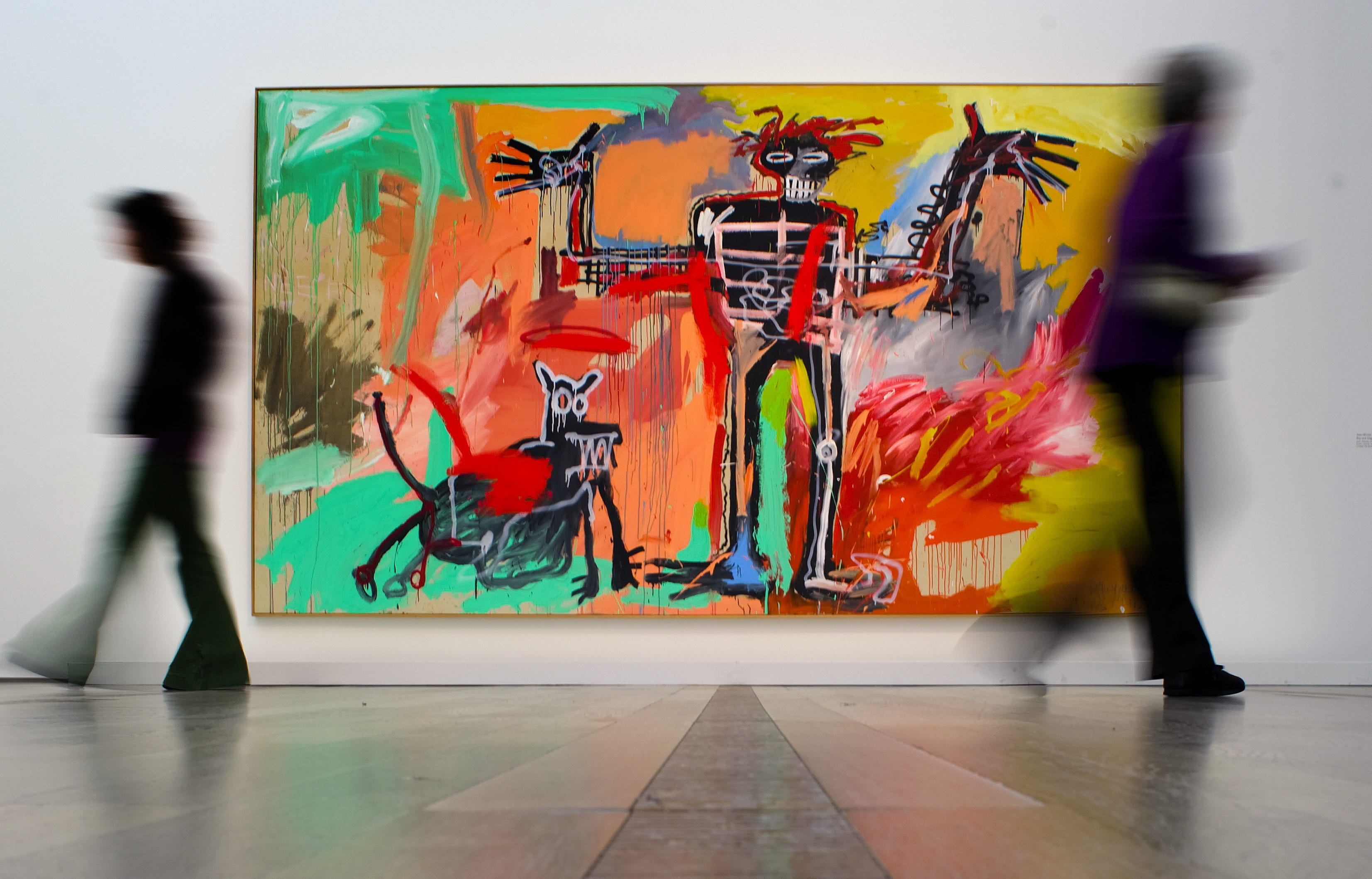
One of the best places to go on a slow weekday morning in Washington, DC is the basement of the Hirshhorn Museum, on the National Mall. There, in a dark corner gallery, you can find a small Basquiat exhibit, with one single crown jewel: “Boy and Dog in a Johnnypump,” a massive, 14-foot long canvas depicting a cartoonish dog and a wild skeletal boy with his hands splayed out, surrounded by swirls and smears of colors. It’s one of my favorite Basquiats—I have a print of it, which I bought for $30, hanging in my kitchen. In the Hirshhorn, you will often have the painting to yourself. You can stand one foot away from it and peer at the drips and feel the same gravity that held Basquiat to the earth when he painted it in 1982.
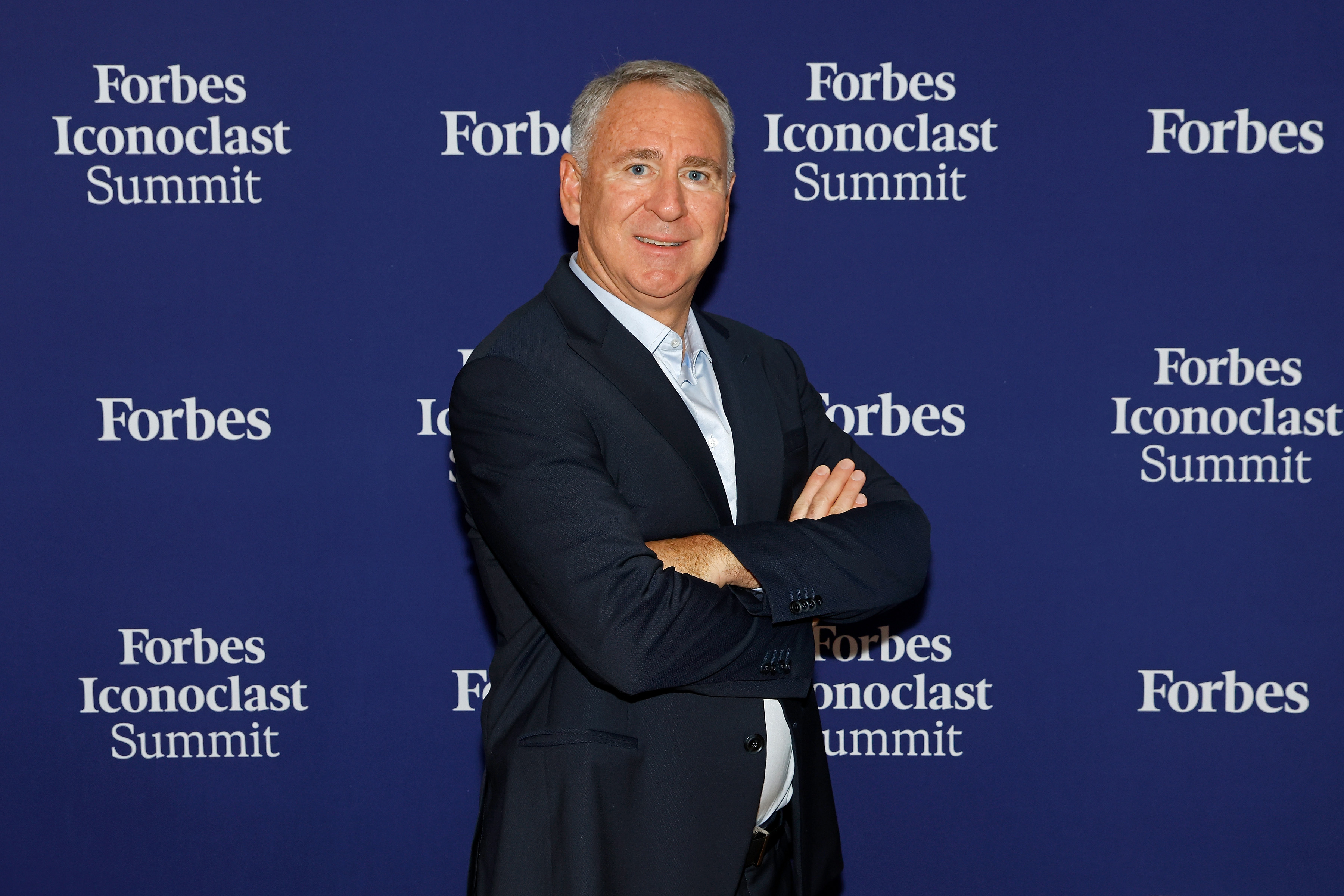
The painting that is hanging on that basement wall cost more than $100 million. It was bought by hedge fund founder Ken Griffin in 2020. He can afford it. His net worth today stands at over $50 billion. Indeed, the Basquiat is not even Griffin’s most expensive painting. In 2016, he reportedly paid $500 million for a pair of paintings, one by Pollock and one by de Kooning. He needs a lot of art to decorate his $238 million New York apartment and his $1 billion Palm Beach compound and the rest of his real estate portfolio in St. Tropez, Chicago, Aspen, and The Hamptons.
Griffin is one of the biggest Republican donors in America. He has spent a quarter-billion on political donations in the past decade. Though he preferred other Republican candidates in the 2024 primaries, he said that he voted for Trump, and declared triumphantly after Election Day that “America is open for business again.”
Now, I am just a simple man in Brooklyn with neither hedge fund nor art history degree, but I feel compelled to say that Ken Griffin owning that Basquiat is a moral perversion that disgusts me in the same way that Martin Luther was disgusted by the lavish papacy of Pope Leo X. Ken Griffin, a dead-eyed automaton who has spent his life piling treasure in a vault, rotely accruing power in order to accrue more capital in order to accrue more extravagant luxuries, seeking always to arrange the world in service of his own personal enrichment, may have the financial means to “own” the painted canvas that Basquiat made, but no amount of money will ever allow him to feel and understand why something is cool. He is not built like that. Nor can he buy that. I like to imagine that this causes him to be plagued at all times by a ferocious sense of inadequacy. But who knows.
To gaze at the amazing gift that Basquiat gave to the world in the form of art and then to reflect that one asshole can, if he chooses, light that artwork on fire for his own amusement, or stash it forever aboard a yacht, or sell it off to an even less appreciative plutocrat in order to fund the purchase of another penthouse apartment is to begin to understand the way that wealth inequality is disease of our collective soul. Democracy is an attempt to create some level of political equality, to mirror the inherent moral equality of all humanity. This is simply not possible in the presence of the level of wealth inequality that America now has. It is not possible. We can have our level of inequality or we can have a democracy but we cannot have both. The numbers, at present, tell us that we have chosen the inequality. We are just playing out the string on the rest right now.
Either we eradicate the billionaires or we will march steadily into dictatorship of capital so strong that everything else means little. Total spending on the last presidential election was about $5 billion, all in, on all sides. Ken Griffin is worth $50 billion, and Bloomberg and Bill Gates and Warren Buffett and the Waltons and the Google guys are each worth more than $100 billion, and Larry Ellison and Bezos and Zuckerberg are each worth more than $200 billion, and Musk is worth more than $300 billion. Of the 330 million people in America, these are the ones who will decide everything. Do you like that? Well, it doesn’t matter. You don’t get to decide. You don’t have $5 billion to buy a presidential election. These people do. For another $10 billion you could pay for every single Congressional election, as well. Ken Griffin could buy all of the above and still have enough to buy all the rest of Basquiat’s paintings, and hang them on his mansion wall, and cock his head like a golden retriever as he stares at them and wonders what they all mean.
People are naturally bad at interpreting very large numbers and therefore we all have a hard time conceptualizing just how insane wealth inequality has become, just how ludicrous the sizes of these people’s fortunes are, just how divorced from any intelligible concept of “work” and “deserve” this kind of opulence represents. There are various ways to try to make these big numbers more understandable—Jeff Bezos, for example, could give each of Amazon’s million American employees a bonus of $100,000 and still be worth more than $100 billion himself. If the absurd math of luxury purchases that these plutocrats could pull off doesn’t drive the point home, another useful method is simply to sit and meditate on the priceless cultural artifacts that these people have, in fact, put a price upon.
Ken Griffin owns a copy of the Emancipation Proclamation signed by Abraham Lincoln. Bought it for $18 million. Ken Griffin also condemned Democratic officials in Illinois for not being tough enough on crime and moved his hedge fund headquarters to Florida and donated millions of dollars to Florida Republicans to help them wage their war against “wokeness” and abortion rights and diversity. From his walled 50,00-square-foot compound on 27 acres in Palm Beach, Griffin has done more than any other individual to create the political conditions that make Florida more hostile to black people, and LBTQ people, and women, and immigrants. Why? What is the reason for this? In order to ensure that political conditions are favorable for the success of Griffin’s hedge fund, and by extension for Griffin’s own net worth, so that he might buy grander estates, more expensive artworks, more exotic luxuries.
In some ways I think that the basic abomination that is Ken Griffin’s ownership a copy of the Emancipation Proclamation, or of Basquiat’s art, is even more powerful than the numbers. This man should not be able to own these things. Not for $18 million, or $100 million, or at all. The grotesqueness of billions of dollars, the brute force of that tidal wave of capital, its ability to force a price upon things that are priceless—it is this quality that may be most effective in demonstrating why such fortunes, like biological weapons and killer robots, fall into the category of “Things we are capable of creating, but should not.”
America feels quite chaotic. The daily procession of political outrages can feel overwhelming. It is important, if you care about such things, to take a quiet moment as the year winds down and refocus on the one, big problem at the center of all these things: The fact that too few people have been allowed to have too much money. That is the underlying problem. The other problems are manifestations of this. We have to destroy the billionaires. Judge political policies on their likelihood to accomplish this. Use this as your guiding star. Don’t lose sight of this amid the swirling conflicts of personalities. We need to take away the fortunes. Otherwise, they will rule, and all of our angry words of protest will not matter much at all.
In that Basquiat exhibit at the Hirshhorn, on a separate wall from “Boy and Dog in a Johnnypump,” is one other, much smaller work. It’s a single scrap of white paper in a small frame. On it is a figure with a crown standing next to a bottle of milk, and the words:
MAN NEEDS MILK
OWNS 10,000 COWS
What was the artist trying to say here, Ken Griffin? Write your answer on the Emancipation Proclamation. Drink it with a glass of milk, and choke.
More
Related reading, on billionaires: Confiscate Their Money; Enough Wealth to Warp the Universe; All the Things That You Need a Billion Dollars to Buy Are Bad; Demonize the Rich; The Underlying Problem.
What is the opposite of billionaires? The opposite of billionaires is “organized working people.” I wrote a book about the labor movement, called “The Hammer,” that makes this point in more depth. Fun read and makes a great Christmas present! You can order it from an independent bookstore, or wherever books are sold.
Raging about inequality is good, but it is not conducive to cultivating a roster of wealthy donors. That is where you come in. The publication you are reading, How Things Work, is true independent media. It has no ads, it has no paywalls, and it has no corporate supporters. It exists solely due to the support of readers just like you, who think to themselves, “I like this place and would like for it to continue to exist, and I’m willing to pay a few bucks to help that be the case.” If you enjoy this site, take a quick second and click the button below and become a paid subscriber yourself. Good karma is included for free. Thanks for being here.
It amuses me to read about the billionaires building their bunkers so they can survive the apocalypse they have, to a large extent, created. They seem to imagine that the serfs left outside the bunkers will continue to feed and protect them as if they were worker bees serving the queen. I imagine not much time would pass before the supply of food and clean water and even oxygen was cut off and people were dancing on the bunkers like they were graves. Let's save them from that fate by seizing the wealth that deprives them of their humanity.
Beautiful ending. Chef's kiss. No notes.